From Douro family house to Portuguese reference
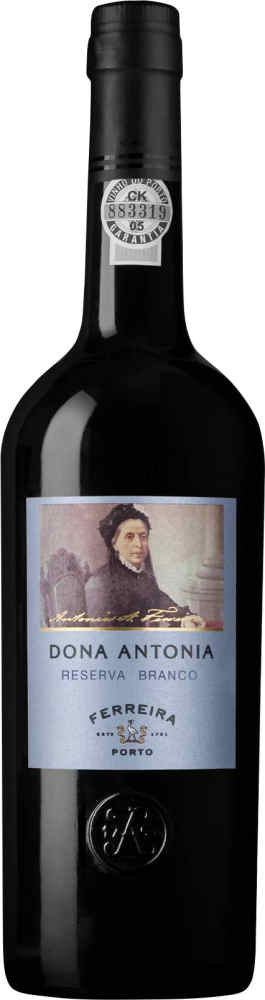
Ferreira was founded in 1751 by a winemaking family from the Peso da Régua region — the year in which the Douro Valley was shortly thereafter state-demarcated as the world's first wine region. The history of the house has been inextricably linked to the development of this region ever since. The decisive step was taken by Dona Antónia Adelaide Ferreira: in 1844, as a 33-year-old widow, she took over the management of the family business at a time when women were simply not intended to be in the wine trade. What followed was one of the most remarkable entrepreneurial careers of the 19th century in Portugal. She laid out new terraced sites, built production facilities in the Douro Superior, secured old wine reserves, and became the largest landowner in the region. Her estates included illustrious Quintas such as Quinta do Vesúvio and Quinta do Vale Meão. The population affectionately called her A Ferreirinha — the little Ferreira. When she died in 1896, she left behind a consolidated empire that still forms the foundation of the house today.
At the end of the 1980s, Sogrape Vinhos, Portugal's largest wine exporter, took over the house of Ferreira. Thus, Ferreira remained in Portuguese hands — and is still the only major port wine house that has never passed into foreign hands since its founding.
Slate, steep slopes, and a winery since 1771
The heart of the Ferreira vineyards is Quinta do Porto in the Cima Corgo, the middle sub-region of the Douro. The 27-hectare estate lies on the north bank of the river, downstream from the village of Pinhão, with a southwest exposure on steeply terraced slopes. Dona Antónia acquired it in 1863; it had already been planted in 1771. The subsoil consists of slate — a shale-like metamorphic rock that breaks vertically and allows the roots to penetrate deep into the earth to find water and nutrients during the long, hot Douro summers. The interplay of this soil composition, the warmer local climate, and the proximity to the river produces grapes with pronounced ripeness and high concentration. Old vines on the Quinta — jokingly described by cellar master Luís Sottomayor as "eligible for pension" — deliver correspondingly low yields with intensely flavored fruit. The most important grape varieties are Touriga Nacional, Touriga Franca, and Tinta Barroca. After vinification in the Douro, the port is transported to the historic warehouses in Vila Nova de Gaia, where it matures in hundreds of oak casks — an 18th-century building that originally belonged to a monastery.
Luís Sottomayor, who has been with Ferreira since 1989 and now leads the entire Sogrape oenology team for port wines, consistently continued the pursuit of precision. His approach combines traditional cellar knowledge with modern viticultural technology. The fact that the 2018 Vintage received a top score of 100 points from Wine Enthusiast speaks for the consistency of this work.
Tawny, Ruby, White — styles with attitude
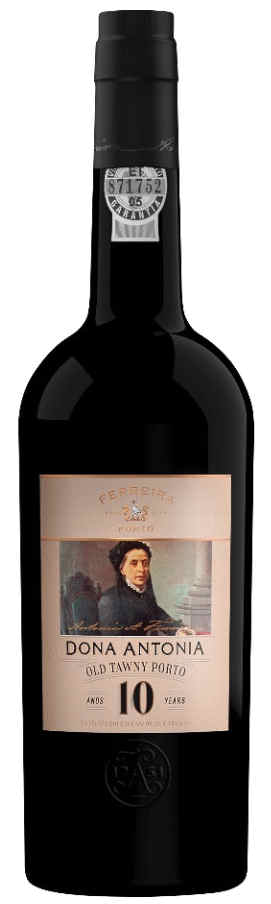
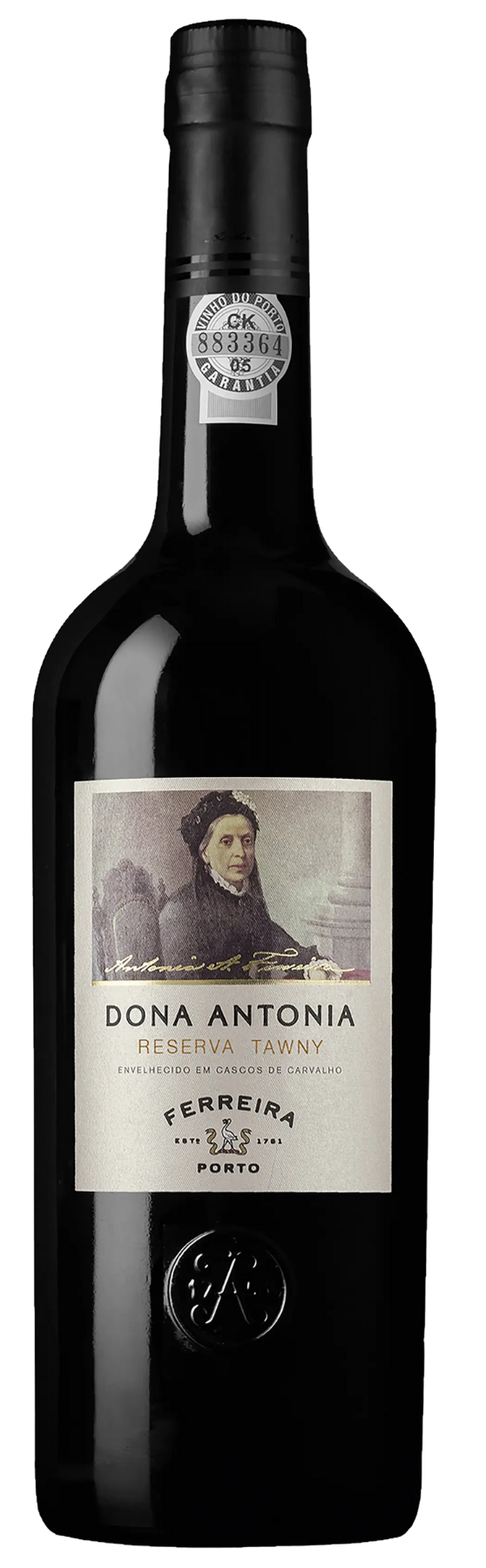
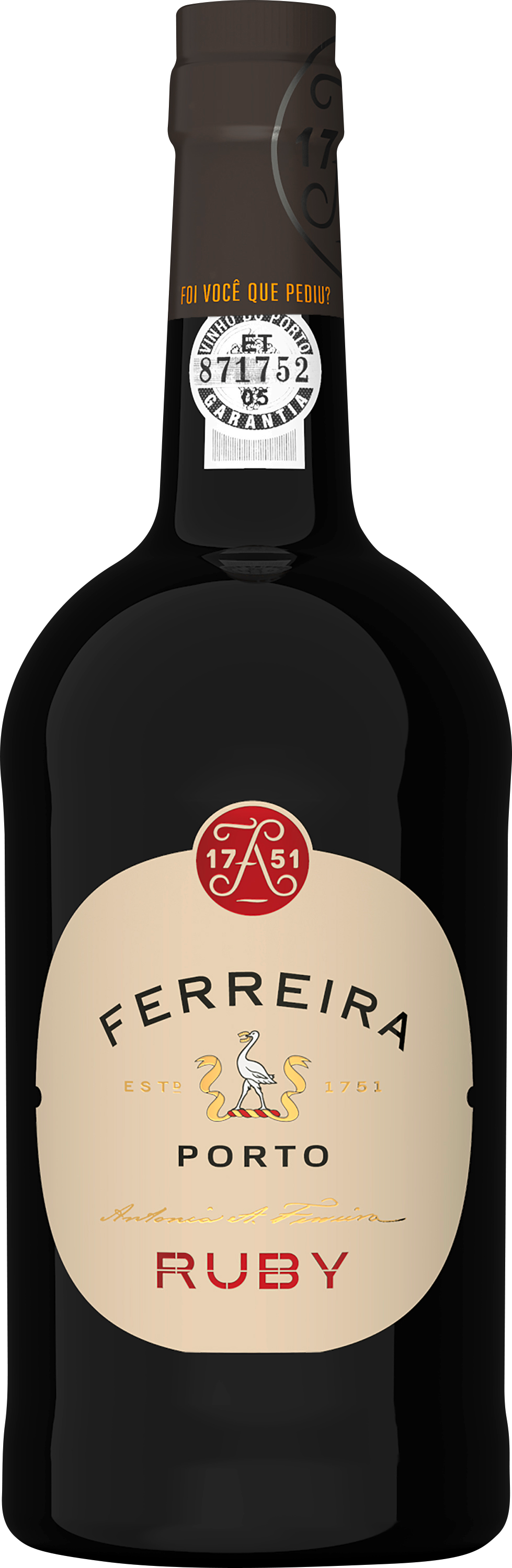
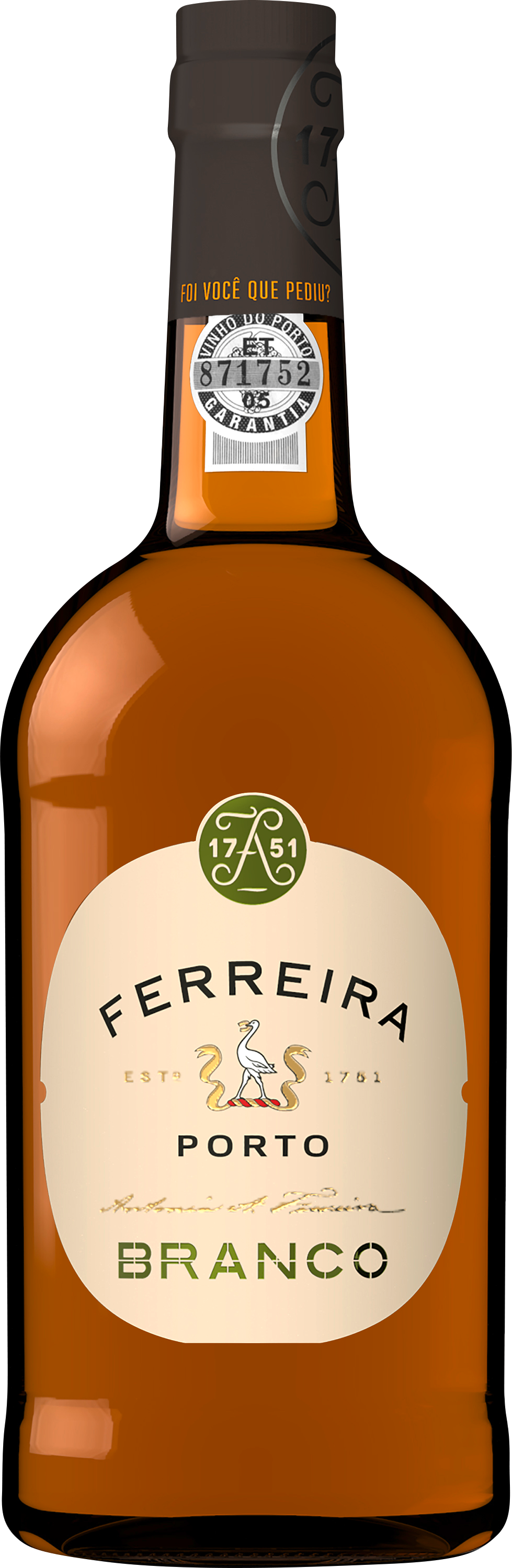
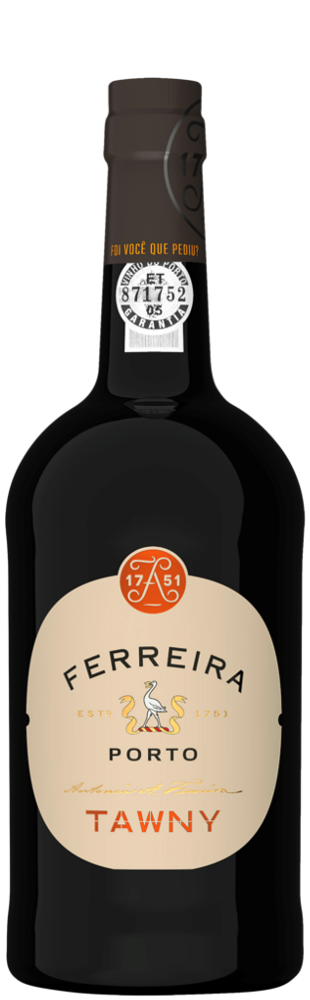
Ferreira stands for port wines that clearly depict the character of the Douro terroir without playing for effect. The Tawnies are the heart: in oxidation aging, they develop notes of dried fruits, roasted almonds, and a hint of caramel — the style is accessible but with structure. The Dona Antónia line, named in honor of the house's founding figure, ranges from the classic Reserva to the 10-year-old Tawny and cleanly reflects the respective stage of maturity: the longer the oxidation, the nuttier and drier the finish. The Ruby shows the fruit-driven, dark-berry side of the Douro with a firmer body; the White Port, pressed from Malvasia Fina, Codega, Rabigato, and Gouveio, opens the range to the lighter, aperitif-like side. All wines mature in the traditional warehouse in Vila Nova de Gaia, serving temperature 10–14 °C depending on the style. Whether with goat cheese and walnuts, dark chocolate, or simply neat after a meal — Ferreira provides the tools that make good port wine: origin, time, and skill.