From Mealhada to the wild Douro: How Messias Baptista built a wine empire
Messias Baptista founded the company in 1926 in Mealhada, a small town in the heart of the Bairrada region in central Portugal. He managed the business until 1973 — for almost half a century — and thus laid the foundation for a family structure that remains strong to this day. Since his retirement, his descendants have continued to run the house without any changes to the family control. The decisive step into the Douro was taken in 1956, when Messias acquired the Quinta do Cachão, a 200-hectare property on the banks of the Douro near Ferradosa in the Cima Corgo. Just two years later, the neighboring Quinta do Rei was added, a winery that had previously belonged to the house of Gonzalez Byass. Together, these two properties now form the heart of their port production.
The historical origin of the Quinta do Cachão goes back even further: the vineyards were first planted in 1845 by the Barão do Seixo and eventually passed into the possession of Messias via the Afonso Cabral family. What the company has taken over is therefore not a young project, but over 175 years of viticulture in one of the most demanding river locations in Europe.
Own Quintas, consistent quality control, bottling in Gaia
The guiding principle of Messias is clear: if you want to control the quality of your wines, you must own the vineyards yourself. Over the decades, the house has consistently acquired Quintas in the most important Portuguese wine regions — in addition to the Douro properties, also the Quinta do Penedo in the Dão as well as the Quinta do Valdoeiro in the Bairrada, which alone accounts for around 70 of the 160 Bairrada hectares. In the Douro, Messias cultivates 110 of the 200 hectares with vines, exclusively on category A slate soils — the highest classification on the Douro quality scale. The vineyards on the slope of the Quinta do Cachão, crowned by a small chapel of Santa Bárbara, are therefore among the best-classified sites in the entire region.
Vinification takes place on-site in Ferradosa; the bottling of the port wine traditionally takes place in Vila Nova de Gaia, where Messias maintains its own facility of more than 10,000 square meters. This principle — production in the Douro, aging and shipping in Gaia — corresponds to the classic division of labor of the great port wine houses and guarantees the regulated aging conditions that oxidative port wines like Tawny and Colheita require.
Five noble Douro varieties, patient wood aging, a broad Tawny spectrum
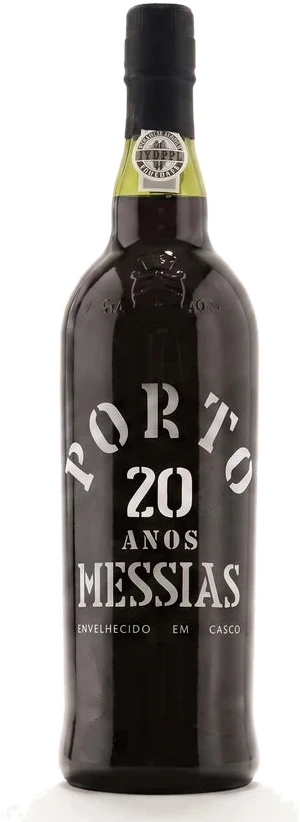
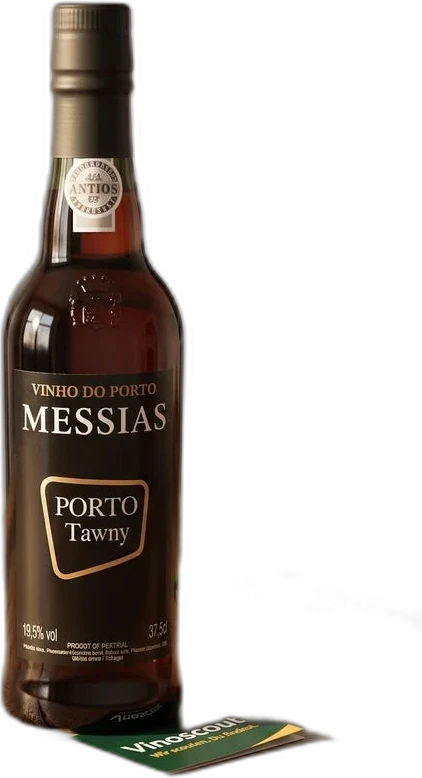
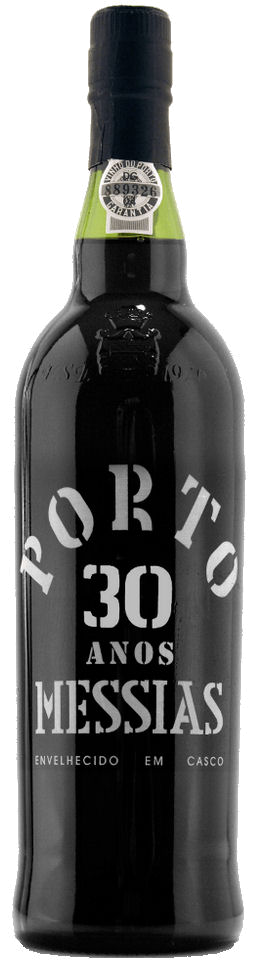
Only the five classic Douro grape varieties grow in the vineyards of the Quinta do Cachão: Touriga Nacional, Touriga Franca, Tinta Roriz, Tinta Barroca and Tinto Cão. Touriga Franca and Tinta Roriz dominate the landscape, complemented by the structure-giving Touriga Nacional. From this spectrum of grape varieties, port wines are created that are known for their balance between fruit depth and the complexity gained through wood aging. Tawny ports mature in small wooden barrels, where controlled oxygen contact brings out the characteristic notes of dried fruits, walnut, and vanilla — features that become more pronounced in a 20- or 30-year-old Tawny with every additional year in the cask. Fermentation takes place at controlled temperatures, is interrupted by the addition of brandy, and thus preserves the natural fruit sweetness of the grapes. The Messias range includes Tawny ports of various ages as well as a Special Reserve Port — port wines shaped by the patient craftsmanship of an almost hundred-year-old family tradition.