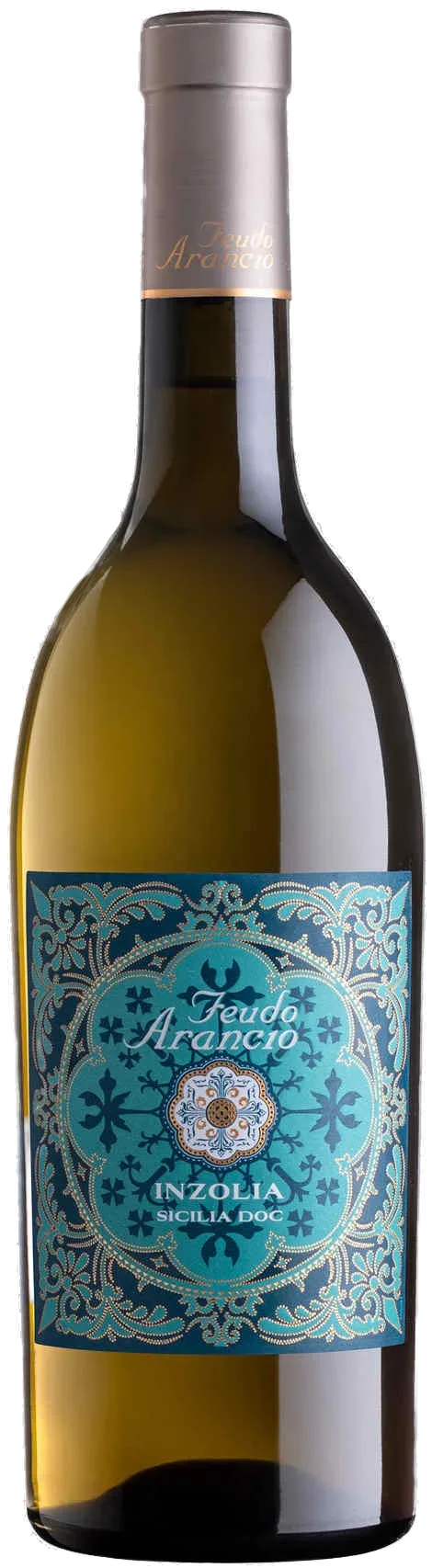
From Trentino wine knowledge to Sicilian terroir
The name reveals the geography: Arancio refers to Lake Arancio, a lake in the province of Agrigento, on whose shores the estate's first vineyards were planted. What is known today as Feudo Arancio began around the turn of the millennium with a strategic decision by the Mezzacorona Group from Trentino — one of Italy's largest wine producers. The group recognized the dormant potential of Sicily and first acquired a neglected estate in Sambuca di Sicilia, later a second estate in Acate near Ragusa. Both properties were rebuilt from the ground up: vineyards cleared and replanted, cellars built to the latest state of the art — all in the Sicilian Baglio style, the typical enclosed estate with an inner courtyard.
Feudo Arancio was founded in 2001. Northern Italian wine knowledge from Trentino thus met the favor of a southern island climate: intense sunlight, constant sea breezes, and clay-rich soils that have made Sicily one of the oldest wine-growing regions in the Mediterranean since antiquity.
Sustainability as a construction principle, not an afterthought
The fact that Feudo Arancio has consistently geared its entire production system towards sustainability from the very beginning is proven by one fact: as early as 2002, one year after production started, the estate was the first winery in Italy with EMAS certification (EU Eco-Management and Audit Scheme) for the entire production chain. Seven artificial lakes with a total volume of 900,000 cubic meters collect rainwater and supply the vineyards via drip irrigation — entirely without groundwater extraction. Photovoltaic and solar systems make the winery largely self-sufficient in electricity.
In the vineyard, the team relies on integrated pest management: greening of the vine rows against erosion, nitrogen-fixing plants instead of mineral fertilizers, beneficial insects, and the technique of mating disruption for pest control instead of chemicals. Lead oenologist Matteo Covazzi works with a permanent team of agronomists who closely monitor ripeness in both estates and coordinate the harvest at the optimal time. The grapes are harvested by hand and processed gently — fermentation takes place in stainless steel tanks or wooden barrels, depending on the wine.
Focusing on Sicily's indigenous grape varieties
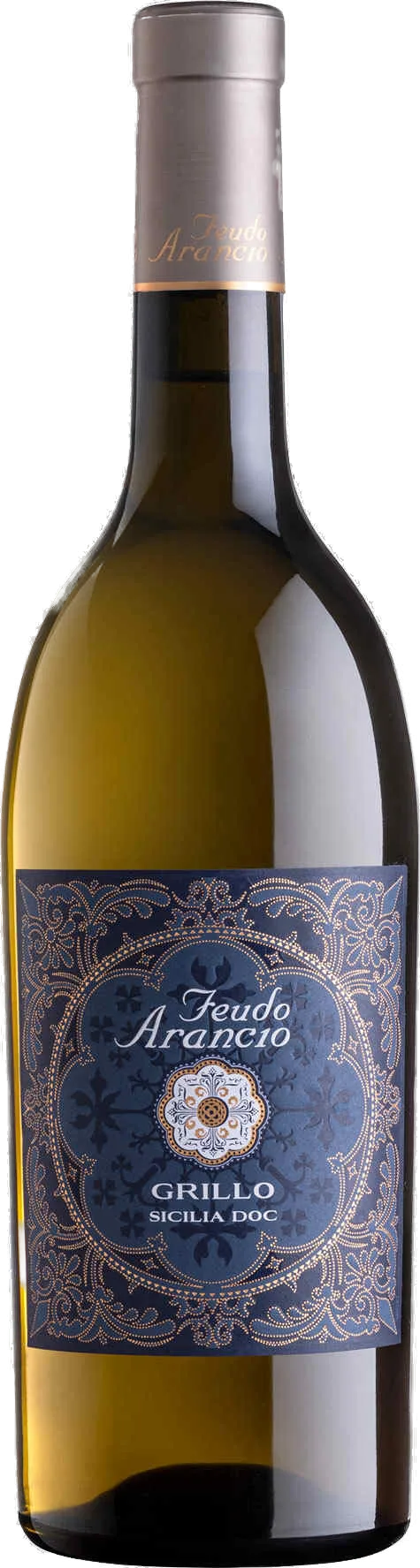
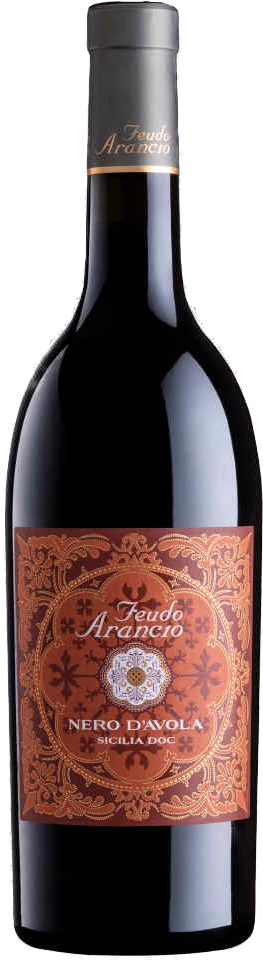
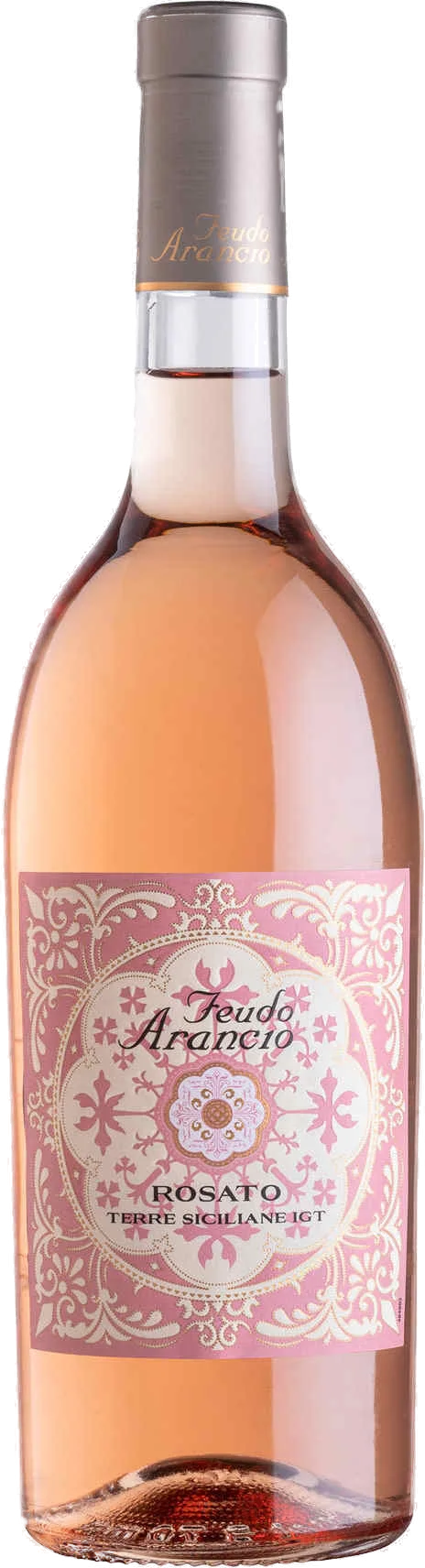
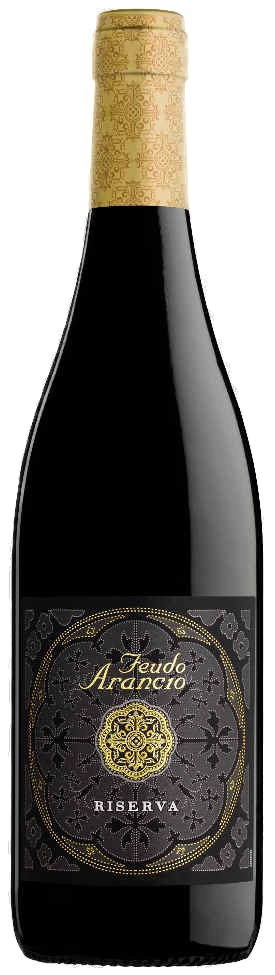
Over 700 hectares of vineyards, divided between the two estates in Sambuca di Sicilia and Acate, form the basis of a range that consistently puts Sicilian heritage varieties in the foreground. Nero d'Avola, Grillo, and Inzolia are at the center: the Nero d'Avola from Sambuca ferments with skin contact and then matures in French oak barrels — the result is a red wine with dark berry fruit, herbal spice, and a Mediterranean character. Grillo and Inzolia translate the salty freshness of the south coast into crisp white wines with ripe citrus fruit. The portfolio is complemented by a rosato as well as Riserva positions that receive more cellar time.
Mezzacorona also brought experience with international varieties such as Syrah, Merlot, Cabernet Sauvignon, and Pinot Nero to Sicily — which opens the range to a wide audience without giving up the regional focus. Those who drink the wines of Feudo Arancio get Sicily without detours: sun-ripened fruit weight, Mediterranean herbal notes, and a freshness that is owed to the constant coastal breeze.