From Dona Antónia to the pioneer of dry Douro wine
Casa Ferreirinha bears the nickname of one of the most extraordinary women in Portuguese wine history: Dona Antónia Adelaide Ferreira, born in 1811 in Régua, took over the family business Ferreira Port in 1845 at the age of 33 after the death of her husband – at the time, the first Portuguese-owned port wine estate in the Douro. Because her compatriots affectionately called her "Ferreirinha" – the little Ferreira – due to her small stature and quiet manner, the house still bears this name today.
What Dona Antónia achieved was remarkable for the 19th century: she had new terraced vineyards laid out, traveled to England to learn modern techniques to combat the devastating phylloxera plague and bring them to the Douro, and expanded the estate to nearly 30 vineyards. When she died in 1896, she left behind a fully formed legacy. The formal starting signal for Casa Ferreirinha as an independent house was given in 1952 by oenologist Fernando Nicolau de Almeida, who achieved a pioneering feat: in a region that had produced only port wine for centuries, he introduced the first high-quality dry red wine of the Douro – the Barca-Velha. In 1987, Sogrape took over the house, ensuring continuity and investment strength; the legacy of Nicolau de Almeida and Dona Antónia remained the compass.
Terroir loyalty across all three Douro sub-regions
Today, Casa Ferreirinha manages 520 hectares of vineyards, spread across all three Douro sub-regions: Baixo Corgo, Cima Corgo, and Douro Superior. The heart of the estate is Quinta da Leda near the Spanish border in the far east of the Douro Superior – an estate of old slate terraces with extreme temperature fluctuations between day and night, which give the wines their characteristic tension. The estate's own vineyards are supplemented by carefully selected partner farms in the Cima Corgo, including Quinta do Sairrão at an altitude of 600 meters – one of the coolest sites in the entire region.
Cellar master Luís Sottomayor, who completed his training directly under Fernando Nicolau de Almeida and consistently continues his line, works according to the principle of terroir loyalty: grapes are vinified by variety or in precisely selected parcel batches, and wood is used sparingly and purposefully. Sottomayor tames the natural opulence of the Douro climate to keep freshness, texture, and depth in balance. At the same time, Casa Ferreirinha is intensively committed to preserving soil health and the biodiversity of the Douro – including through targeted research into rare autochthonous grape varieties, which are documented and vinified in a separate line called Castas Escondidas.
A range that reflects the entire Douro
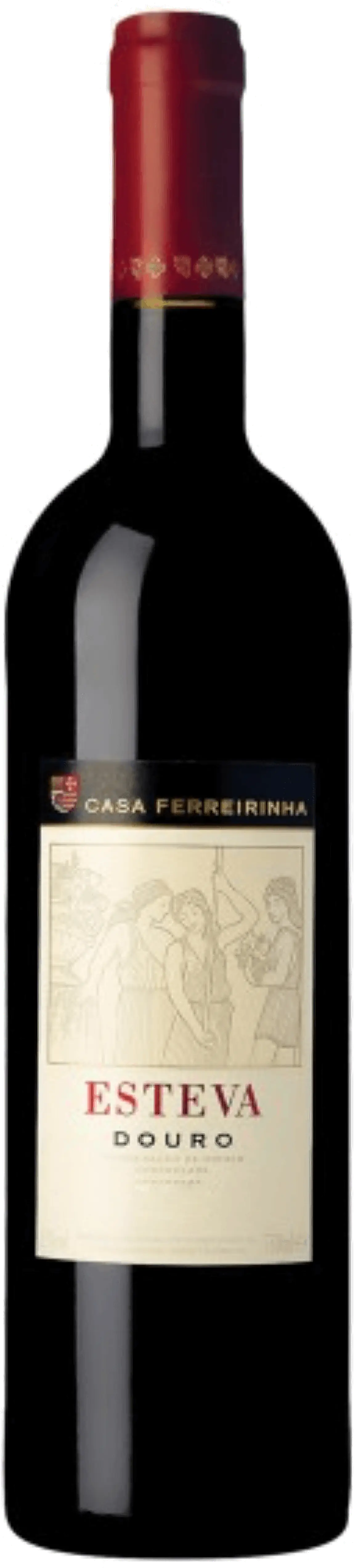
The spectrum of the wines reflects the geographical and stylistic depth of the house. The Esteva is the accessible entry point – a Douro DOC made from classic grape varieties, dense and fruit-forward, straight to the point. The Planalto Reserva shows what higher-altitude sites in the Douro can achieve in terms of white wine: varieties such as Viosinho, Gouveio, and Arinto are fermented separately in stainless steel tanks to preserve aroma and freshness. The Vinha Grande – one of the first wine lines after Barca-Velha – comes from the cool slopes of Quinta do Sairrão and combines Touriga Franca, Touriga Nacional, and Tinta Roriz into a medium-bodied, structured red with a fine tannin structure.
At the top is the Barca-Velha, the "Old Boat" – bottled only in exceptional years, made from Touriga Franca, Touriga Nacional, Tinta Roriz, and Tinto Cão from Quinta da Leda. It is considered one of Portugal's most significant unfortified red wines. Those who want to get to know the house do not have to have it: the Esteva and the Vinha Grande show the same signature – Douro character without volume, warm fruit, salty finish, and always the slate in the background.