From a wine shop to a Rheingau reference winery
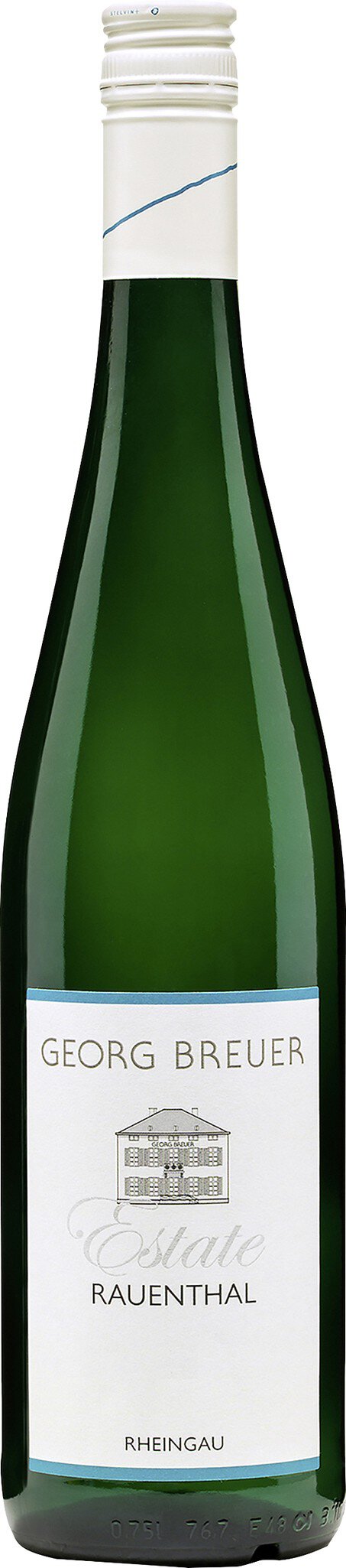
The Georg Breuer winery dates back to 1880, when Bernhard Scholl and Albert Hillebrand founded a wine shop with an attached estate in Rüdesheim am Rhein. At the beginning of the 20th century, the Breuer family acquired the business; Peter Breuer handed it over to his son Georg (1910–1982), to whom the winery owes its name, which is still valid today. Georg expanded exports and opened up new markets in Europe. His sons Heinrich and Bernhard significantly expanded the vineyard area in the 1980s — through acquisitions and the takeover of the Nonnenberg monopoly in Rauenthal, the estate grew to 40 hectares in Rüdesheim, Rauenthal, and Lorch.
Bernhard Breuer shaped an entire era of German Riesling: he was a co-initiator of the Charta association, which campaigned for dry Rheingau Rieslings, and a staunch advocate of a geologically based site classification. After his sudden death in 2004, his daughter Theresa, supported by her uncle Heinrich, operations manager Hermann Schmoranz, and cellar master Markus Lundén, took over the management — and leads the winery today in the fourth generation.
40 hectares of steep slopes, consistent self-restraint
Today, the winery manages 40 hectares, 65 percent of which are steep slopes — distributed across Rüdesheim (25.5 ha), Rauenthal (6.5 ha), and Lorch (8 ha). With 86 percent Riesling, the vineyard area is clearly focused on one variety; alongside it are Pinot Noir, Pinot Gris, and Pinot Blanc, as well as the historical varieties Orléans and Heunisch. The latter is considered a proven parent of Riesling and is vinified as a single varietal in the Rüdesheimer Berg Rottland — a small cultural project with a strong connection to regional wine history.
Cultivation is characterized by low average yields of around 40 hectoliters per hectare; elaborate canopy management and seasonal cover cropping are part of the fixed artisanal program. The winery is certified according to the Fair 'n Green standard. Theresa Breuer has placed even greater focus on vineyard work — for her, the feel for the natural balance of ripeness, acidity, and aromatics begins in the vineyard, not in the cellar.
Clear Rieslings from primary rock sites — and an artist label since 1980
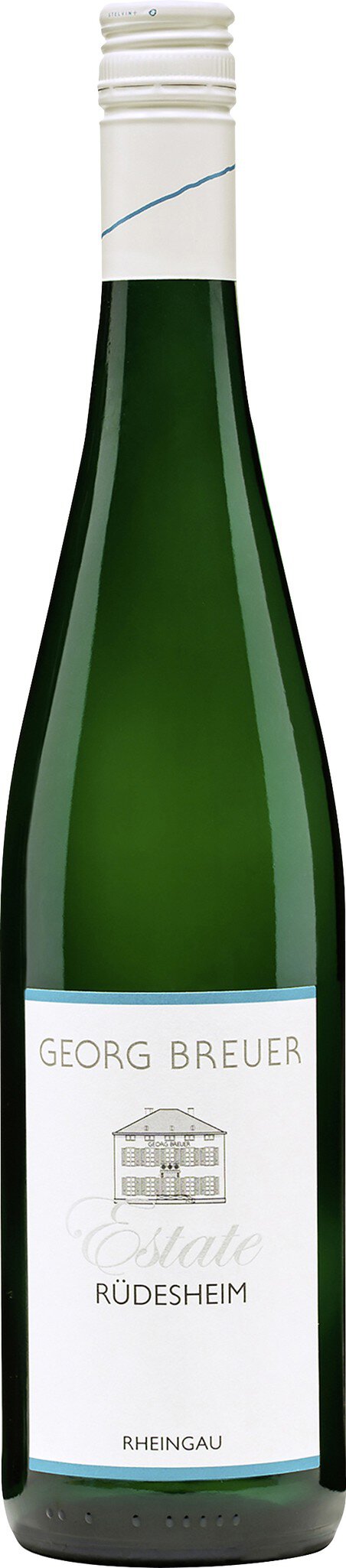
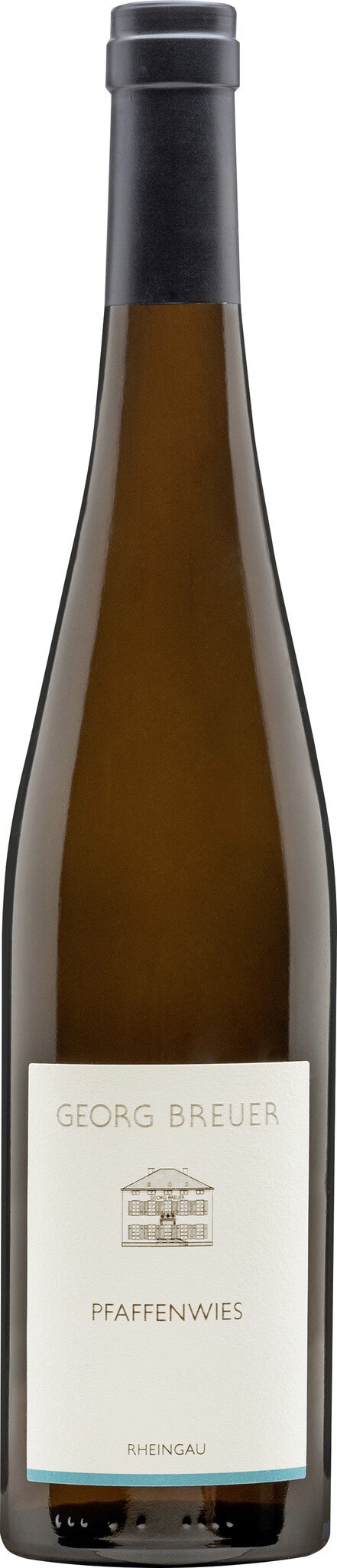
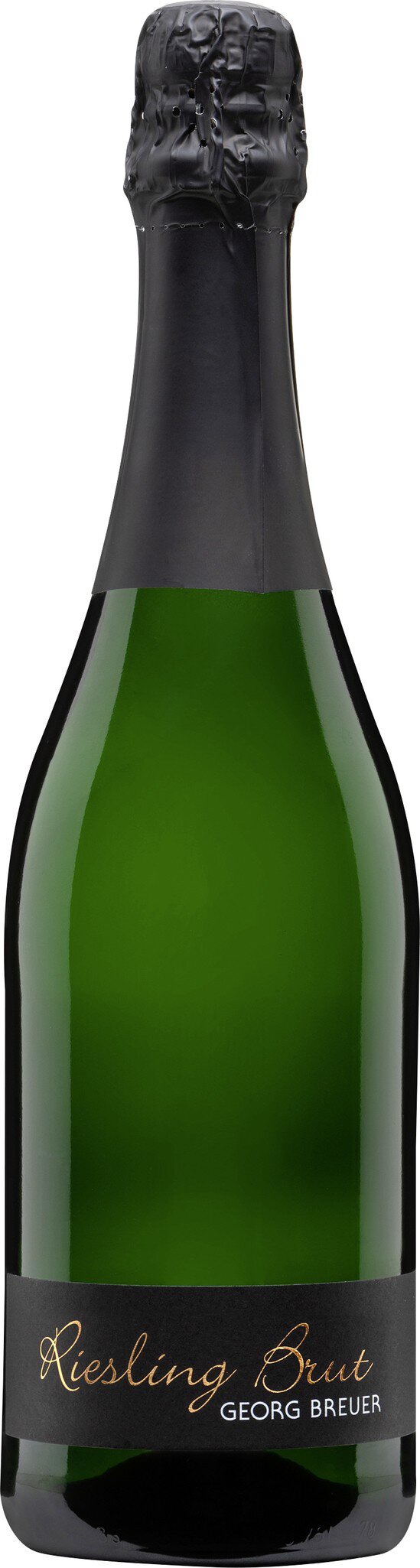
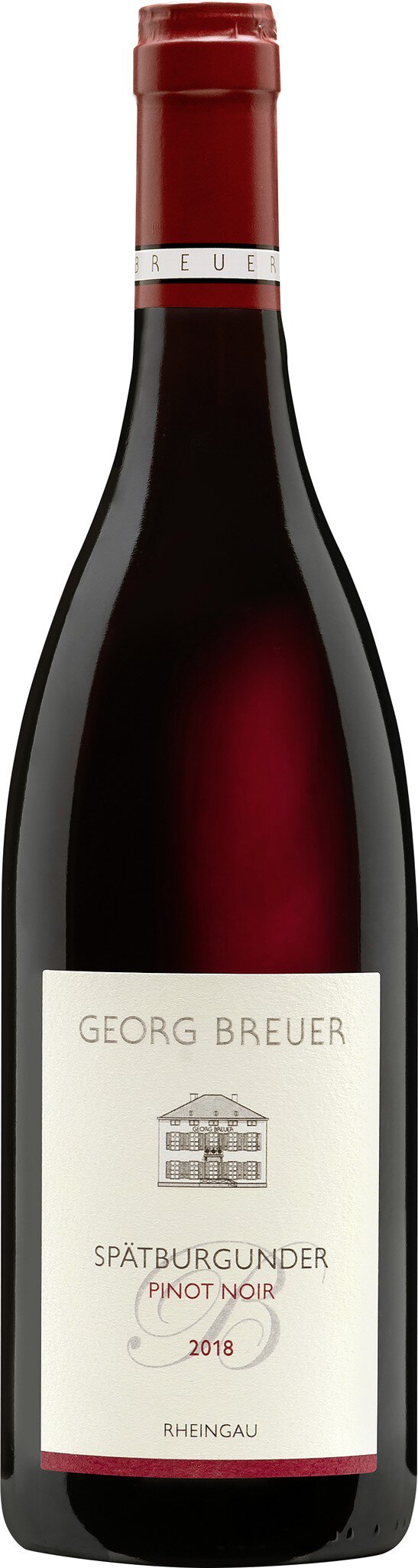
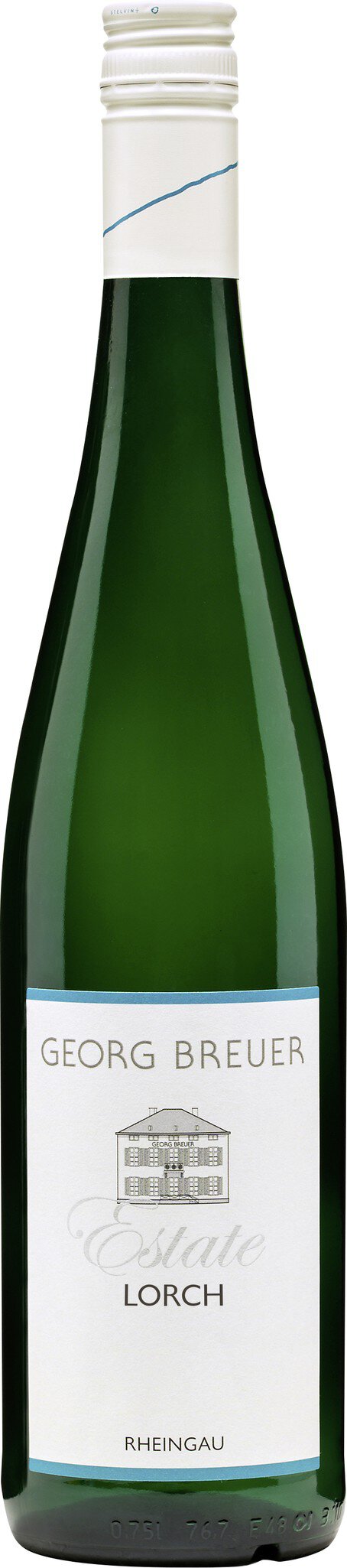
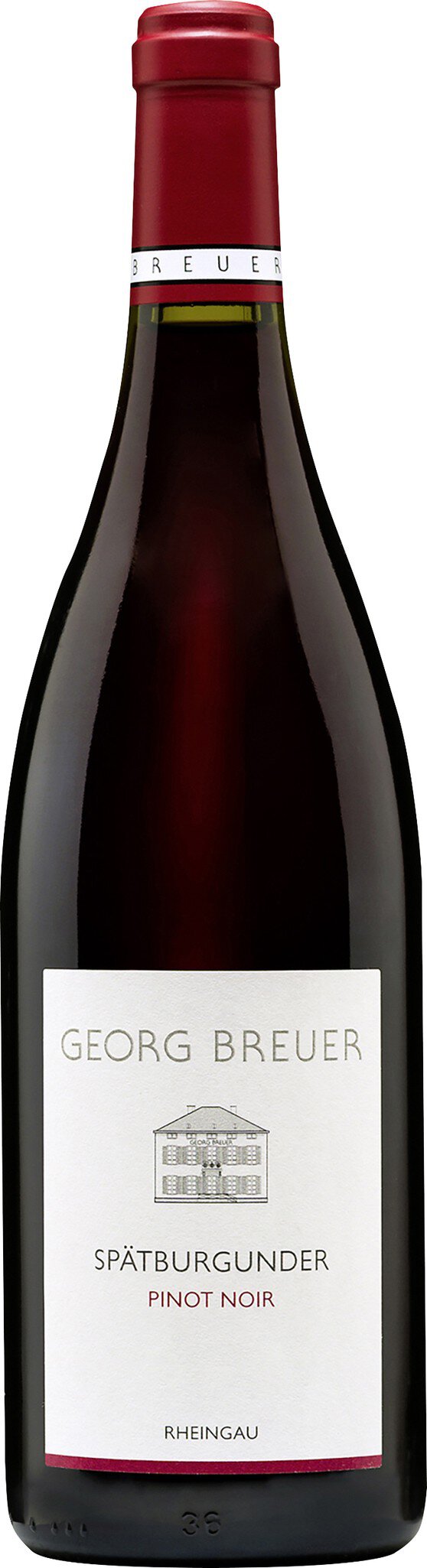
The estate's top sites — Berg Schlossberg, Berg Rottland, and Berg Roseneck in Rüdesheim, as well as the Rauenthaler Nonnenberg as a sole-ownership monopoly and the Pfaffenwies in Lorch — deliver Rieslings with a distinct site character. The Berg Schlossberg stands for slate and quartz-containing soils, which give the wine its dense minerality and characteristic aroma profile: mandarin peel, red apple, white peach, lean and straightforward on the palate. The estate wines from Rüdesheim and Lorch show a cooler, citrusy-smoky side; the Sauvage offers dry Riesling with steel-tank freshness, while Pinot cuvées and sparkling wines made using traditional bottle fermentation complement the range.
Since the 1980 vintage, a contemporary artist has designed the label for the Berg Schlossberg each year — now the 45th artist label in a row. The connection between art and wine is not a marketing concept here, but an attitude cultivated for decades: the Schlossberg gets a new face every year that interprets its character — and makes the bottle a collector's edition.