From Bédarrides to the world elite: 130 years of Brunier on the La Crau
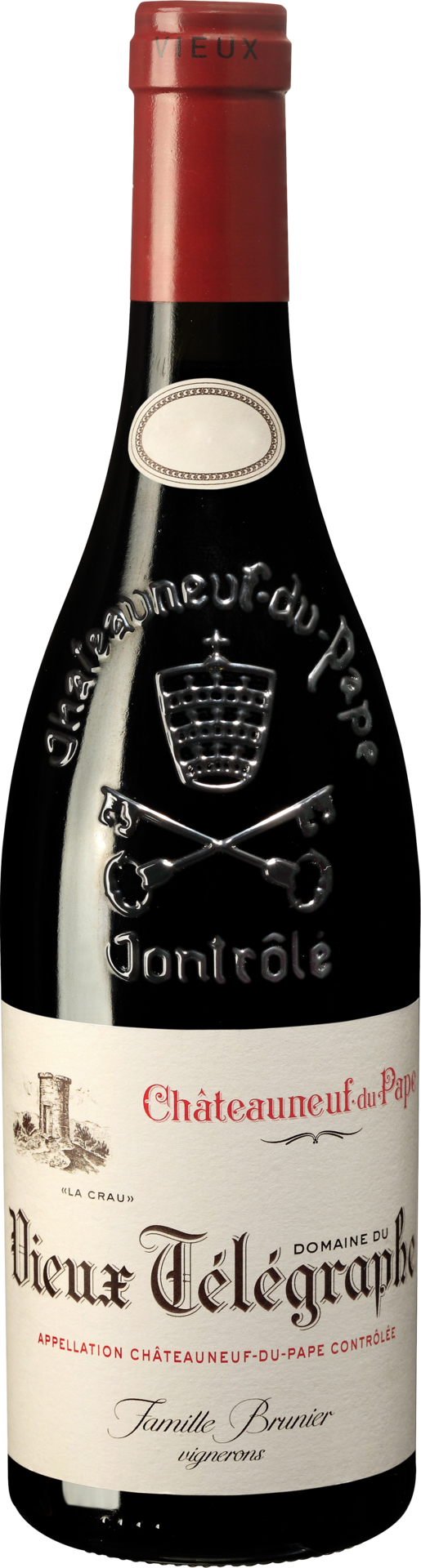
The history of Vignobles Brunier begins in 1891 in Bédarrides, one of the five villages that make up the Châteauneuf-du-Pape appellation. Henri Brunier left his son Hippolyte some plots on the Plateau de la Crau — soil that most people at the time considered barely cultivable: too stony, too inhospitable, too exposed. Hippolyte planted the first vines there and thus laid the foundation for one of the most highly regarded estates in the southern Rhône Valley today. The estate owes the name Vieux Télégraphe to the signal tower that the engineer Claude Chappe built in 1821 exactly on this plateau — an optical telegraph network that connected the south of France with Paris.
Over the generations, the winery grew cautiously. Frédéric and Daniel Brunier took over the management at the beginning of the 1980s and expanded the business in a targeted manner: in 1986, Domaine La Roquète was added within the Châteauneuf-du-Pape appellation, and in 1998, together with the American importer Kermit Lynch, they acquired a 25-hectare share of Domaine Les Pallières in Gigondas. Since 2015 and 2016, the next generation has been actively involved: Nicolas, son of Frédéric, and Édouard, son of Daniel, now carry the responsibility for the vineyard and cellar together with their fathers — six generations of Brunier on the same terrain.
Galets roulés, Mistral and minimal intervention
The heart of all Brunier wines is the Plateau de la Crau: a flat high plateau at around 120 meters, the surface of which is covered by large, round pebbles — the eponymous galets roulés. Beneath this lies red clay over limestone at a depth of about 1.20 meters, which retains moisture and ensures the vines have access to water even in dry summers. The southern exposure and the constant Mistral keep disease pressure low and ensure concentrated, healthy grapes.
The Bruniers work with a greatly reduced use of pesticides, traditional soil cultivation by plow, and organic fertilization. In the cellar, manual work dominates: hand-picking, multiple sorting in the vineyard and in the cellar, fermentation with indigenous yeasts in stainless steel containers, and maturation in large wooden barrels (foudres). The vinification cellar, modernized in 2011, works entirely according to the gravity principle — pumps that could stress the harvested grapes are consistently avoided. Bottling is neither fined nor filtered.
Grenache precision and a range with a clear signature
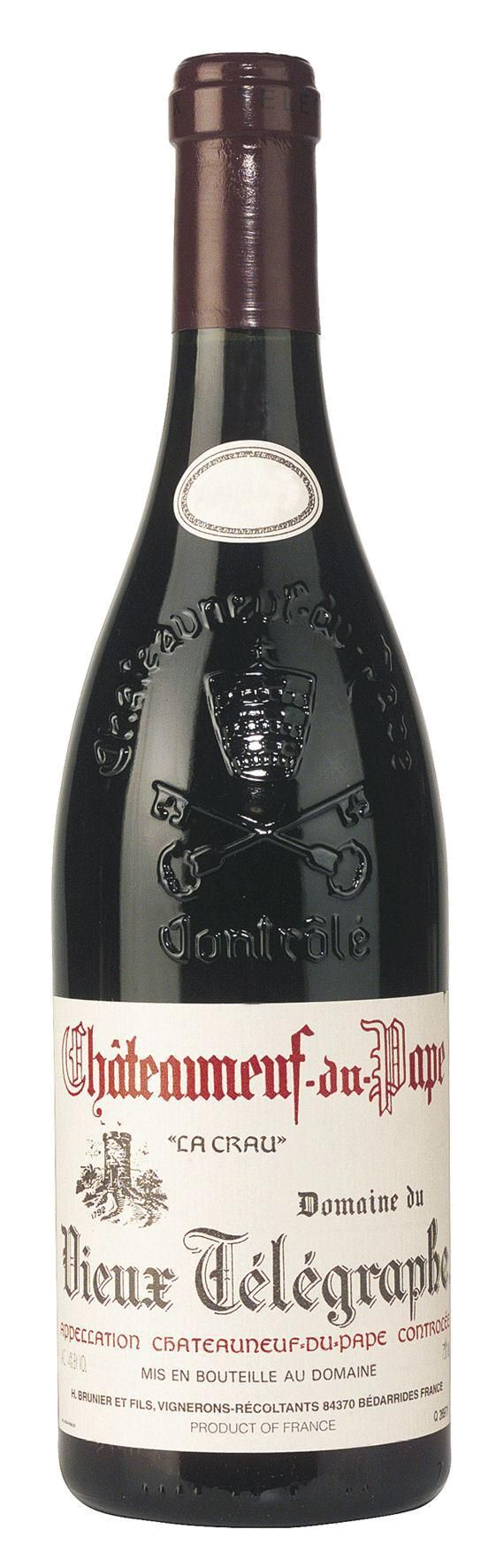
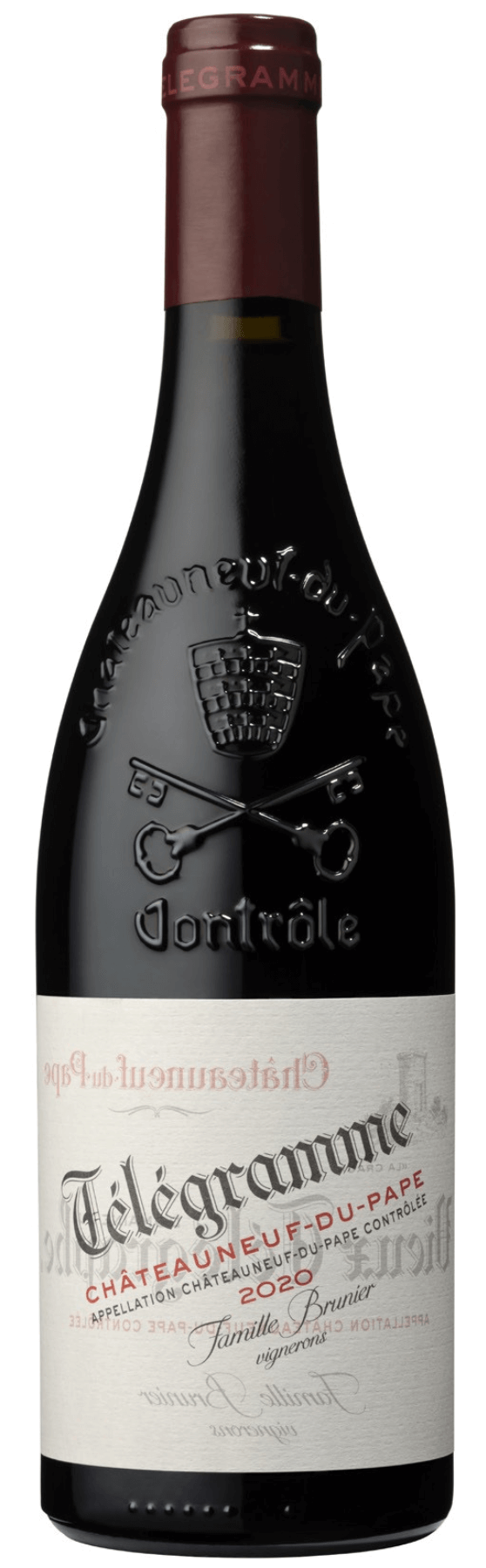
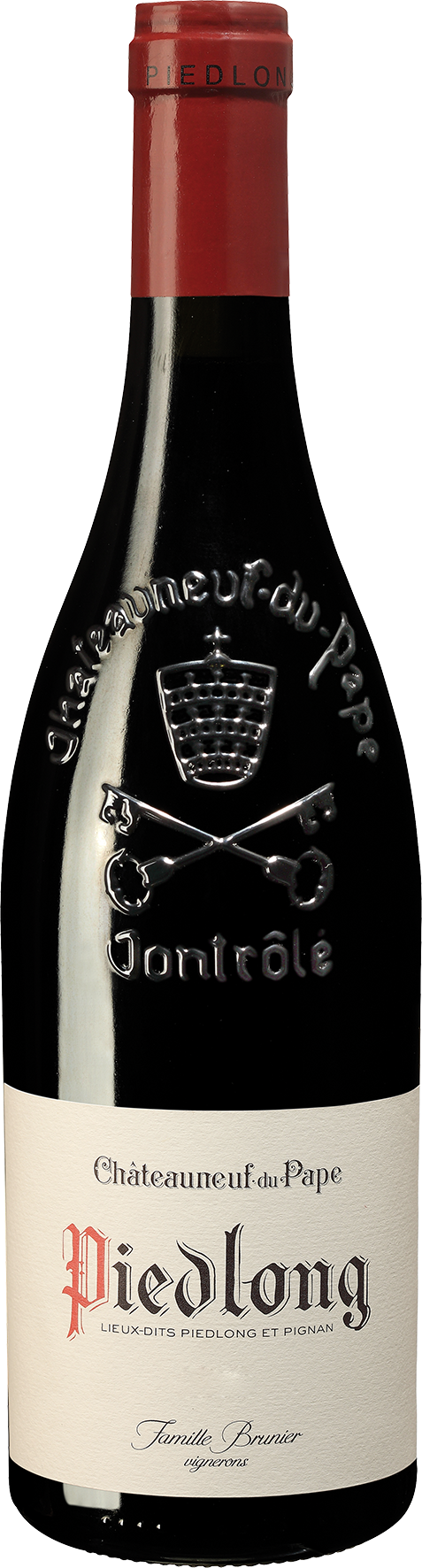
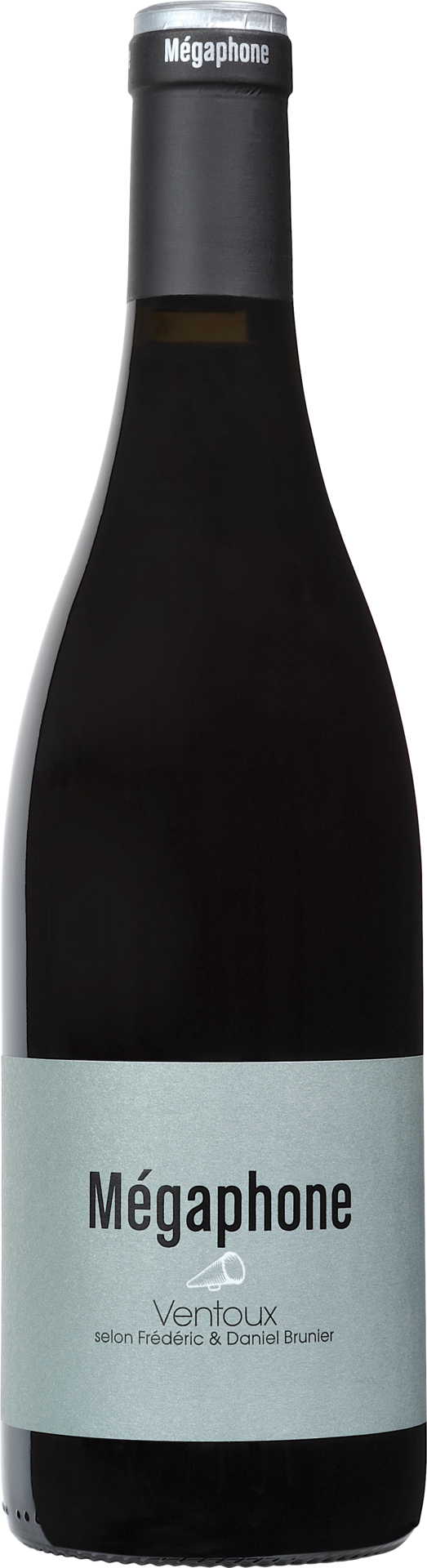
At the center of the range is Vieux Télégraphe La Crau, a Grenache-based red wine cuvée (usually around 65%), supplemented by Mourvèdre, Syrah, and Cinsault — exclusively from the oldest vines of the Crau plots, matured for 20 months in large foudres. The style for which the Bruniers are known is not the blockbuster school of the southern Rhône Valley, but the opposite: precision, salty minerality, spicy depth, long finish. The Télégramme (first harvest 2002) shows the same signature in a more accessible way, with younger vine material from the appellation. Clos La Roquète Blanc and Vieux Télégraphe Blanc stand for the white side of the house — Clairette, Roussanne, and other Rhône varieties on the same pebble soil. Les Pallières stands for Gigondas, and Mégaphone for the foothills of the Mont Ventoux. All cuvées follow the same principle: The vineyard decides, the cellar accompanies.