
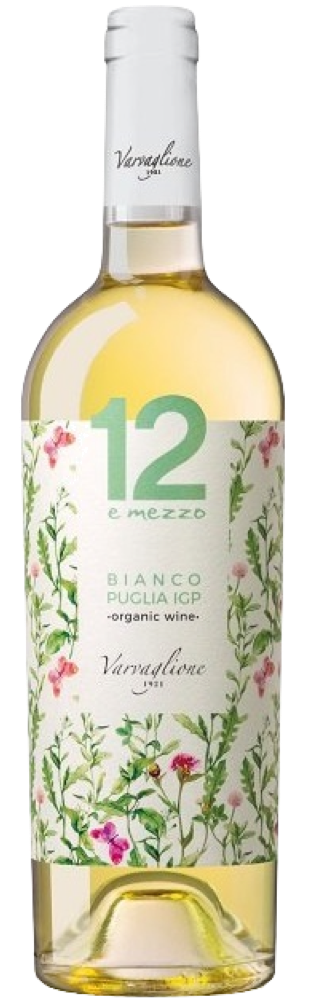
Varvaglione 12 and mezzo Bianco Biologico Puglia IGP

Varvaglione 12 and mezzo Bianco Biologico Puglia IGP
A fresh white wine from Apulia that combines the lightness of the South with organically produced care — uncomplicated, but not without character.
Varvaglione 1921 is a family-run winery from Leporano in the province of Taranto, with over 100 years of experience. The winery is one of Apulia's established organic producers and is committed to certified organic farming methods without synthetic pesticides.
In the glass, the Bianco displays a pale straw yellow color with greenish reflections. The nose offers aromas of white blossoms, lemon zest, and a hint of peach. On the palate, it is light-bodied and juicy, with lively acidity and a short, clean, and fresh finish.
Served at 10–12 °C , it pairs well with grilled seafood, light pasta dishes with zucchini or ricotta, or simply on a summer evening on the terrace. Drink now — not a wine for aging.
Nutritional values per 100 ml
Legal & trade information
Review this product
Log in to review this product.

The Varvaglione family winery is located near the Ionian coast, overlooking the Gulf of Taranto and the city of the same name, also known as "the city of two seas," which is bordered by the Ionian Sea along its coast and the inland Mare Piccolo. The soils on which the vines grow are diverse, but predominantly calcareous clay with fossils and iron oxides, which give the soil its characteristic reddish hue. The iron present in the soil aids drainage and prevents stagnation after rainfall, making this red soil among the most suitable for wine production.
Leporano (Taranto)varvaglione.com
More from Varvaglione 1921

Berlin Wine Trophy 2023 oder 2024
Awarded by Berlin Wine Trophy
Luca Maroni Bewertung
Awarded by Luca Maroni
Berlin Wine Trophy 2019 – Gold
Awarded by Berlin Wine Trophy (DMW)
Berliner Wein Trophy
Awarded by Berlin Wine Trophy
Gambero Rosso 3 Bicchieri 2024 (für Jahrgang 2020)
Awarded by Gambero Rosso
Japan Women's Wine Awards 2017
Awarded by Japan Women's Wine Awards


Only Good News!
Promise!
Only Good News!
Promise!
Similar products
Wine Enthusiast 2024
Awarded by Wine Enthusiast
Sauvignon Blanc Trophy DE 2025
Awarded by Falstaff
Gilbert & Gaillard 2023
Awarded by Gilbert & Gaillard
Weinzeche-Punkte 2025
Awarded by Weinzeche GmbH