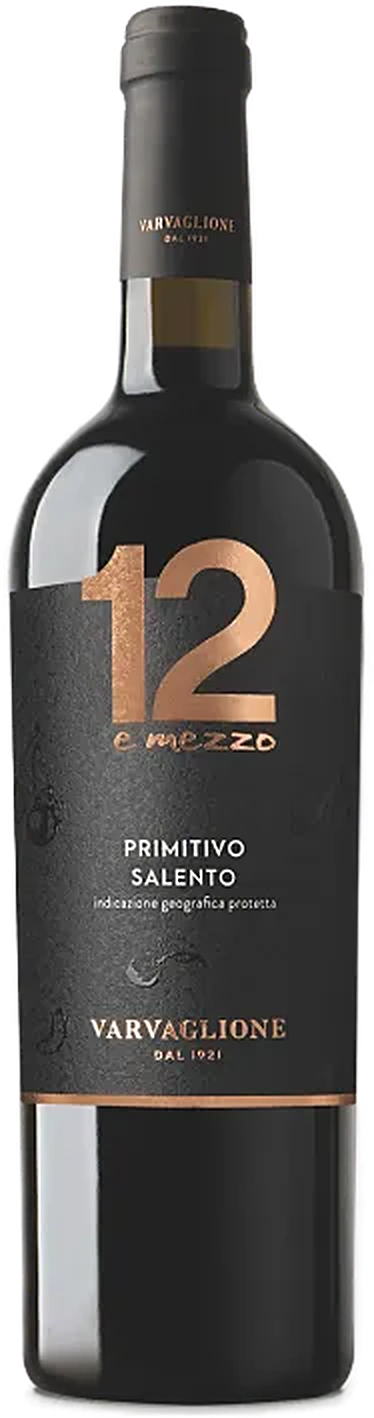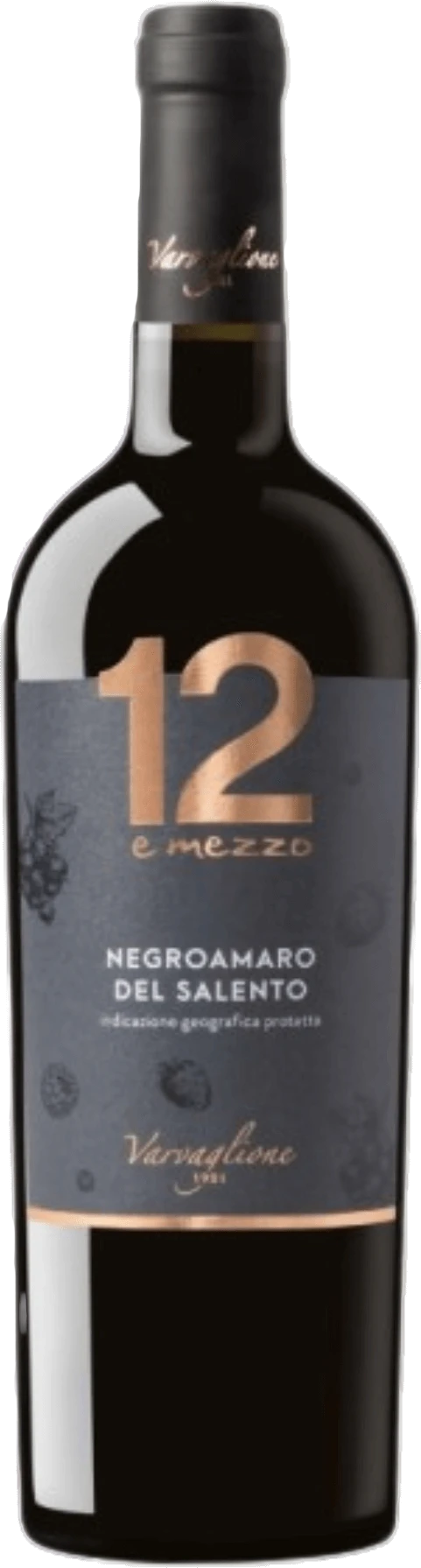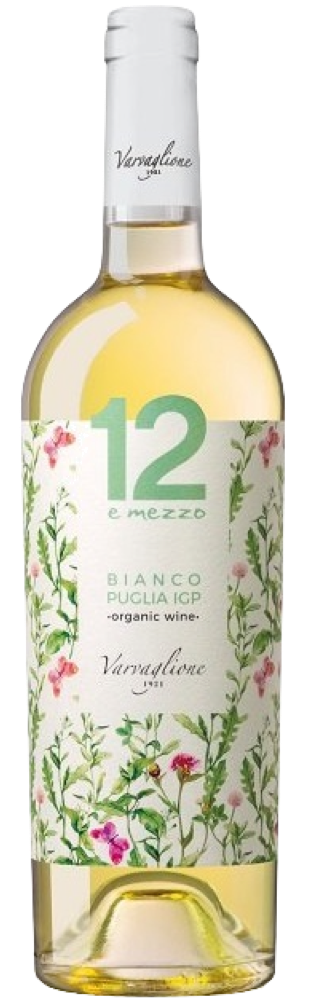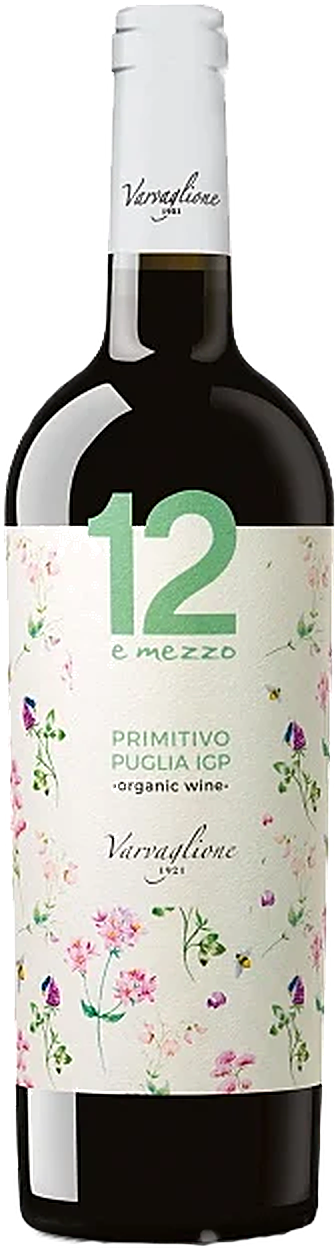










































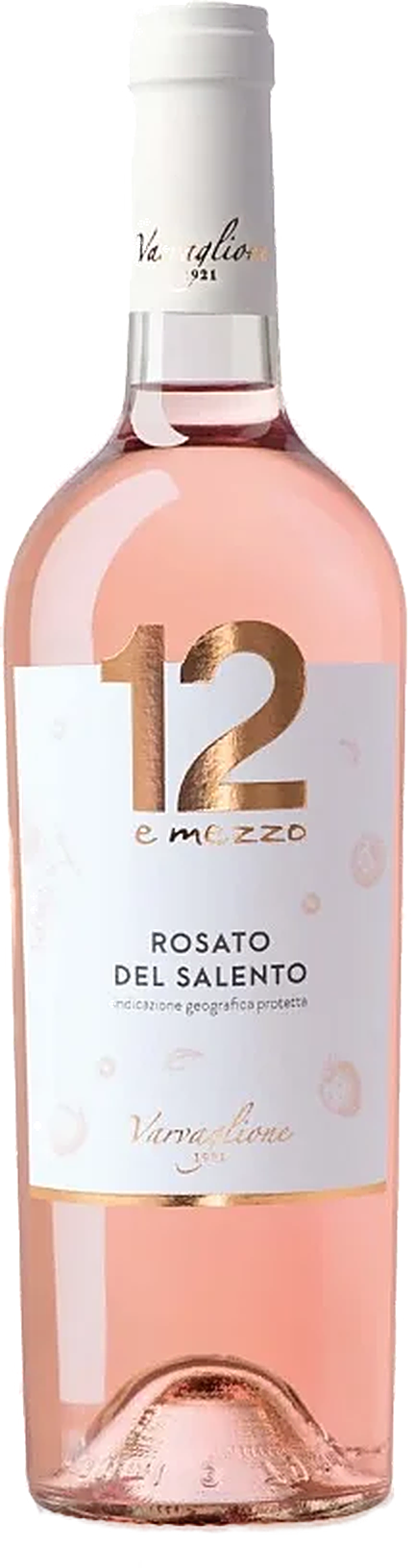
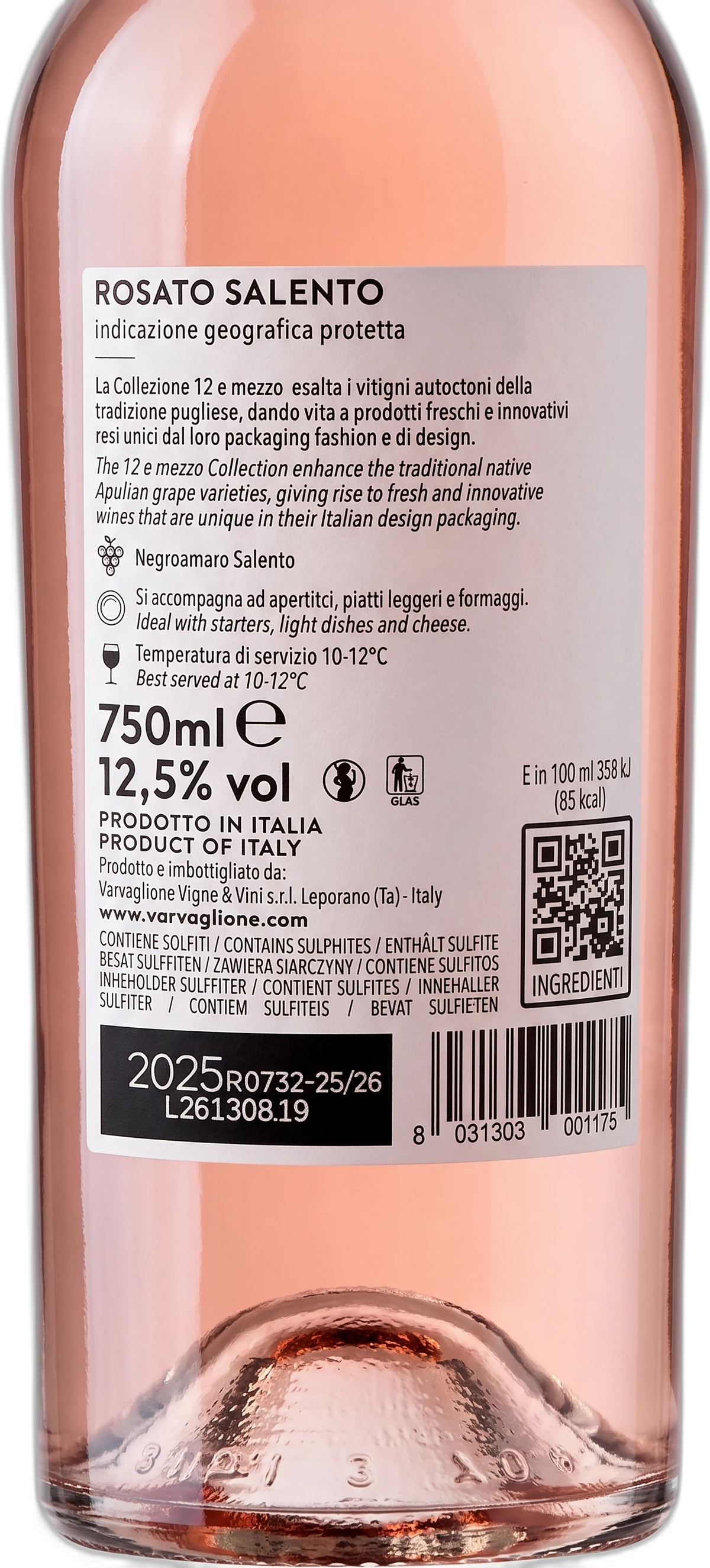

Varvaglione 12 and mezzo Rosato del Salento IGP

Salmon pink, strawberry, raspberry – fresh Salento rosé for antipasti and summer evenings.

Sale price7,80 €10,40 €/l 0,75 l

In stockDelivery in 1-2 working days
Dirk WascherSenior Wine Consultant How would you like to reach Dirk?
  • Free shipping from 99 €
  • 14-day right of withdrawal, return without giving a reason
Earn 8 points for every purchase of this product.
Sale price7,80 €10,40 €/l

Varvaglione 12 and mezzo Rosato del Salento IGP

A light rosé from Puglia's hot south – the 12 e mezzo (named after its alcohol content of 12.5% vol.) shows what Southern Italy can do in the glass: fresh, fruit-forward, uncomplicatedly drinkable.

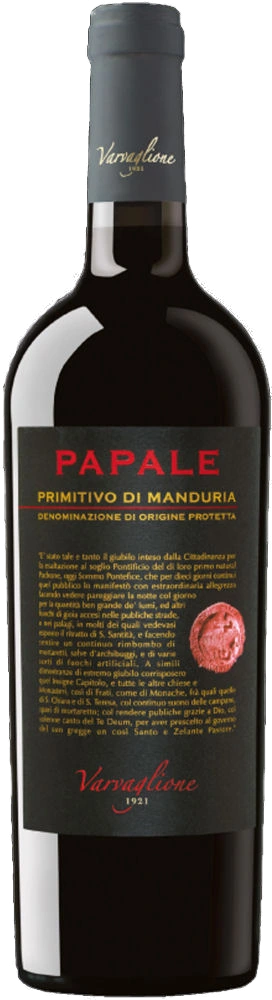
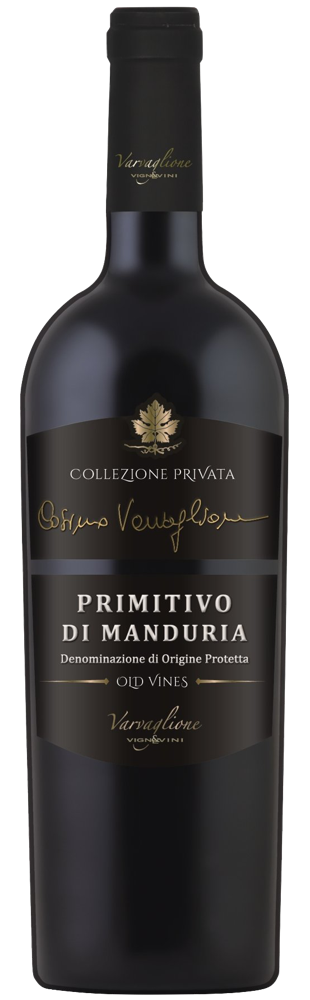
The Varvaglione winery was founded in 1921 in Leporano, Taranto province, and has been in family hands for over 100 years. The vineyards are located in Salento, the peninsula in the extreme south of Puglia, where intense sun and sandy soils produce fully ripe grapes.

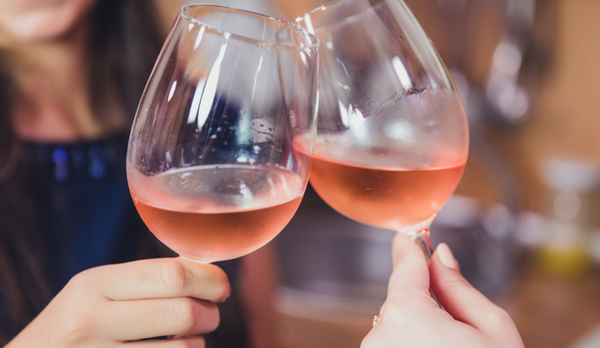
In the glass, a clear salmon pink. The nose shows strawberry and raspberry, complemented by a hint of white blossoms. On the palate, lightweight with mild fruit sweetness and crisp freshness – a rosé that doesn't make you tired.

  • Temperature: 8–10 °C
  • Food: Antipasti, grilled vegetables, light pasta, seafood, or solo as a summer aperitif
Grape variety Negroamaro
Origin Salento, Italy
Taste Semi-dry
Alcohol 12,5 % Vol.
Serving temp. 6–8 °C
Volume 0,75 l
Country of origin Italy
Region Salento
Grape variety Negroamaro
Wine color Rosé Wine
Vintage 2025
Alcohol content 12,5 % Vol.
Taste Semi-dry

In detail

How does the Varvaglione 12 e mezzo Rosato del Salento IGP taste?

It tastes fruity and light, with mild sweetness and an acidity that keeps it fresh. Semi-dry means here: the fruit is at the front without the wine feeling heavy or sticky. This distinguishes it from many bone-dry rosés that rely more on strictness and minerality.

Aging in stainless steel tanks shapes the drinking impression. Without wood, the profile remains clear and straightforward. At 12.5% vol, it has body without heaviness. As a Negroamaro from Salento, it brings the warmth of the south with it, but remains on the light side. Anyone looking for a rosé as an uncomplicated companion is in the right place here.

What does the 12 e mezzo go with?

It goes well with seafood because the mild fruit sweetness picks up on the natural sweetness of shrimp or mussels and the acidity provides freshness. With pasta in a light tomato or vegetable sauce, the same acidity plays against the fruitiness of the sauce. A salad with vinaigrette gets along with it because the wine brings enough residual sweetness to cushion the acidity in the dressing.

It works as an aperitif because it remains light and has no tannins that tire the palate before the meal. This makes it the wine for the terrace, balcony, and long summer evenings. You are also well served with it for an antipasti platter with grilled vegetables.

Similar rosé wines to the 12 e mezzo

All three alternatives are produced dry. They are the better choice if the 12 e mezzo is too fruit-sweet for you.

  • I Tratturi Rosato Salento from Feudi di San Marzano also comes from Salento and is also a Negroamaro, but tastes dry. It fits for everyone who wants to stay with the grape variety and origin.
  • Tramari Rosé Primitivo del Salento comes from the same region, but focuses on Primitivo and is dry. It is the choice if you want to try a different grape variety.
  • Doppio Passo Primitivo Rosato Puglia from Botter is a dry Primitivo from Apulia. It fits for everyone who wants to explore Apulia more broadly.

Quick answers

Reviews

Rate

Very fast delivery. Very good product. Everything

Very fast delivery. Very good product. Everything fine. Gladly again.
Vinoscout customerTranslated from German

The Winery

Varvaglione 1921

The family winery Varvaglione is located not far from the Ionian coast with a view of the Gulf of Taranto and the city of the same name, also known as “the city of the two seas,” which is washed by the Ionian Sea along the coast and by the inland sea “Mare Piccolo.”

The soils on which the vines grow are of different types, but mainly calcareous clay with fossils and iron oxides, which give the soil its typical reddish color.

The iron present in the soil helps with drainage and avoids stagnation after rainfall, and for this reason, the red earth is among the most suitable for wine production.

Leporano (Taranto)varvaglione.com

Alternatives