
Salento · Italy
Varvaglione 1921
Read more Read less
The Varvaglione family winery is located near the Ionian coast, overlooking the Gulf of Taranto and the city of the same name, also known as "the city of two seas," which is bordered by the Ionian Sea along its coast and the inland Mare Piccolo. The soils on which the vines grow are diverse, but predominantly calcareous clay with fossils and iron oxides, which give the soil its characteristic reddish hue. The iron present in the soil aids drainage and prevents stagnation after rainfall, making this red soil among the most suitable for wine production.

Filters
9 products

Berlin Wine Trophy 2023 oder 2024
Awarded by Berlin Wine Trophy
with code PRIMITIVO12, from 100 € order value, up to Sep 07
0,75 l (15,73 €/l)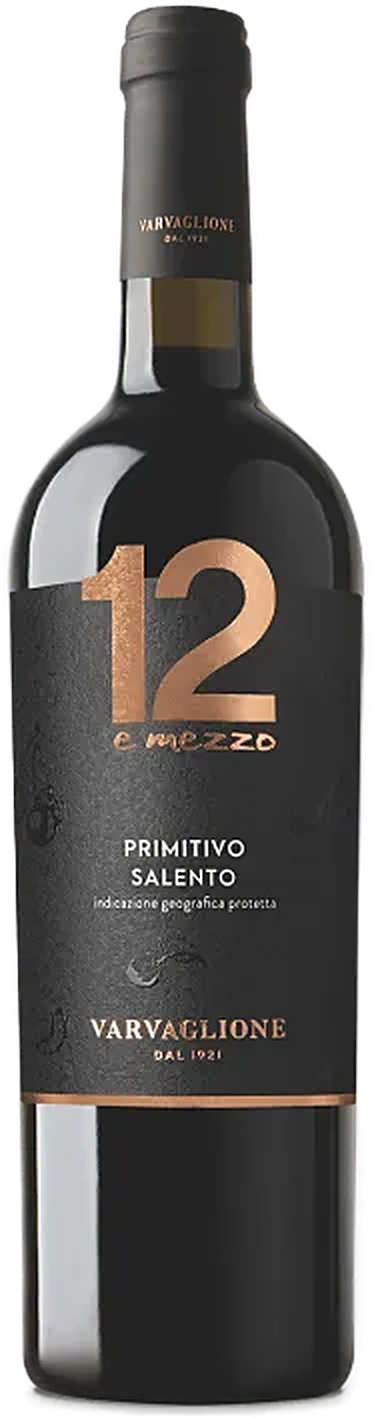
with code PRIMITIVO12, from 100 € order value, up to Sep 07
0,75 l (10,40 €/l)Luca Maroni Bewertung
Awarded by Luca Maroni
with code PRIMITIVO12, from 100 € order value, up to Sep 07
0,75 l (25,07 €/l)Berlin Wine Trophy 2019 – Gold
Awarded by Berlin Wine Trophy (DMW)
Berliner Wein Trophy
Awarded by Berlin Wine Trophy
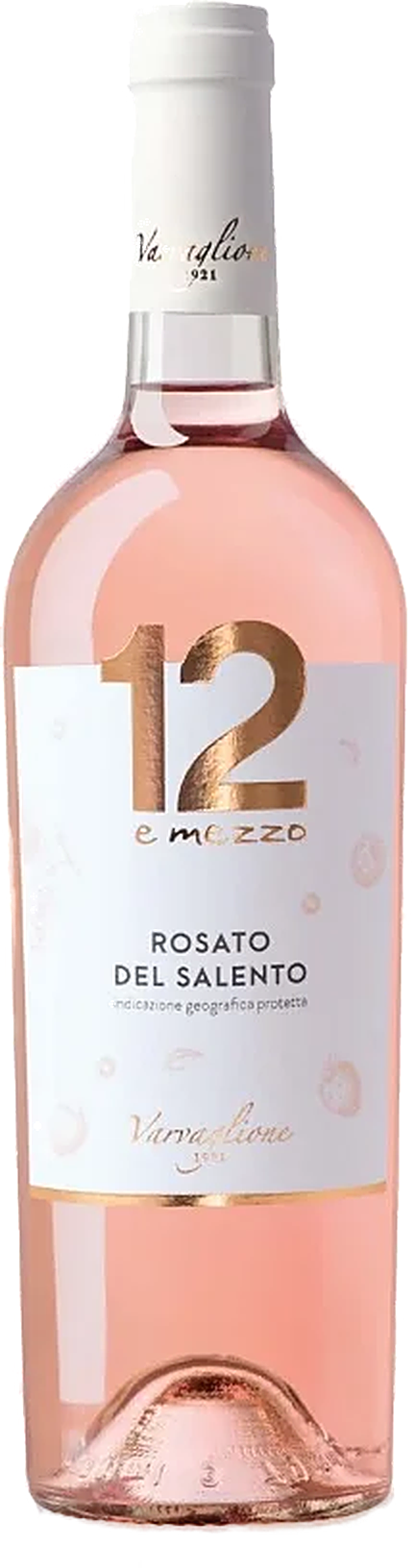
Gambero Rosso 3 Bicchieri 2024 (für Jahrgang 2020)
Awarded by Gambero Rosso
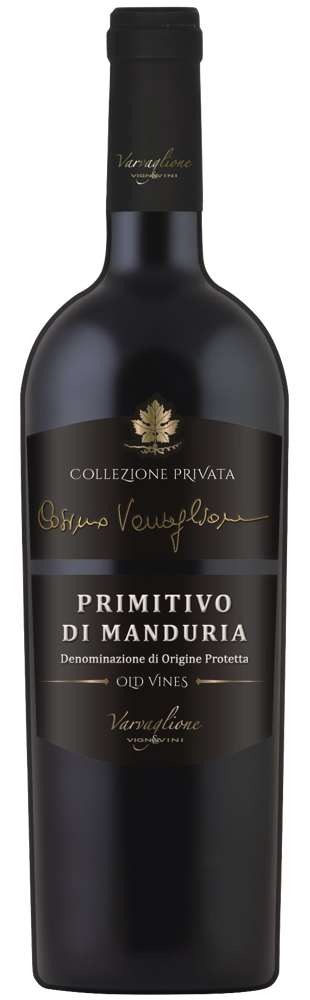
with code PRIMITIVO12, from 100 € order value, up to Sep 07
0,75 l (33,07 €/l)
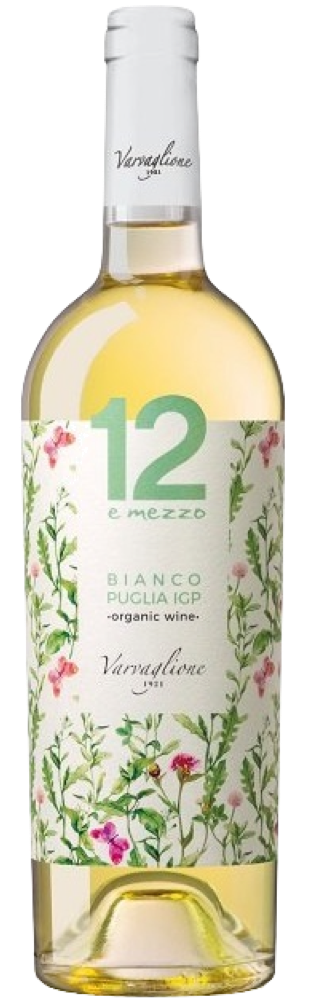
Japan Women's Wine Awards 2017
Awarded by Japan Women's Wine Awards
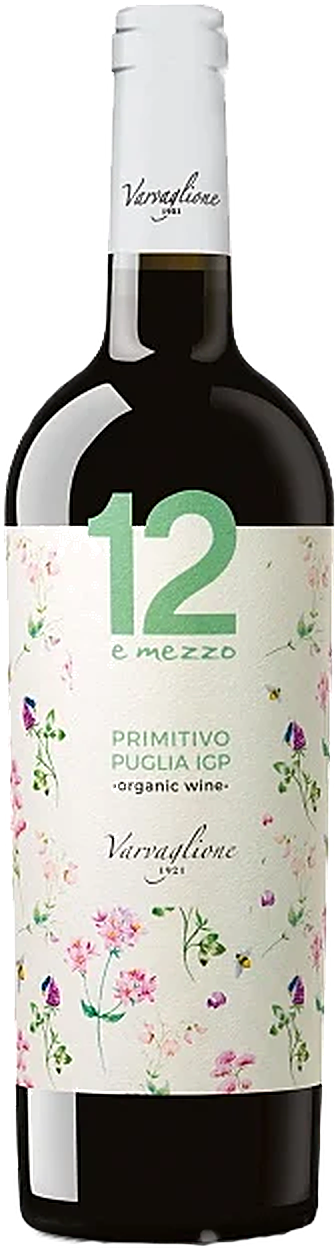
with code PRIMITIVO12, from 100 € order value, up to Sep 07
0,75 l (11,20 €/l)
with code PRIMITIVO12, from 100 € order value, up to Sep 07
About Varvaglione 1921
From Pulsano to the world: four generations, one name
The history of Varvaglione 1921 begins with the generation of Angelo and Filomena Varvaglione, who planted their first vines between Pulsano and Leporano on the Ionian coast south of Taranto. Wine was initially a family affair — shared with neighbors, not intended for trade. After the Second World War, the second generation took the step into the local market and sold vino sfuso, bulk wine that buyers filled into their own containers. The real change came with the third generation: Cosimo Varvaglione consistently oriented the business toward quality at a time when Apulian viticulture was still largely focused on volume. His wife Maria Teresa, a business economist and entrepreneur, pushed for bottling under the brand name Varvaglione 1921 at the beginning of the 2000s — the starting signal for the international breakthrough. Today, Cosimo manages the winery in the fourth generation together with Maria Teresa and their children Marzia, Angelo, and Francesca; Marzia's daughter Carlotta already represents the fifth.
From the first cellar that Angelo Varvaglione built in Leporano, which now serves as a point of sale, the company has grown to three estates: the historic Masseria Pizzariello, the Giardinetto winery, and the newly acquired Casino Nitti in Marina di Lizzano — a 16th-century homestead overlooking the Ionian Sea.
Vineyard, cellar, and responsibility for the Ionian Sea
Around 200 hectares of estate-owned vineyards on the calcareous clay of Salento form the productive base. The reddish soil with its iron oxides drains reliably and protects the roots from waterlogging — a natural prerequisite for concentrated grapes. The grapes are hand-harvested; oenologist Cosimo Varvaglione personally oversees vineyard work, selection, and cellar aging. In the cellar, the team combines state-of-the-art technology — temperature control, precise fermentation tanks — with the vinification traditions of Salento.
Sustainability is not a marketing term, but a lived practice: Varvaglione uses drones for precise inventory management, maintains bee colonies for natural pest control, and works with the University of Bari on soil protection and climate-neutral management. For selected bottles, closures made from recycled marine plastic (Nomacorc Ocean) are used to utilize marine plastic from Southeast Asia. On the newly acquired Casino Nitti site, an experimental "Vigneto della Biodiversità" is being created with over 500 rare and Balkan grape varieties, accompanied by researchers from the University of Milan and the University of Salento. For quality and food safety management, the winery is certified according to ISO 9001, ISO 14001, ISO 22000, and ISO 22005.
Primitivo and Negroamaro — Salento in a bottle
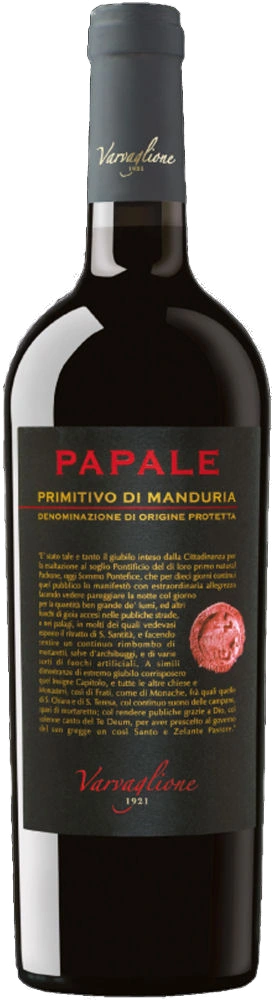
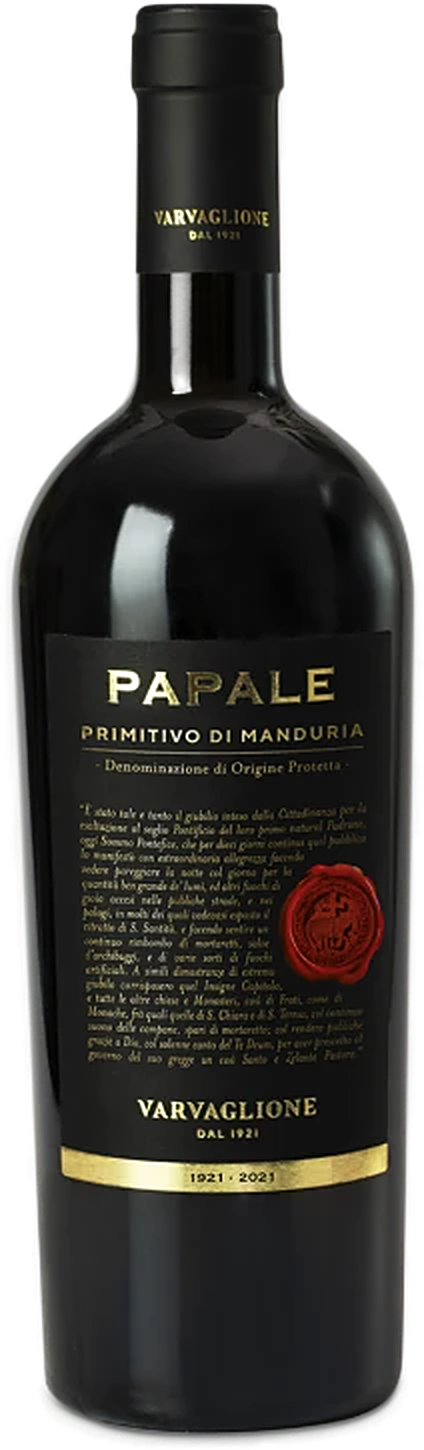
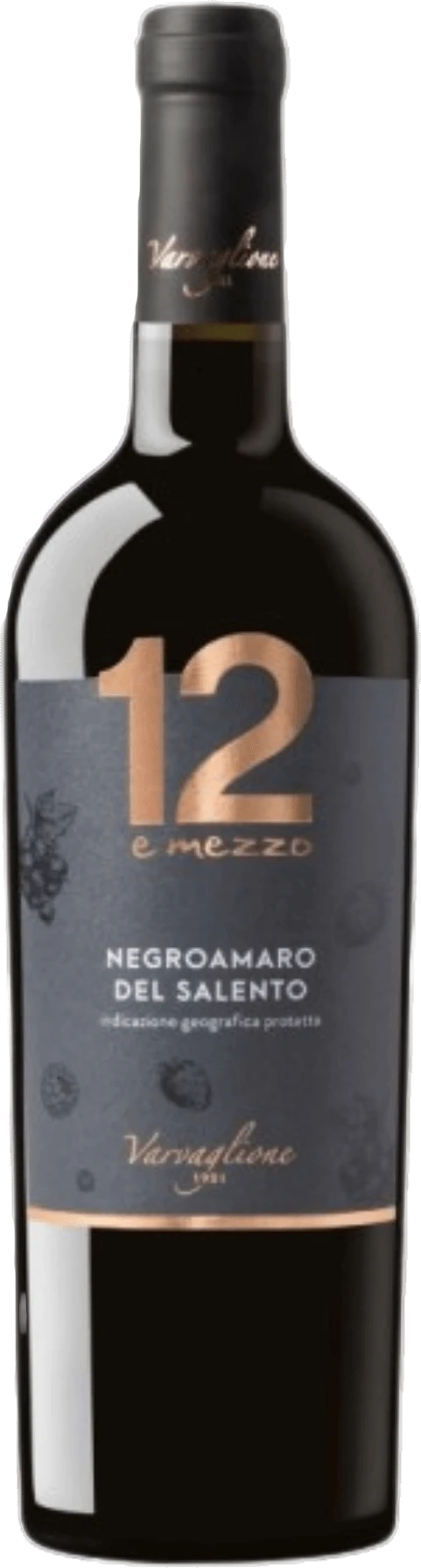
Varvaglione focuses on the indigenous grape varieties of Apulia: Primitivo and Negroamaro form the core, supplemented by Susumaniello, Negroamaro, Malvasia Nera, and Aglianico for the reds, as well as Verdeca, Falanghina, Malvasia Bianca, and Fiano for the whites. The Papale line — named after the historic Contrada Papale, which once belonged to an Apulian pope — stands for the most powerful Primitivo di Manduria cuvées from old vines. The 12 e Mezzo line shows another side: eight wines with exactly 12.5% alcohol, organically certified, accessible in style, and clear in varietal typicity — Primitivo, Negroamaro, Rosato, and Bianco. Each family member has inspired their own wine within this collection. With currently around 4.5 million bottles of annual production, Varvaglione 1921 is one of the largest family-run wineries in Apulia — and one of the fastest-growing in Europe.
Leporano (Taranto)varvaglione.com
Award-winning wines
Berlin Wine Trophy 2023 oder 2024
Awarded by Berlin Wine Trophy
Luca Maroni Bewertung
Awarded by Luca Maroni
Berlin Wine Trophy 2019 – Gold
Awarded by Berlin Wine Trophy (DMW)
Berliner Wein Trophy
Awarded by Berlin Wine Trophy
Gambero Rosso 3 Bicchieri 2024 (für Jahrgang 2020)
Awarded by Gambero Rosso
Japan Women's Wine Awards 2017
Awarded by Japan Women's Wine Awards