From John Riddoch to Treasury Wine Estates: 130 years of Coonawarra
The history of Wynns Coonawarra Estate begins in 1891, when Scottish settler John Riddoch planted the first vines on a narrow strip of iron-red earth in the far southeast of South Australia and, in 1896, erected the striking three-gabled winery building, whose silhouette has adorned every Wynns label ever since. Riddoch's Coonawarra Fruit Colony comprised 800 hectares of Terra Rossa, on which 95,000 vines were planted in the first year. After his death in 1901, the estate fell into decay for decades. The decisive restart was carried out in 1951 by Melbourne wine merchants Samuel and David Wynn: They bought the then-dilapidated Château Comaum, renamed it Wynns Coonawarra Estate, and immediately recognized what distinguishes the region — fruit depth and intensity that come from this soil like no other in Australia. In 1954, they released the Black Label Cabernet Sauvignon, the first commercially labeled Cabernet Sauvignon in Australia. After further changes of ownership — Allied Vintners in 1972, Penfolds/Southcorp in 1985, Foster's in 2005 — the winery joined Treasury Wine Estates in 2011, under whose umbrella it is still managed as an independent brand today.
Terra Rossa, solar power, and vine genetics: Viticulture between tradition and research
Wynns is the largest single vineyard owner in Coonawarra and manages around 500 hectares of the region. The key to the style lies in the soil: Terra Rossa, an iron-rich red clay loam 30 to 50 centimeters deep, lies on porous Miocene limestone. The cool climate, moderated by the Southern Ocean, provides long ripening periods and preserves natural acidity. Over the past two decades, the vineyards have been systematically renewed — new rootstocks, international clones, and selections from the oldest Wynns parcels. Chief winemaker Sue Hodder, who has shaped the winery for decades, summarizes the attitude as follows: “Our winemaking is informed by our heritage and the new knowledge that is unfolding all the time.” On the sustainability side, Wynns is certified by Sustainable Winegrowing Australia, operates a 230 kW solar system at the winery, and focuses on reduced fungicide use. In collaboration with the CSIRO, genetic lines of old Wynns vines are also being used to breed more climate-resilient clones for the future — traditional vineyard management meets Australian science.
Black label, icon Shiraz, and the full spectrum of Coonawarra
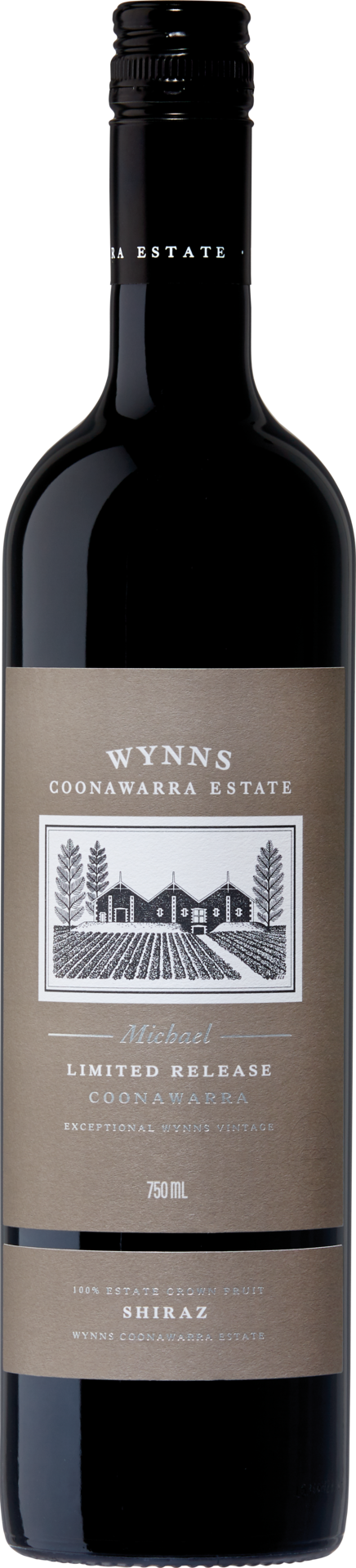
The range spans a clear arc: from the accessible Black Label Cabernet Sauvignon — one of the most collected Australian red wines — to the Riddoch Cabernet Sauvignon, and up to the icon bottlings John Riddoch Cabernet Sauvignon and Michael Shiraz, which are only produced in exceptional vintages from less than one percent of the best grapes. The Michael Shiraz, whose oldest producing vines date back to 1894, shows how deeply Coonawarra is also rooted in Shiraz. Characteristic of Wynns wines are aromas of dark currant and black olives in the Cabernet, cherry, plum, and a fine note of mint in the Shiraz — always embedded in a grippy structure and lively acidity, which is owed to the cool climate. The Coonawarra Chardonnay and The Gables round off the picture with the white side of the appellation. Serving temperature: Red wines at 16–18 °C, Chardonnay at 10–12 °C.