From a historic clubhouse to a modern wine brand
The Beefsteak Club owes its name to a long tradition: in 18th and 19th-century England, private dining clubs existed where the beefsteak was celebrated as a symbol of freedom and joie de vivre. The current brand is based on this idea — it translates the attitude to life of those dining communities into a contemporary wine line, curated and internationally marketed by E.I. Wines Ltd. from London. Not a winery in the classic sense, but a brand with a clear concept: wines from the best growing regions in the world, specifically selected for the table.
The first wines featured Argentine Malbec from Mendoza — a conscious decision, because Malbec and beef are connected by a culinary logic that can hardly be described better than: made for each other. With the success of the Malbec line, the range grew to include Australian Shiraz as well as other grape varieties from Southern Europe and beyond.
Grapes from the right sites, not from a single cellar
The working principle of the Beefsteak Club follows a clear philosophy: no own vineyards, but a consistent location selection. For the Malbec, grapes are sourced from high-altitude selected plots in Mendoza — the altitude slows down ripening, sharpens the fruit, and keeps the acidity lively. The Mighty Malbec, which is also available as a 1.5-liter magnum, is made from grapes from the Uco Valley, fermented in small concrete tanks with subsequent yeast aging — a process that gives the wine texture and depth without overloading it with wood. The Beef & Liberty Malbec in the standard bottling matures for six months in barriques, which integrates the fine tannins of the Malbec without crushing its fruit structure.
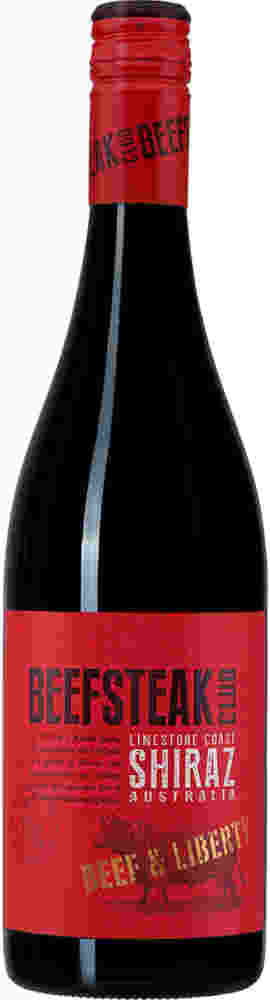
For the Australian line, the Beefsteak Club draws on Shiraz from South Australia — a region where this grape variety has been at home since the 19th century. The Shiraz also matures in wood, which underpins the dark fruit notes with spicy warmth.
Dark, meaty, on point — wines that work on the grill
The Beef & Liberty line is clearly aimed at one goal: wines that stand up to a proper piece of meat. The Malbec shows deep purple in the glass, with plum, dark chocolate, and a quiet floral note on the nose. On the palate, it is juicy and multi-layered, with fine-grained tannins and a long finish — classic Mendoza profile, accessible but not shallow. The Australian Shiraz appears darker: blackcurrant, plum, spicy wood notes from barrel aging, a dense body with soft tannins and an intense finish. Both wines are recommended at 16–18 °C — for ribeye as well as braised lamb rack, strong hard cheeses, or a classic burger from the grill. For those who prefer to drink in company rather than in small quantities: the magnum bottle of the Malbec is built for that.