From civil war exile to modern Rioja: the history of the Forner family
The roots of Marqués de Cáceres go back to 1920, when Enrique Forner's father and grandfather founded Vinícola Forner in Valencia. The Spanish Civil War drove the family into exile in France — which would prove to be a formative detour. Enrique Forner built a new wine career there, opened wineries in the Rhône and Loire valleys, and in 1963 acquired two Grands Crus Classés in the Haut-Médoc: Château Camensac and Château Larose Trintaudon. With this Bordeaux foundation in his luggage, he returned to Spain in 1968 and in 1970 founded the bodega in Cenicero, Rioja Alta, that bears his name today.
The winery owes its name to a noble friend and investor, the Marqués de Cáceres. The first vintage appeared in 1975 — and immediately caused a stir because it stood out significantly from everything that Rioja meant at the time. Cristina Forner has been working in the family business since 1983, and she has been leading it as president since 2007. Under her leadership, the house became a global brand ambassador: today, the wines are exported to over 130 countries.
Bordeaux craftsmanship meets Riojan soil: philosophy and working methods
What Enrique Forner brought to the Rioja in 1970 was revolutionary: strict grape selection, cold fermentation for aroma preservation, maturation in new and semi-new French oak barrels — techniques that his mentor, the Bordeaux pioneer Émile Peynaud, had perfected in the Médoc. With this, he broke with a cellar tradition in which oxidation and excessive wood notes were considered a stylistic feature. In the 1990s, Michel Rolland also advised the bodega and helped to develop the prestige wine Gaudium from old vines in Cenicero.
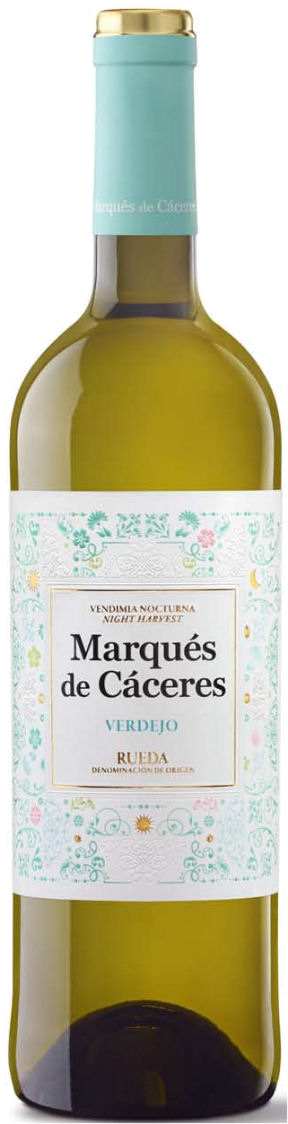
The grapes do not come from their own property, but from long-term contracts with local winemakers around Cenicero — in total, the bodega controls around 1,200 hectares. Hand-picking is not a romantic relic, but a conscious quality principle: every grape is evaluated individually before it enters the cellar. In the cellar, a long maceration follows, after which the cellar masters choose between stainless steel tanks, old, and new wooden barrels depending on the wine. Since 2014, Marqués de Cáceres has also operated its own facility in the DO Rueda with 120 hectares of its own property for the Verdejo line. An ongoing sustainability program has reduced the bodega's water consumption by 37% in five years; solar panels cover part of the energy demand. The Sustainable Wineries for Climate Protection certification confirms this course.
Fruit, finesse, and structure: what distinguishes the wines of Marqués de Cáceres
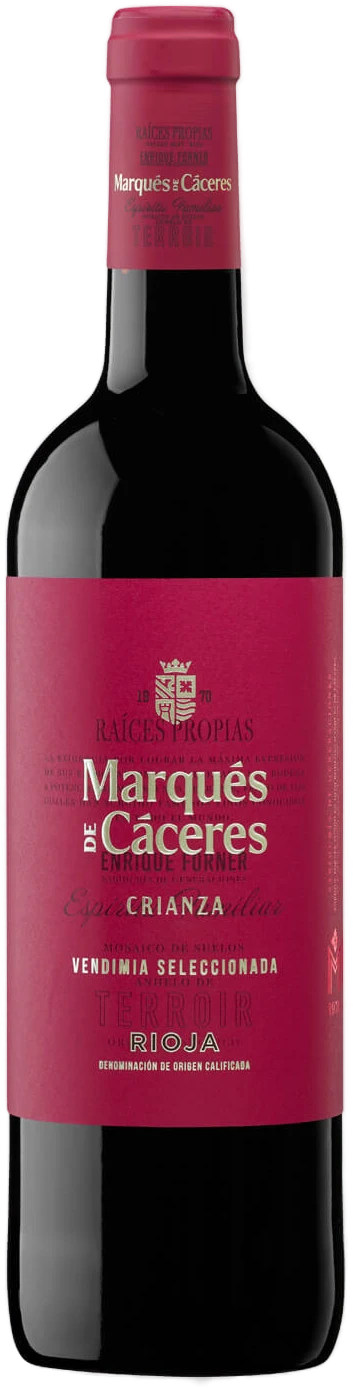
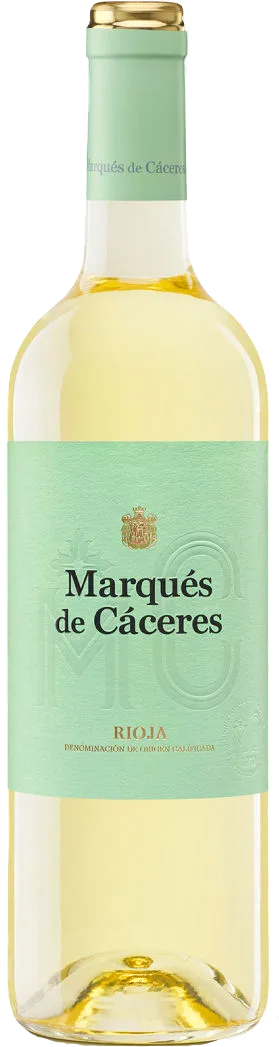
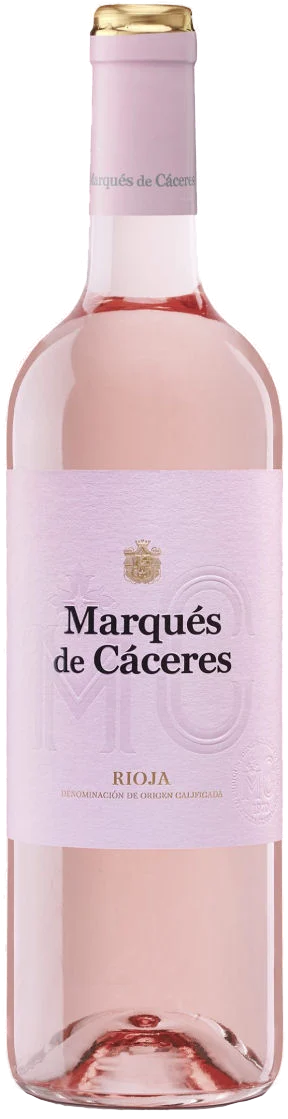
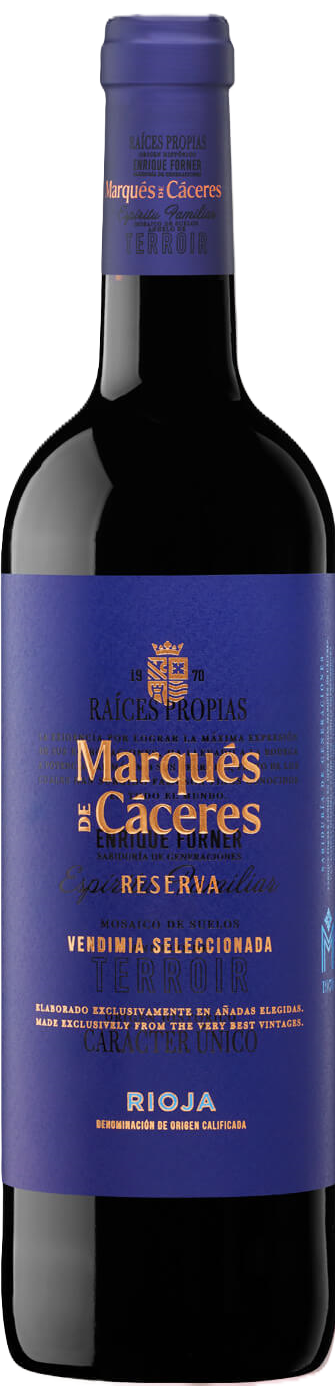
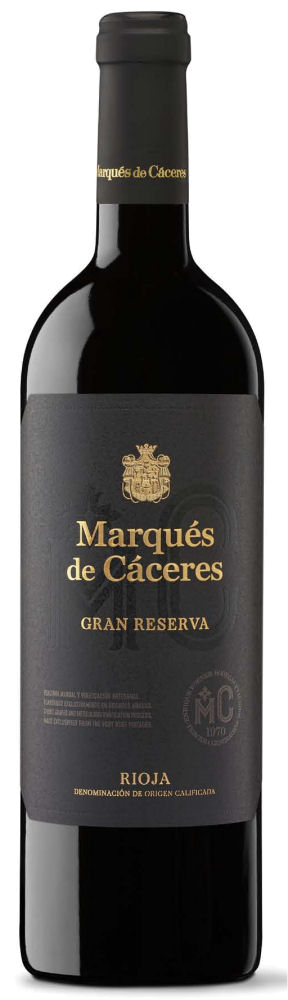
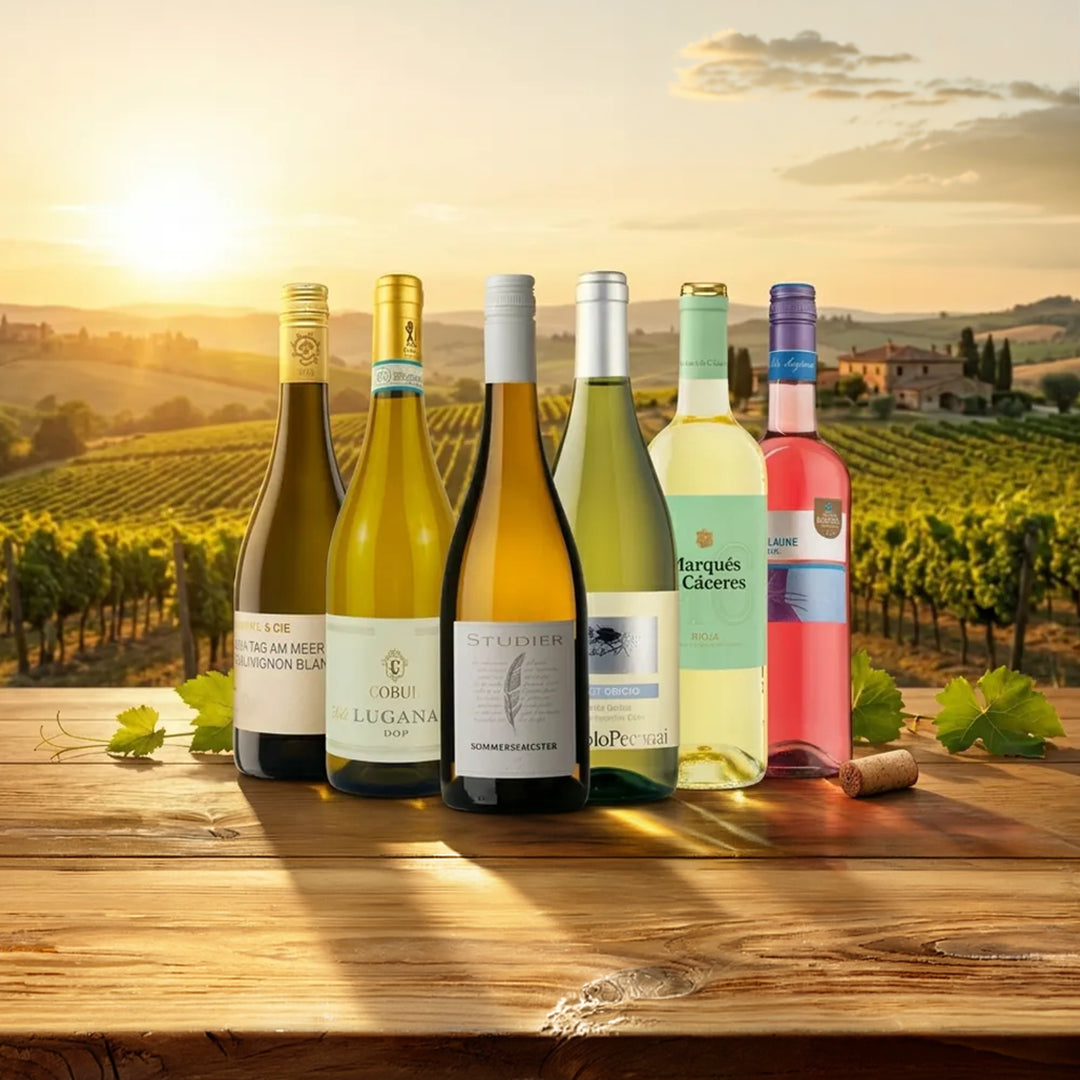
The range spans a wide arc — from fresh white wines made from Viura and Verdejo to a lively rosado and the classic Rioja red wines in the Crianza, Reserva, and Gran Reserva maturity levels. At the center is always Tempranillo, often supplemented by Garnacha and Graciano. The style follows Peynaud's credo: fruit before wood, freshness before heaviness. The red wines show a red berry fruit core, fine tannins, and a spice that arises from the interplay of terroir and carefully dosed barrel aging — no dominant wood that covers the origin. The whites — whether the mineral-citrus-fresh Blanco from Rioja or the taut Verdejo from Rueda — benefit from cold fermentation, which guarantees aromatic precision. Anyone who works their way through the range experiences how consistently a single philosophy can endure for more than five decades.