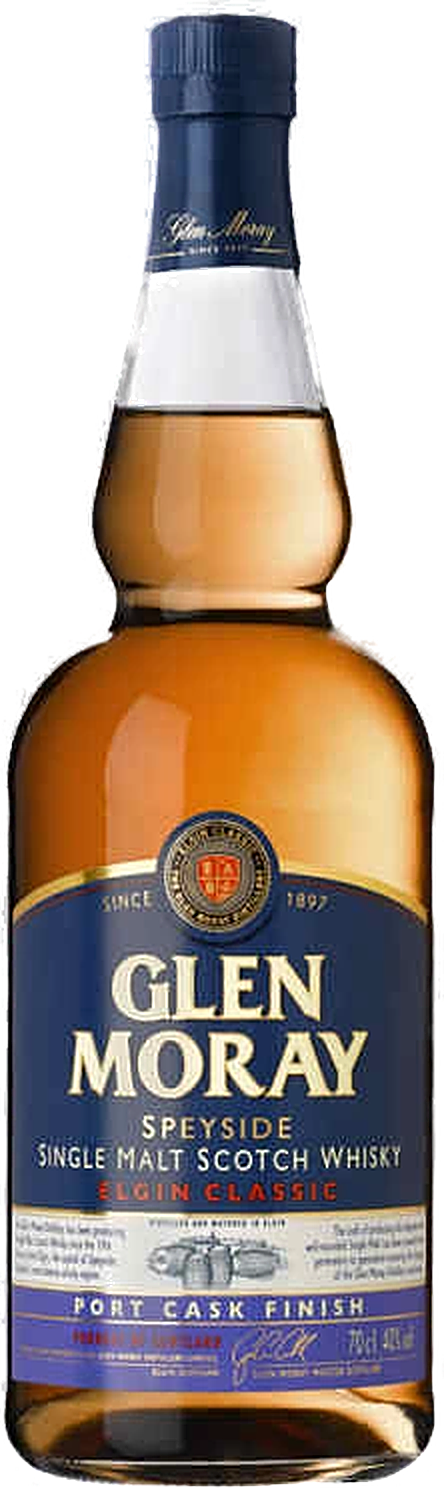
From brewery to distillery — Elgin's quiet Speyside classic
The history of the Glen Moray Distillery begins not with whisky, but with beer. The building on the western outskirts of Elgin served as a brewery from the 1830s before Robert Thorne & Sons converted the operation to whisky in 1897. According to handwritten distillation books that are still kept in the distillery's archive today, the first drop ran from the stills on September 13, 1897. The early years were turbulent: production stops and a standstill around 1910 brought the company to the brink of extinction. In 1920, Macdonald & Muir — the family behind the Glenmorangie distillery — acquired the site, and from 1923 Glen Moray ran continuously again. Renovations in 1958 and an expansion in 1979 formed the current facility; in 2008, the French spirits group La Martiniquaise took over the distillery and has invested in capacity and the range ever since.
Craftsmanship by the river — distillation, wood, and patience
Glen Moray is located in a hollow directly on the River Lossie, whose soft water forms the basis of every batch. The distillery's stills are deliberately kept short and squat, the lyne arm runs flat — a technical decision with consequences for the character: heavier, oilier alcohols reach the distillate more unhindered and lay the foundation for the typically round, full-bodied Speyside style. Maturation takes place predominantly in ex-bourbon barrels made of American oak, which give the new make vanilla and ripe light fruit. Tens of thousands of barrels mature in the traditional dunnage, rack, and pallet warehouses on the distillery grounds, including ex-sherry, port, madeira, chardonnay, cabernet sauvignon, and rum — a wood diversity that is rare in this breadth. The cask finishing program, today with maturation times of two to three years, goes back to a tradition as old as the distillery itself: as early as 1897, new whisky was filled into Marsala and sherry barrels — long before cask finishes were a marketing term. In 1999, Glen Moray was one of the first Scottish distilleries to launch modern wine wood finishes in Chardonnay and Chenin Blanc barrels. Anyone visiting the distillery often encounters tours led by the distillery's own craftsmen — an indication of the small-scale, craft-oriented work culture that has been preserved despite increased production capacity.
Fruit, smoke, and wine wood — the range at a glance
The basic character of Glen Moray is accessible and fruity: light citrus and apple notes, vanilla from the bourbon wood, a soft texture without sharp edges. This foundation supports the entire range — from the classic 12-year-old to the 18-year-old with significantly more depth and spice. The age-stated Heritage line shows how the light, fruity distillate gains complexity over time without losing its Speyside character. Next to it is the Classic Collection with a series of clearly defined cask finishes: Chardonnay, Port, Sherry, and — as a specialty — a Cabernet Sauvignon finish, which is one of the first of its kind in Scottish malt whisky at all. The conclusion is a peated single malt that brings smoke to the fore without completely covering the fruit line typical of Speyside. Whether you start with an accessible Classic expression or continue with a matured vintage — Glen Moray can be read in one direction: honest craftsmanship without detours.