From William Grant to the family dynasty in Dufftown
The history of the Balvenie Distillery begins in 1892, when William Grant acquired a plot of land near the medieval Balvenie Castle in Dufftown — less than five years after he and his sons and daughters had built the neighboring Glenfiddich Distillery with their own hands. On May 1, 1893, the first spirit flowed, distilled in used copper stills that Grant had acquired from Lagavulin on Islay and the now-closed Glen Albyn Distillery in Inverness. What began as a family project is today one of the few remaining companies in Scotch whisky that has remained in family hands continuously since its founding: William Grant & Sons still runs the distillery today without corporate influence. Dufftown was the right place from the start — the water comes from the Robbie Dubh spring, the barley grows in the surrounding Speyside landscape, and the town itself has been breathing whisky craftsmanship for generations.
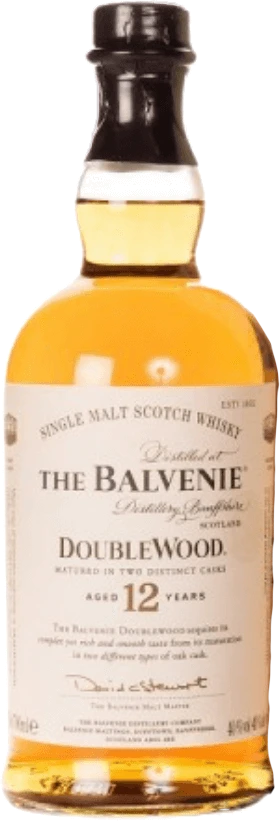
For decades, Balvenie whisky flowed almost exclusively into the Grant house blends. It was not until 1973 that the first official bottling appeared as a single malt — a date that, in retrospect, acts like a quiet turning point. In 1992, for the 100th anniversary, Malt Master David Stewart MBE launched the DoubleWood 12 Years, which made cask finishing a stylistic device in the industry.
Five crafts that hardly any other distillery combines
What distinguishes Balvenie from the vast majority of the more than 120 Scottish distilleries can be named concretely: five traditional crafts are practiced entirely on the distillery grounds — own barley cultivation on the Balvenie Mains Farm, traditional floor malting by hand, an in-house coppersmith for the pot stills, an in-house cooperage, and a dedicated Malt Master. No other major distillery in Speyside operates all five under one roof.
Floor malting — on the malting floor laid out in 1928 — covers around ten percent of the distillery's barley requirements. The barley is turned by hand, a process that has long since been replaced industrially by drum malting plants. In the cooperage, coopers inspect and restore oak casks daily; according to the distillery, about 70 percent of the whisky aroma comes from the cask — a reason why Balvenie has never outsourced this craft. The coppersmith maintains the stills and thus directly influences the character of the distillate. This chain of individual competencies makes the production process both understandable and repeatable.
David C. Stewart MBE joined the distillery in 1962 at the age of 17 and remained Malt Master for over 50 years — a tenure without parallel in the Scotch whisky industry. His successor, Kelsey McKechnie, continues the tradition of artisanal cask selection.
Rich style, clever cask strategy — from DoubleWood to Caribbean Cask
The style of Balvenie whiskies can be described in a few words: rich, honeyed, with a round oak note that never becomes dominant. This is no coincidence, but the result of a precise cask strategy. The DoubleWood 12 Years matures first in American ex-bourbon casks and then moves into Oloroso sherry casks — hence the characteristic combination of vanilla, dried fruits, and mild spice. The Caribbean Cask 14 Years completes its maturation in rum casks: tropical fruit and toffee lie softly over the Speyside base. The range extends from the twelve-year-old entry-level to rare bottlings well beyond the 20-year mark, including Portwood and Madeira finishes as well as single-barrel editions from individual casks. All bottlings are created under the supervision of the Malt Master, who personally checks every cask. Drink neat, at room temperature, or with a few drops of water — this is how the layers unfold most clearly.