From St. Drostan's Well to Speyside icon
The history of today's Aberlour Distillery begins in 1879 — even if the history of distillation at the site itself is older. James Fleming, son of a tenant farmer and later a successful local businessman, chose a building site at the confluence of the Lour Burn and the River Spey in Charlestown of Aberlour. The decisive factor was the spring: Fleming's facility was built directly over St. Drostan's Well, a natural spring that still provides the brewing water today. The motto that Fleming gave his distillery — "Let the deed show" — still defines the distillery today. After a devastating fire in 1898, he had the facility largely rebuilt by Charles Doig, the leading distillery architect in Scotland at the time. In the 20th century, the distillery changed owners several times: from Robert Thorne and Sons to Campbell Distillers, who completed the takeover in 1945. Since the 1970s, Aberlour has belonged to Pernod Ricard and is now managed by Chivas Brothers Ltd.
Slow distillation, patient casks
What distinguishes Aberlour from many neighbors in Speyside is a deliberately slow production process. The distillery operates two wash stills and two spirit stills with broad shoulders and gradually tapering necks — a shape that favors an even, controlled boiling process. The distillation cycle lasts around 7.5 hours, with the actual heart cut running for two full hours. This extended copper contact time drives fruity, floral esters into the new make and lays the foundation for a medium-bodied, fruit-saturated distillate that is made for subsequent maturation in different casks. The brewing water comes from the Lour Burn, which is fed by natural springs in the hills around Ben Rinnes. The raw material is exclusively unpeated Scottish malt.
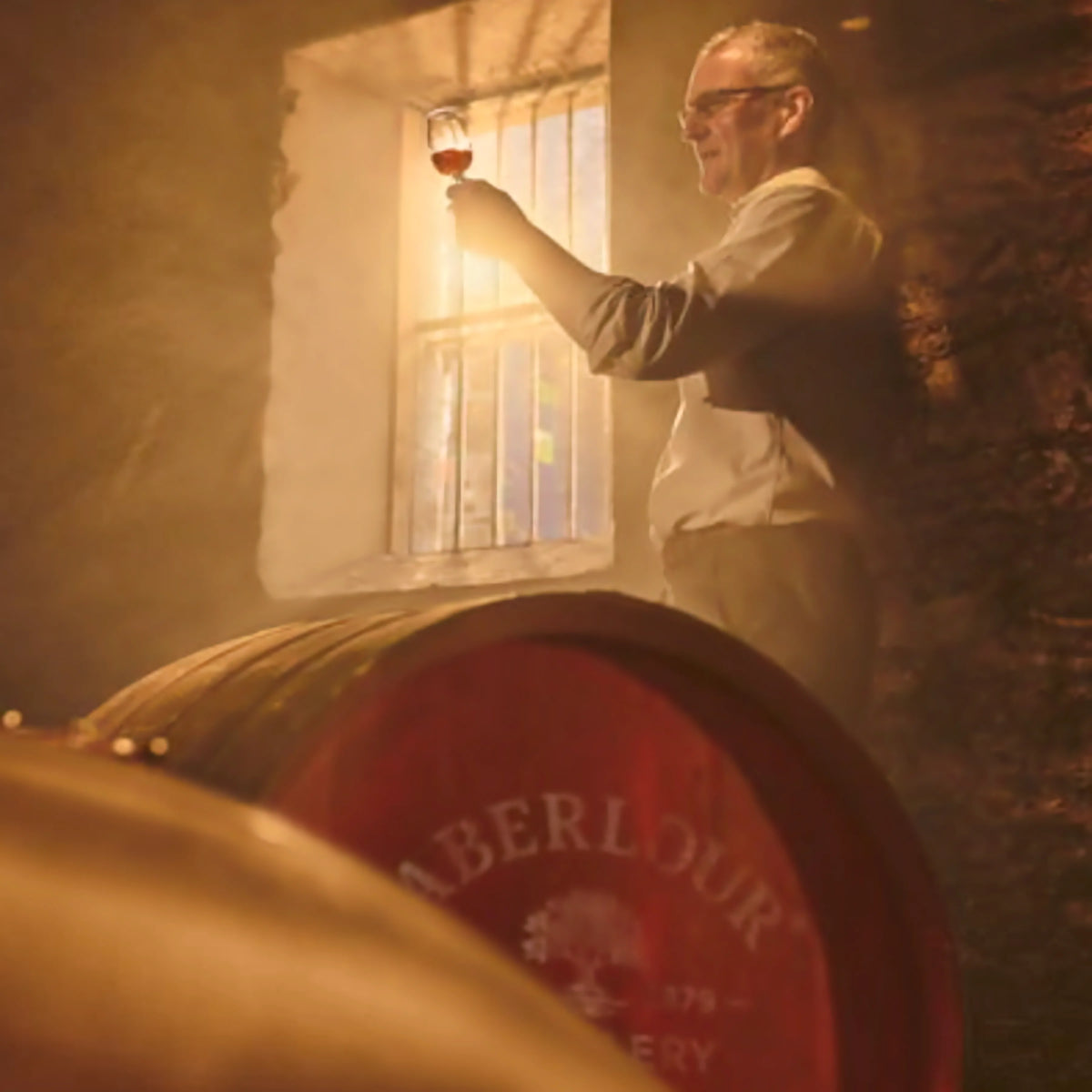
The distillery's true trademark is the so-called double-cask process: the whisky first matures in ex-bourbon casks made of American oak — which brings vanilla and light fruit — and is then transferred to carefully selected Oloroso sherry casks made of Spanish oak. Each cask is individually selected by the Master Blender before the fully matured whisky from both wood types is married in the desired proportion. Between 25 and 50 percent of the annual production matures in sherry casks, the rest in bourbon casks.
A range that relies on sherry power
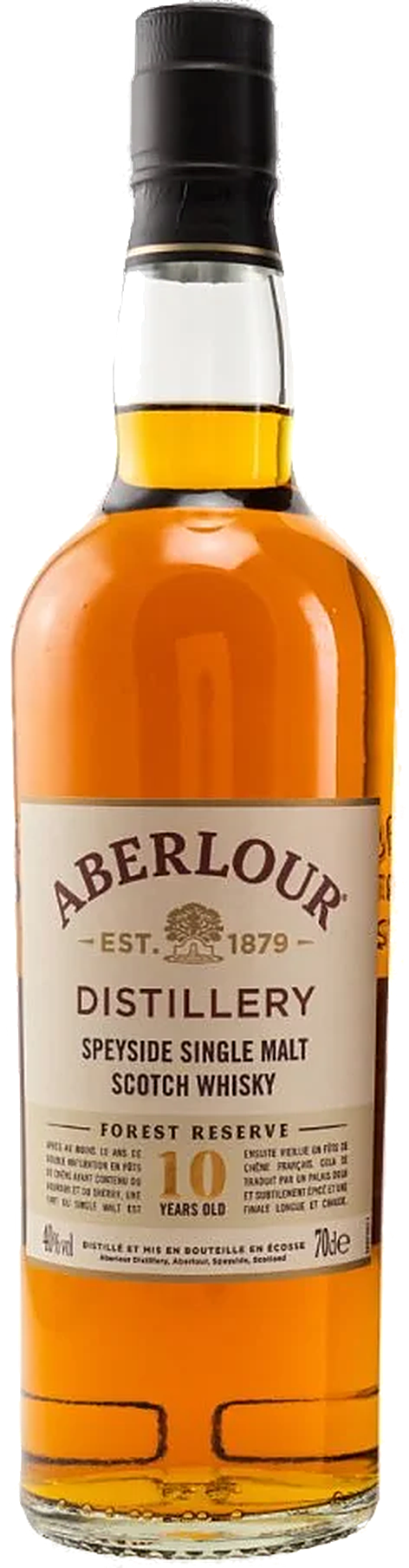
The core range of the Aberlour Distillery consistently revolves around single malts with a clear statement of cask character. The Aberlour 10 Years Forest Reserve is the accessible entry point: with ex-sherry maturation that brings dried fruits and toffee notes to the fore, while not losing the typical Speyside freshness. The Aberlour Double Cask 12 Years shows how the interplay of bourbon and Oloroso sherry wood works: cherry, caramel, and dark chocolate in the opening, a long, slightly peppery finish. Those who want to dive deeper into the Aberlour world will also find older bottlings in the range as well as the flagship A'bunadh — a cask-strength bottling that matures exclusively in Oloroso sherry casks and reinterprets Fleming's original style. Today, Aberlour is one of the best-selling single malt whiskies worldwide and is number one in the category in France — proof that artisanal patience and consistent style are convincing in the long term.