From Swartland child to the benchmark of a generation
David Sadie grew up in the Swartland — in that vast landscape characterized by wheat fields north of Malmesbury, which long stood in the shadow of the Cape region. After a BSc in Viticulture and Oenology at Stellenbosch University — where a rugby injury drove him from sports into the cellar — he worked at Waterford and Rustenberg in South Africa, then in New Zealand and France. Nadia, also a graduate of Stellenbosch University, brought a foundation in soil science and viticulture. The two married in 2009. David pressed his first own wine in 2010 as a side project; since 2013, he has focused exclusively on the joint label. In 2014, they moved to the Paardebosch farm in the Paardeberg, which they have leased long-term and where wine is made and lived today.
Honesty in the vineyard, minimal intervention in the cellar
Nadia is responsible for viticulture on around 16 to 20 leased or contractually used hectares. Her approach: no herbicides, sowing of cover crops, mulching, and regular composting — an organic management that combines elements from ecological and biodynamic concepts without committing to a rigid system. Many of their plots are certified by the Old Vine Project; the bush vine stocks from which the Chenin Blancs originate were partly planted in the early 1980s. In the cellar, the principle applies that David Sadie himself formulates as follows: they try to be simply honest with every vintage. The grapes are pressed whole-bunch, spontaneously fermented, and mature in old neutral wooden barrels as well as proportionally in concrete containers — the goal is texture without wood influence, freshness without cooling technology makeup.
David Sadie is a co-founder of the Swartland Independent Producers collective, which has organized the movement of independent winemakers in the region for years and made it visible to the outside world. The Paardebosch farm is located in the Paardeberg, the granite-dominated heart of the Swartland — a place that directly explains the signature of the wines.
Chenin as a compass, Grenache as the future
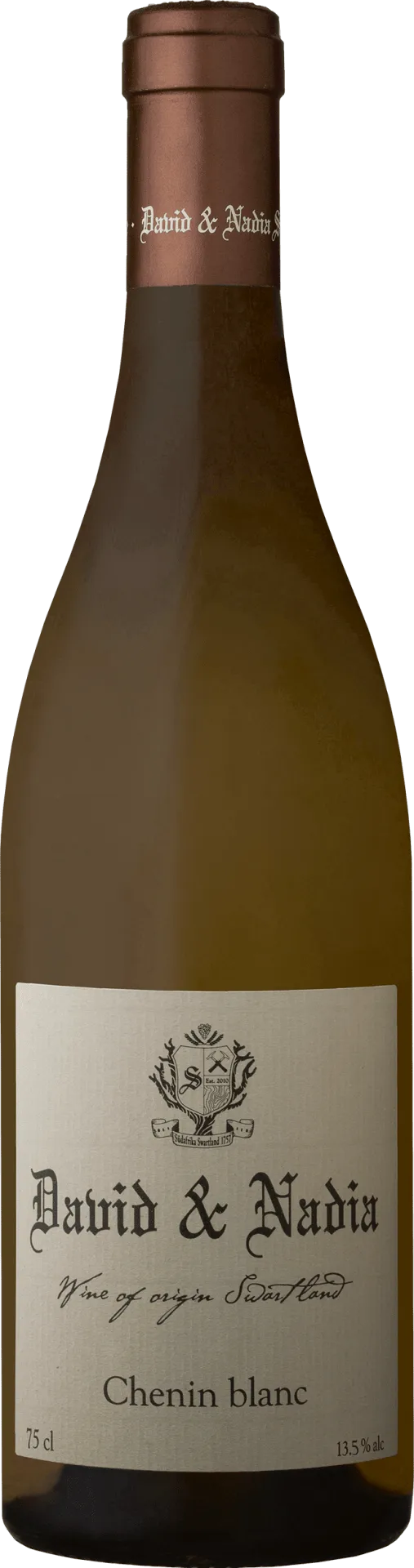
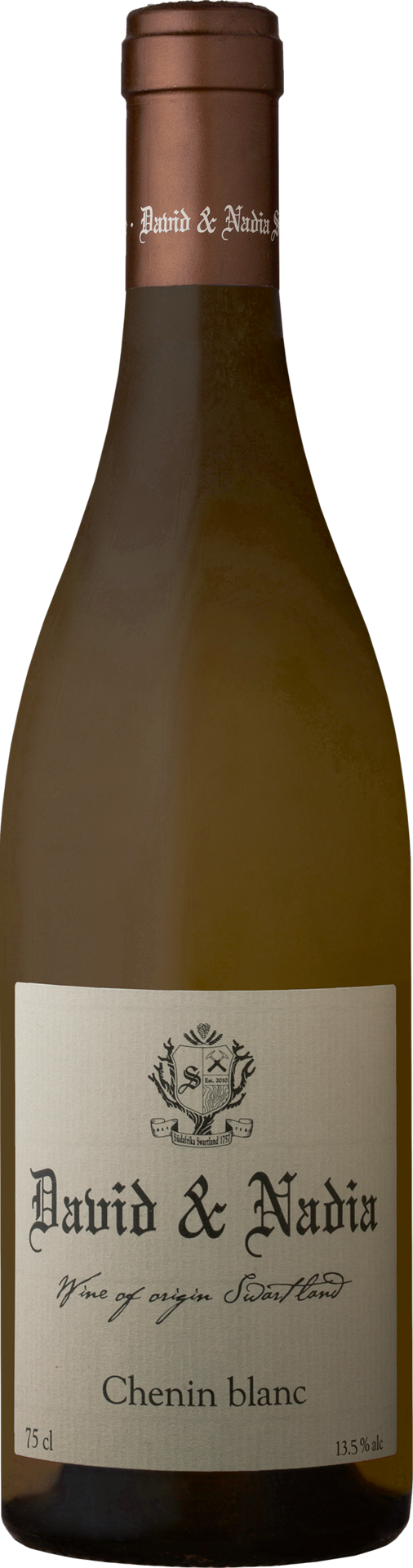
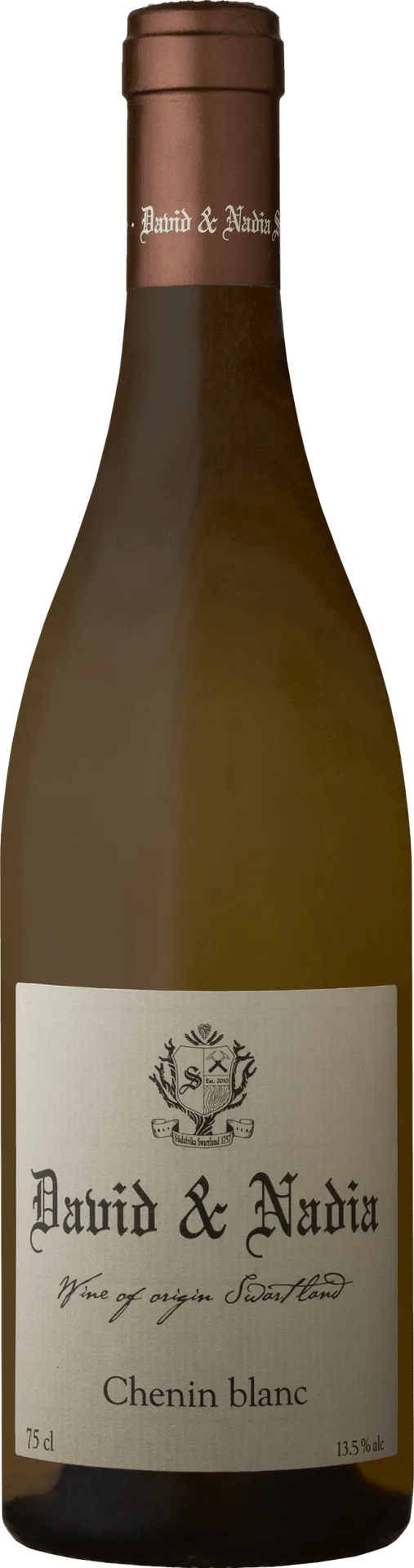
The focus is on Chenin Blanc and Grenache as well as on cuvées that place both grape varieties at the center. The range of Chenin Blancs extends from a Swartland-wide blend of eight plots and nineteen individual pickings to strictly plot-specific bottlings that specifically depict different soil types: granite provides minerality and salinity, slate-rich soils more structure and yellow fruit, clay soils over lime richer, softly woven textures. Aristargos is the white field blend based on Chenin with Mediterranean varieties such as Roussanne, Semillon, and Viognier — matured on the lees in old wood. Elpidios stands as the red counterpart: a Grenache-led blend with Syrah, Cinsault, and Mourvèdre. The wines of David & Nadia were awarded the title Young Winemakers of the Year 2020 by Tim Atkin MW; the single-vineyard Chenins regularly receive top-tier ratings from international critics. Around 70% of production goes to export, which shows how high the international demand for these precisely crafted Swartland wines has become.