1919: A handful of farmers founds what supports 400 families today
In 1919, a few small farmers in the Catalan town of l'Arboç joined forces — not out of romance, but out of economic necessity. Together, they could process and market grapes, which none could have managed alone. The first cellar was built in the town center, in the style of Catalan Modernisme, which also shaped rural architecture at the time. From the beginning, they vinified the classic Penedès varieties: Macabeo, Xarel·lo, and Parellada — the trio on which the Cava tradition still rests today. Early on, they supplemented the portfolio with international varieties such as Chardonnay, Cabernet Sauvignon, and Merlot. A pioneering achievement of these early years: Cellers l'Arboç was one of the first wineries in the Penedès to consistently carry out fermentation at low temperatures — a method that preserves freshness and Mediterranean aromatics and later became the standard for the entire region.
More than a century after its founding, the cooperative consists of around 400 member families who jointly cultivate about 1,000 hectares of vineyards. What began as an emergency community is today one of the most traditional Cava cooperatives in Catalonia.
Limestone soils, sea breeze, and a new building as a turning point
The terroir of l'Arboç is no coincidence. The soils consist predominantly of limestone and clay; the topography with its terraced sites ensures good drainage and temperature changes between day and night. The Mediterranean climate with continental influences — and above all the cool sea breezes from the nearby coast — slow down ripening and allow the grapes to develop acidity and finesse. Both are a prerequisite for a Cava with structure and length.
2006 marked a turning point in the history of the cooperative: the move to a modern cellar building with contemporary technology was simultaneously a strategic restart. Instead of primarily producing bulk goods for the wholesale trade as before, they focused from then on on their own labels — including the Pupitre line — and on international distribution. The production volume remains deliberately limited.
Pupitre: When manual labor is a method
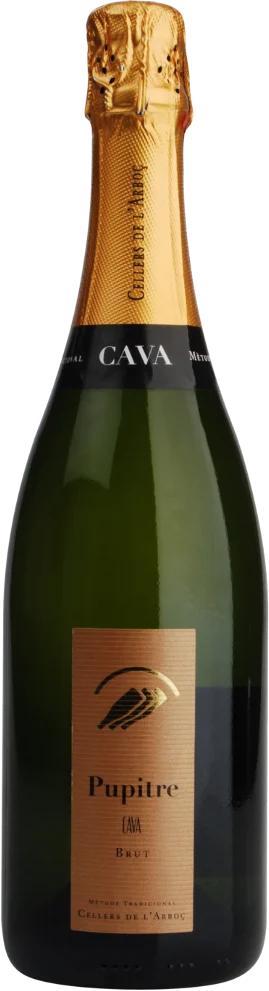
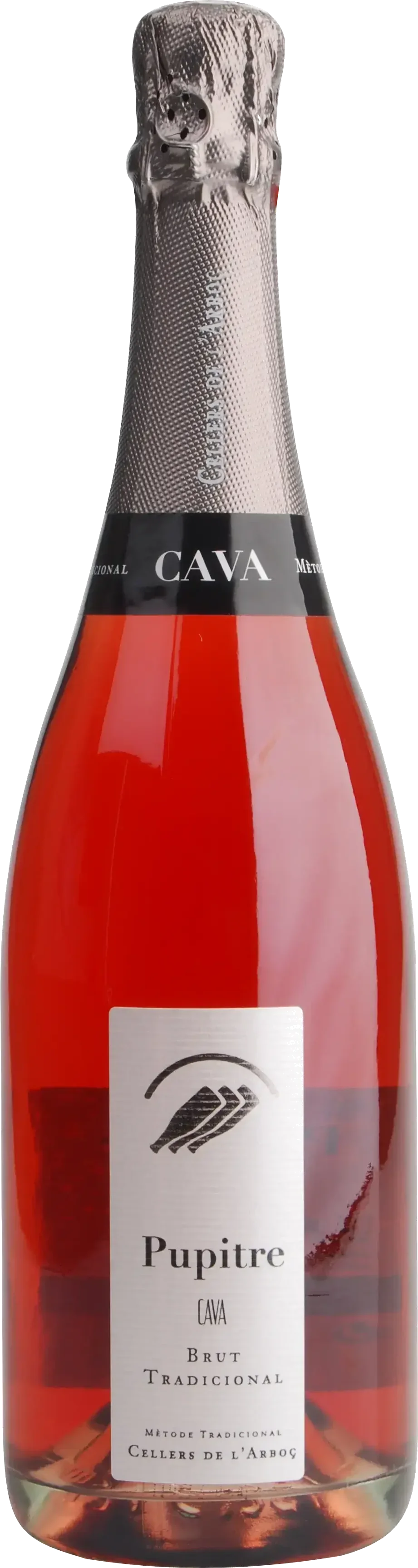
The heart of the range is the Pupitre line, named after the wooden riddling rack that has been in use since the beginnings of sparkling wine making. The bottles are still riddled by hand — a time-consuming process in which the yeast is gradually moved into the bottle neck. In the process, the Cava remains in direct contact with the yeast cells during yeast aging, which gives it a creamy texture and aromatic depth. The Pupitre Brut shows light lemon yellow in the glass with fine perlage; the nose opens with acacia and yellow apple, complemented by a subtle anise note. On the palate, fresh green apple, clear citrus line, dry finish. The Pupitre Rosé Brut consists entirely of the Catalan variety Trepat: salmon pink in the glass, quince and sloe in the nose, lively acidity, dry and straightforward. Both Cavas are suitable as an aperitif and accompany Catalan cuisine — from seafood to aged cheese to light meat dishes — just as confidently as internationally oriented dishes.