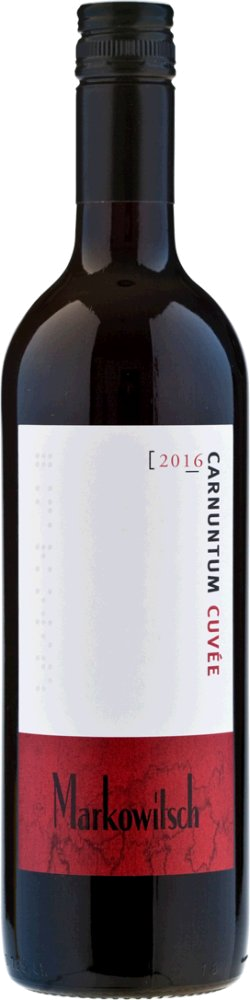
From mixed farming to a leading address in Carnuntum
Weingut Markowitsch in Göttlesbrunn is writing family history that goes back a long way: the Markowitsch family has been growing wine in Carnuntum for more than 200 years. Gerhard Markowitsch made the decisive break when he took over his parents' business in 1990 – at that time still a classic mixed farm with grain, sugar beets, and a few rows of vines. Wine was a supporting actor. Gerhard made it the main event. In just a few years, he developed the estate into one of Austria's most well-known wineries; in 1999, Falstaff magazine named him Winemaker of the Year, a signal that resonated far beyond Göttlesbrunn into the Austrian wine world. 2001 saw the construction of one of the most modern wine cellars in the country at the time. Today, the winery contributes to the fact that Carnuntum – once an underdog among Austria's wine regions – is taken seriously as an origin for independent, characterful red wines. Since 2018, his daughter Johanna has been actively working in the business and is setting her own accents without touching the basic character of the house.
Organic, site-oriented, without pumps and haste
The 65-hectare winery – spread across the towns of Göttlesbrunn, Höflein, and Prellenkirchen – is organic-certified and a member of the Austrian Traditional Wine Estates (ÖTW). Two of the six single vineyards cultivated, the Ried Rosenberg and the Ried Kirchweingarten, bear the "1ÖTW" seal as classified First Growths. The terroir is shaped by two mountain ranges: in the Göttlesbrunn area, the alpine influence of the Leithaberg is at work, while in the eastern part, that of the Spitzerberg as a spur of the Carpathians. Adjacent forest areas ensure cool nights, which favors freshness and complexity in the wines. In the cellar, a clear course has prevailed in recent years: spontaneous fermentation in large vats or used barriques, gentle pressing, and the avoidance of pumps when moving the wine. Hand-picking is standard. Gerhard and Johanna Markowitsch understand the Carnuntum DAC origin pyramid, which has been in effect since 2019 – with regional, local, and vineyard wines – as a consistent tool to make the profile of each individual site visible in the glass.
Zweigelt as the backbone, origin as the benchmark
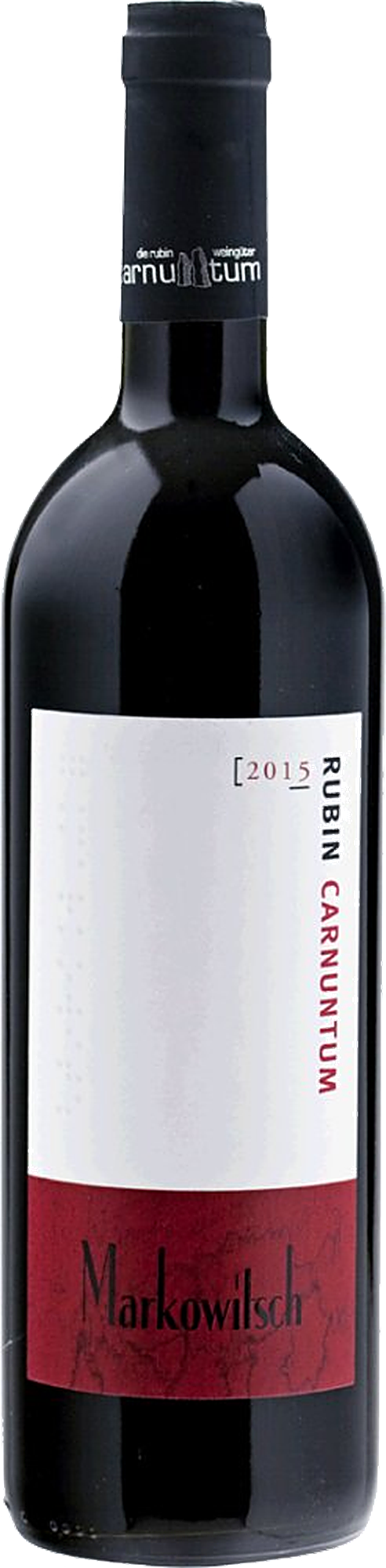
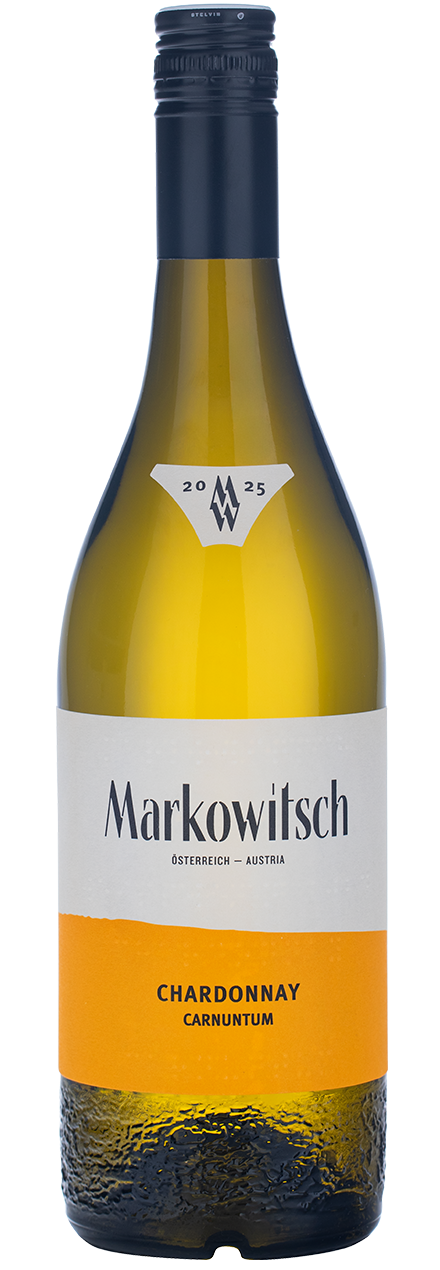
Around three-quarters of the vineyard area is planted with red varieties. Zweigelt forms the backbone – on loamy-gravelly soils, without irrigation, it shows the depth for which Carnuntum is known. Blaufränkisch complements on barren, lime-rich vineyards, while Chardonnay thrives in the cooler sites near the Danube wetlands. In all red cuvées, Zweigelt plays the defining role; it guarantees regional identity instead of international uniformity. The wines are characterized by a fine, dense body without heaviness – the interplay of fruit, spice, and structure is the trademark of the house. With each level of the origin pyramid, complexity and depth increase: from the accessible Rubin Carnuntum to the local wine Göttlesbrunn Rot to the multi-layered vineyard wines from Rosenberg and Kirchweingarten.