From fruit farm to First Lady of the Cape
The history of Warwick Estate begins in 1771 — as a fruit farm, back then under the name De Goede Sukses. The estate received its current name in 1902, when Colonel William Alexander Gordon bought it after the Second Boer War and named it after the English county of Warwickshire. However, the actual wine history began in 1964, when Stan and Norma Ratcliffe took over the farm and recognized the potential of the sites for classic Vitis vinifera varieties. They initially planted Cabernet Sauvignon and Cabernet Franc — the core grape varieties of Bordeaux — and needed two decades of meticulous work before the first commercial wine was bottled in 1984.
Norma Ratcliffe shaped the winery far beyond her role as a winemaker: As one of the first female cellar masters at the Cape and the first woman to chair the Cape Winemakers Guild, she set standards that still resonate today. Warwick is also considered the first winery ever to bottle a Cape Blend — the South African Pinotage-Bordeaux assemblage. After more than five decades under the Ratcliffe family, the estate changed hands in 2017. Today, cellar master JD Pretorius, trained at Stellenbosch University with experience in Sonoma (California) and several top South African wineries, leads the vinification.
Vineyard first — minimal intervention, maximum character
Warwick is located at the foot of the Simonsberg, where the slopes of the main massif transition into the Klapmutskop foothills — at altitudes between 240 and 360 meters. The estate covers a total area of almost 700 hectares, of which around 306 hectares are actively protected as nature reserves. As a WWF Conservation Champion, Warwick practices agriculture geared towards long-term ecological balance: cover crops like lupins and radish loosen the soil naturally and promote microbial activity, harmful insecticides are consistently avoided, and natural predators like ladybugs take over pest control. Water is used consciously and sparingly.
The cellar philosophy follows the same logic: the starting point is the individual vineyard parcels; every grape is only harvested when it is physiologically ready. In the cellar, minimal intervention dominates — from crushing to bottling. Oak is used to support the wines, not to dominate them. The goal is recognizable varietal and origin character, not over-shaping through technology or wood.
Bordeaux soul with South African expression
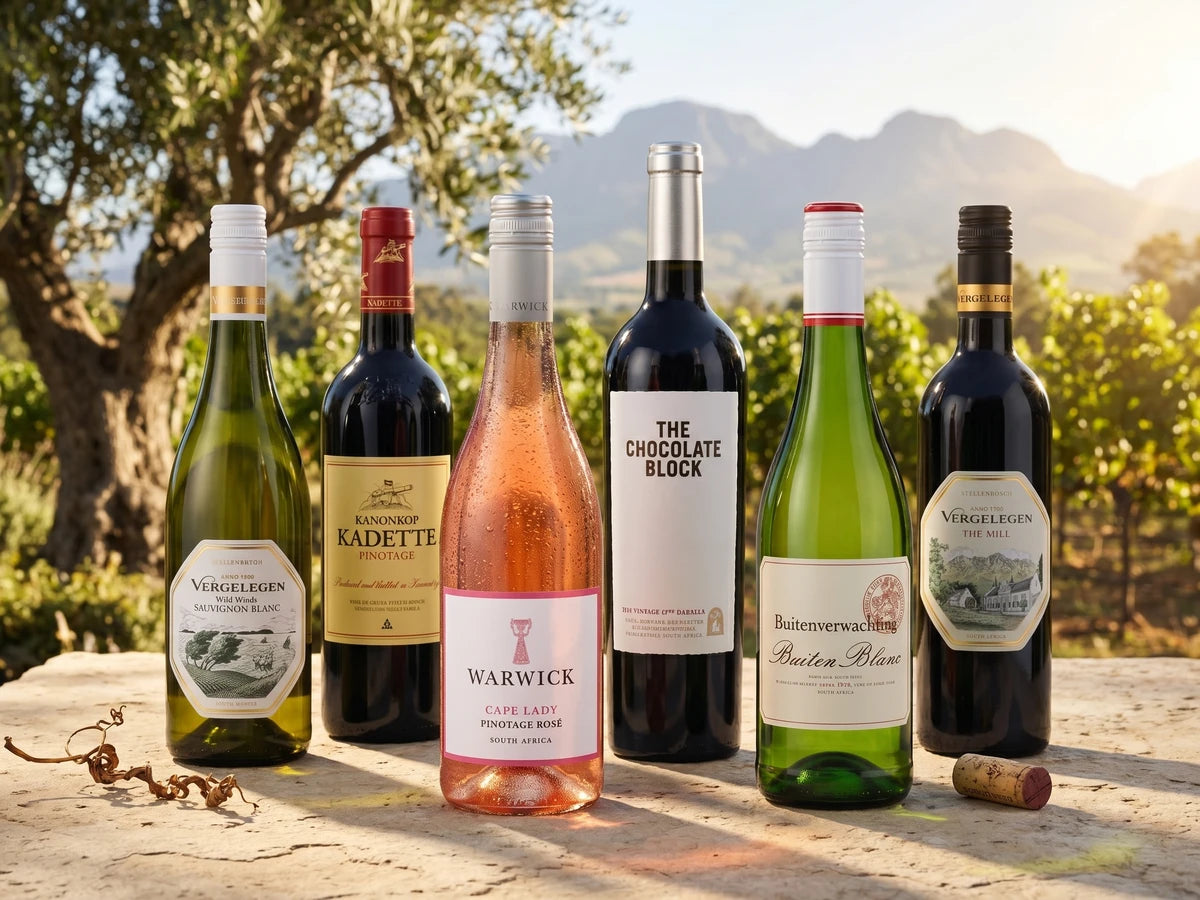
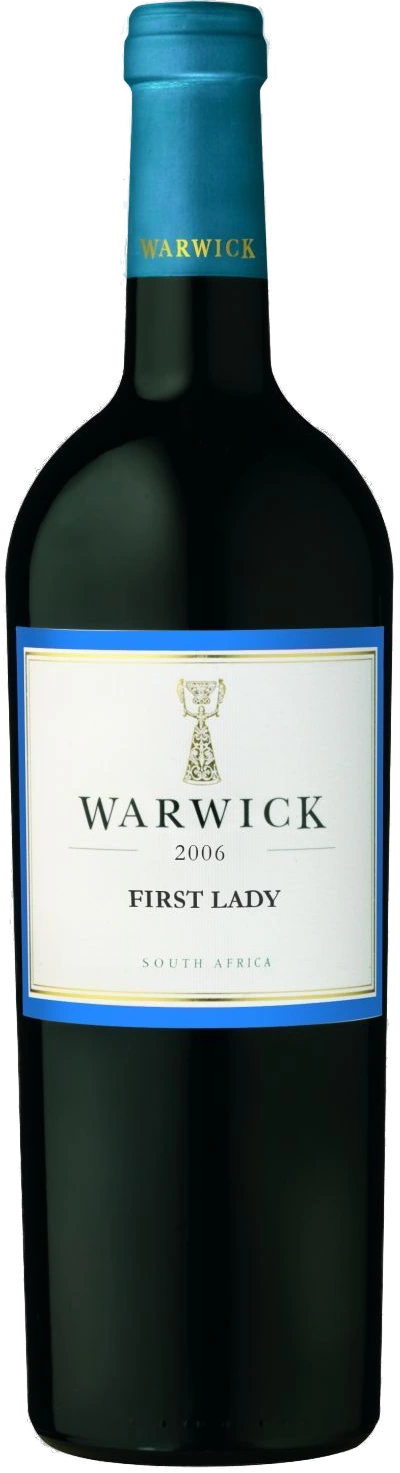
Warwick's range spans from accessible entry-level wines to iconic prestige cuvées. The Trilogy — a Bordeaux assemblage of Cabernet Sauvignon, Cabernet Franc, and Merlot — is considered one of the benchmarks of South African red winemaking. The First Lady range, named in honor of Norma Ratcliffe, makes Bordeaux varieties accessible to broader palates: clearly structured, with a fruit-forward profile and without excessive weight. The Cape Lady Pinotage Rosé, in turn, shows the South African side of the winery — Pinotage as a light, berry-forward interpretation. What all wines have in common is what is established in the vineyard: terroir expression that is not masked, but rather revealed, through restraint in the cellar.