From Crusader monastery to the reference winery of the Trentino
What is now one of Italy's most famous wineries began as a monastery: Since 1215, a monastic convent stood on the estate in the Avio Valley, at the southern tip of the Trentino, serving as a hostel for Crusaders. The Guerrieri Gonzaga family leased the estate from 1741 and purchased it in the same century. The decisive impulse for modern viticulture was provided by Marchese Carlo Guerrieri Gonzaga, who took over the estate from his father in 1974. Carlo had studied oenology in Lausanne — under the influential French oenologist Émile Peynaud — and subsequently worked as a consultant at Tenuta San Guido in Tuscany, the estate where Sassicaia was born. This influence was programmatic: Carlo brought the soul of the great Bordeaux châteaux to the Trentino without denying the alpine terroir. 1982 saw the first vintage of the flagship blend San Leonardo. Today, his son Anselmo manages the winery, supported by the renowned oenologist Carlo Ferrini, who has been working as a consultant since the year 2000.
Craftsmanship between the Alps and Lake Garda
The 30 hectares of vineyards are nestled in a 300-hectare estate of forests, meadows, and river plains in the Vallagarina, near the Adige River. The soils are glacially influenced: gravel, clay, and limestone alternate, draining water well and storing heat during the day. The climate owes its peculiarity to two opposing forces — the Alpine barrier in the north, which slows down cold winds, and the warmth of nearby Lake Garda, which rises through the valley. The Ora del Garda, a daily wind current from the lake, dries the foliage and keeps disease pressure low. Strong day-night temperature differences, even in summer, ensure long, slow ripening and pronounced freshness in the berries. In the vineyard, the family relies on consistently low yields and exclusively indigenous yeasts for fermentation. The vines for the flagship wine are at least 25 years old. Carménère — the variety that was considered Cabernet Franc on the estate since the 19th century until a DNA analysis brought the truth to light — is partially cultivated again in the traditional pergola training system to exploit its full varietal profile. The red wines are aged for 18 to 24 months in barriques, in old cellar vaults without mechanical cooling.
Bordeaux soul, alpine freshness — the range at a glance
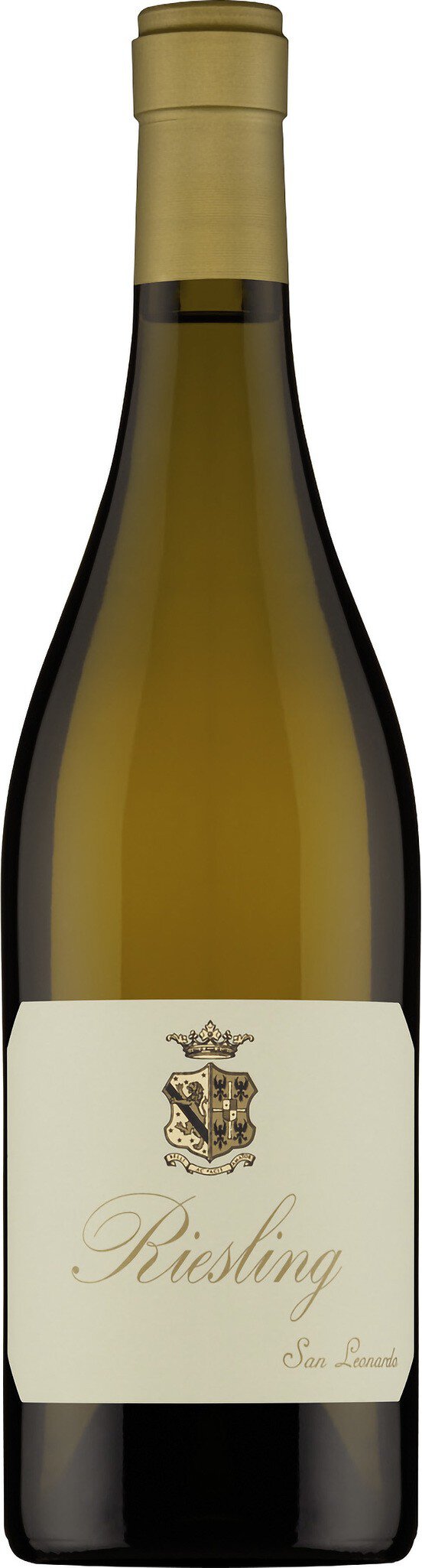
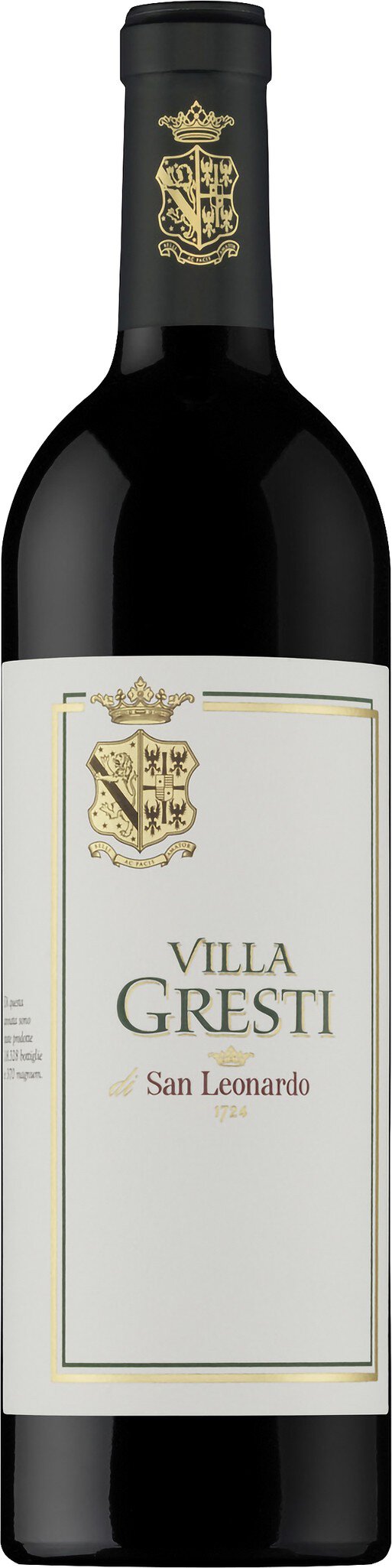
At the center is the San Leonardo, a cuvée of 60% Cabernet Sauvignon, 30% Carménère, and 10% Merlot. The wine bears a clear signature: no hedonistic opulence in the Tuscan style, but cool spice, structure, and length — smoky bell pepper and green olive as the typical Carménère signature, framed by the density of the Cabernet Sauvignon. The Terre di San Leonardo interprets this style in a more accessible and fruit-driven way. Villa Gresti, a Merlot-Carménère blend, brings fullness with a Mediterranean character. On the other side is the Vette di San Leonardo, a Sauvignon Blanc from higher altitudes that clearly depicts the estate's alpine origin: herbal, citrus-fresh, with lively acidity. The portfolio is complemented by the Gemma, a rosato. The result is a range that consistently utilizes the geographical intermediate position of the Trentino — alpine and Mediterranean at the same time — and translates it into stylistically coherent wines.