Five generations in Pünderich — and a new beginning from 1984
The Clemens Busch winery has been documented since 1802; the manor house on the banks of the Moselle even dates back to 1663. Clemens Busch, the fifth winemaker in his family in direct succession, took over the then two-hectare small winery in 1984 together with his wife Rita — and immediately made a decision that was anything but a matter of course on the Moselle at that time: a complete conversion to organic viticulture. He had already stopped using herbicides in 1976, while still a young employee in his parents' business. In 1984, Clemens Busch was one of the co-founders of the Oinos-Bund, the association of organic Moselle winemakers, and helped establish the Federal Association of Organic Viticulture in 1986. Pioneering work that was met with skepticism at the time and is now considered trendsetting. Since 2022, his son Johannes has been running the winery — on an equal footing with his parents, who have built the business up to around 20 hectares.
Biodynamics as an attitude — from the slate slope to the Fuder cellar
The winery has been working completely biodynamically since 2005 and has held the Demeter seal since 2015. In practice, this means: hand-harvesting in steep slopes, no chemical-synthetic plant protection, no herbicides, no mineral fertilizers. Instead, biodynamic teas and preparations that strengthen soil health and vine vitality. As a result, the oldest vines root up to eight meters deep in the slate rock — a depth that requires undisturbed decades in the soil. In the cellar, the winery consistently relies on spontaneous fermentation with natural yeasts from the vineyard, long aging on the full lees, and 1,000-liter Fuder barrels, the youngest of which is over 50 years old. Sulfur is used exclusively at bottling; fining agents are not used. The vaulted cellar, built in 1974 by Clemens Busch Sr., was expanded in 2024 with a new press house.
Clemens Busch is a VDP member and has been part of Respekt-Biodyn, a European association of biodynamic winemakers, since 2014. His son Florian has taken the family's biodynamic working method to the Languedoc, where he produces wine under his own name.
Marienburg plots as a program — slate in three colors
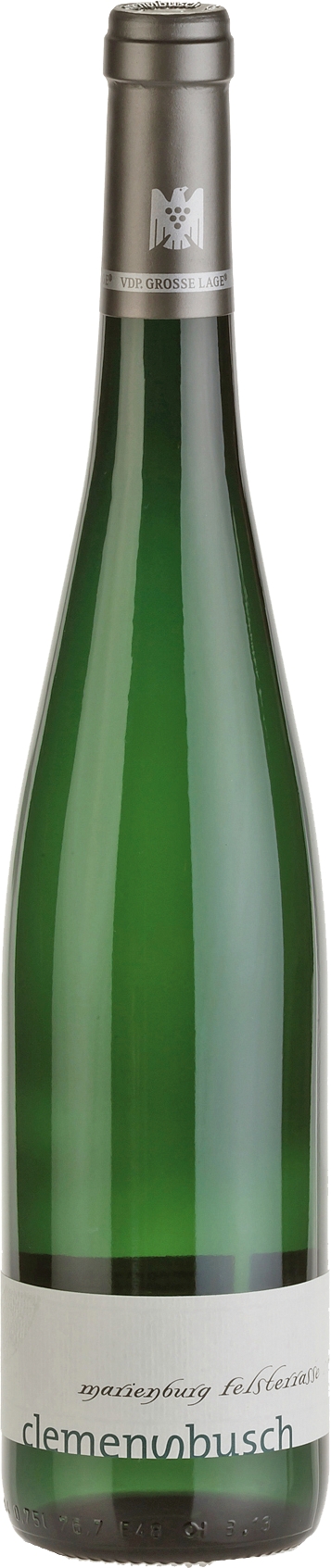
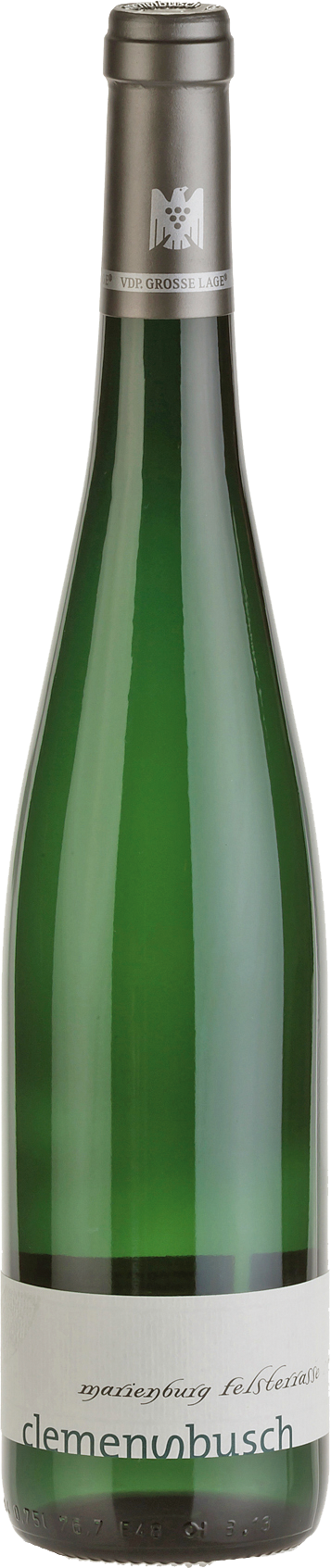
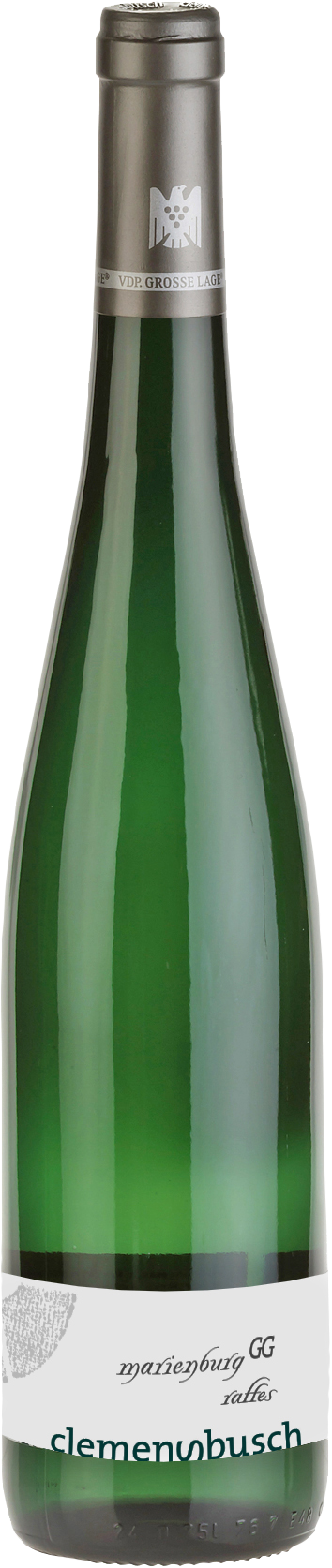
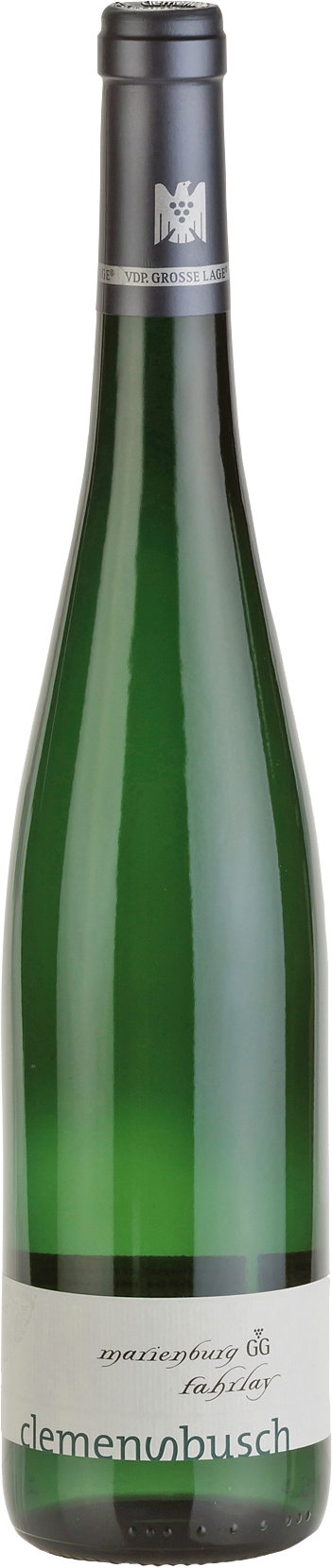
The key to understanding the wines lies in the Pündericher Marienburg site: a south to southeast-facing steep slope directly opposite the village, classified by many as one of the best sites on the Moselle and VDP-classified. Around 12.5 hectares of the winery are located there. What distinguishes the Marienburg from other top sites: red slate, gray slate, and blue slate alternate plot by plot — and Clemens Busch has always vinified them separately. He has gradually brought the historical plot names Fahrlay, Falkenlay, Felsterrasse, Rothenpfad, and Raffes, which the 1971 wine reform had buried under a single large site, back onto the labels. Blue slate brings mineral freshness, red slate more texture and a noticeable volcanic spice, and gray slate combines both. All wines ferment spontaneously and mature for 10 to 24 months on the lees — hence the density and aging potential, which many bottles are designed for 15 years and more. The range consists almost exclusively of Riesling, supplemented by a Pinot Noir that is vinified as a Blanc de Noir.