From Bordeaux Négociant to Médoc Classic: The Story of the Bories
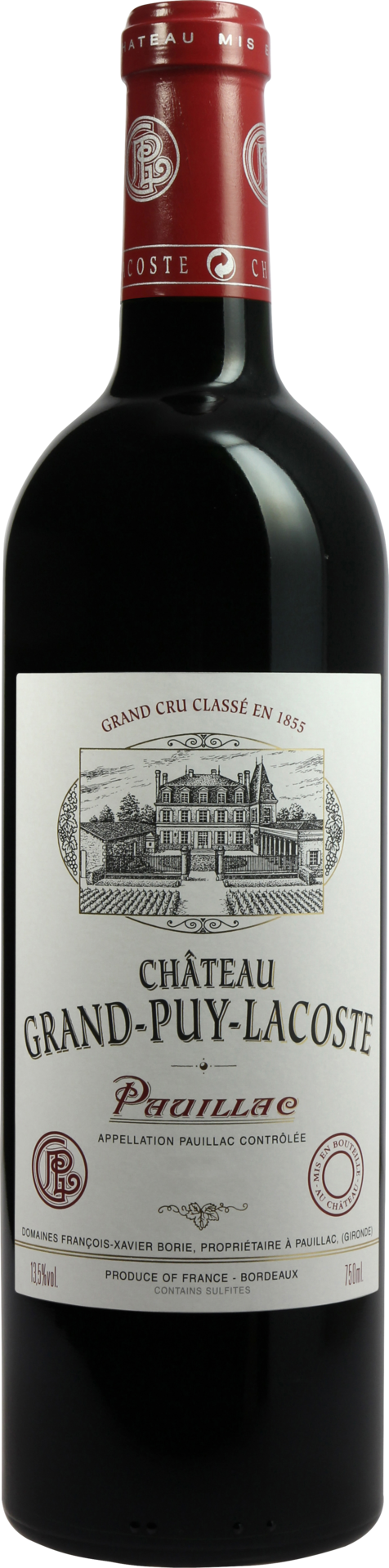
The roots of Château Grand-Puy-Lacoste reach back to the 16th century, when the first vines were planted on the light gravel ridge above the Gironde. The estate's name reflects this origin: Puy in French refers to an elevation in flat land — a rare topographical advantage in the Médoc. The suffix Lacoste commemorates the family that shaped the estate in the 18th century and built the current Château in 1855, the very year of the famous Bordeaux Classification, in which Grand-Puy-Lacoste was ranked as a Cinquième Grand Cru Classé.
The estate has belonged to the Borie family since 1978 — a wine trading dynasty that moved from Corrèze to Bordeaux at the end of the 19th century and earned a firm place in the Médoc with estates such as Château Ducru-Beaucaillou in Saint-Julien. Jean-Eugène Borie took over Grand-Puy-Lacoste from Raymond Dupin, and his son François-Xavier Borie has been managing the Château since 2003. He and his wife Marie-Hélène live on the estate all year round — a rarity in Bordeaux. The next generation is already active: daughter Emeline Borie is responsible for marketing and communications.
Terroir Expression Over Technique: Viticulture and Cellar Work
The 55-hectare vineyard tableau lies as a largely contiguous plateau on the Pauillac gravel ridge. It is planted with 75% Cabernet Sauvignon, 20% Merlot, and 5% Cabernet Franc, with a vine density of 10,000 vines per hectare. The deep gravel soil — made of Pyrenean pebbles deposited by the Garonne over millennia — ensures excellent drainage and uniform heat retention, which drives the Cabernet Sauvignon to slow, aromatically dense ripeness. Remarkably, the vineyard area and composition have remained unchanged since the 1855 classification.
In the cellar, 43 temperature-controlled fermentation tanks of varying sizes manage vinification on a parcel-by-parcel basis. Fermentation takes place at a maximum of 28 degrees with gentle pumping-over; the subsequent maceration period lasts about ten days. The consulting oenologist is Éric Boissenot, one of the most renowned cellar consultants in the Médoc. François-Xavier Borie focuses on continuous investment: a cellar renovation in 1997 brought thermoregulation, a new barrel cellar followed in 2003, and gravity-flow systems will be introduced for the first time in 2025 to further reduce mechanical stress on the must. In parallel, the estate is reducing total production volume to consistently prioritize quality over quantity.
Classic Pauillac Style — and the Second Wine Lacoste-Borie
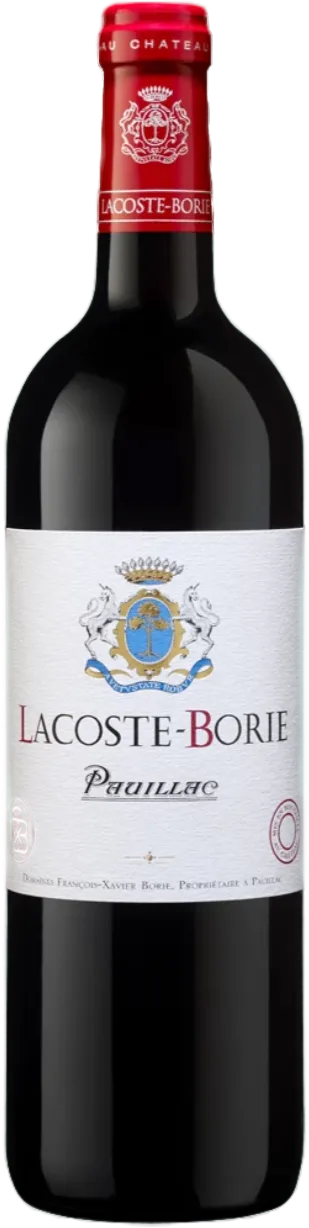
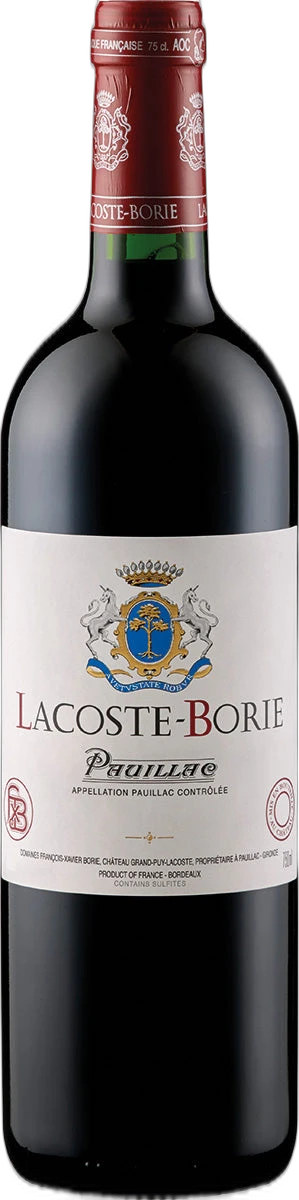
Grand-Puy-Lacoste stands for the archetypal Pauillac: a powerful Cabernet Sauvignon structure that brings freshness and length, rounded off by the melt of Merlot. In young vintages, black cherry, cassis, and graphite dominate; with cellar aging, tobacco, cedarwood, and a fine note of undergrowth emerge. The tannins are firm but fine-grained — not a broad format, but precise contour. The second wine Lacoste-Borie follows the same signature but is cut to be more accessible, showcasing the strengths of the terroir in a framework that is drinkable sooner. Since the 2020 vintage, both wines can also be purchased in so-called Variation Cases — mixed cartons that allow for a direct comparison of both cuvées.