

Pauillac · France
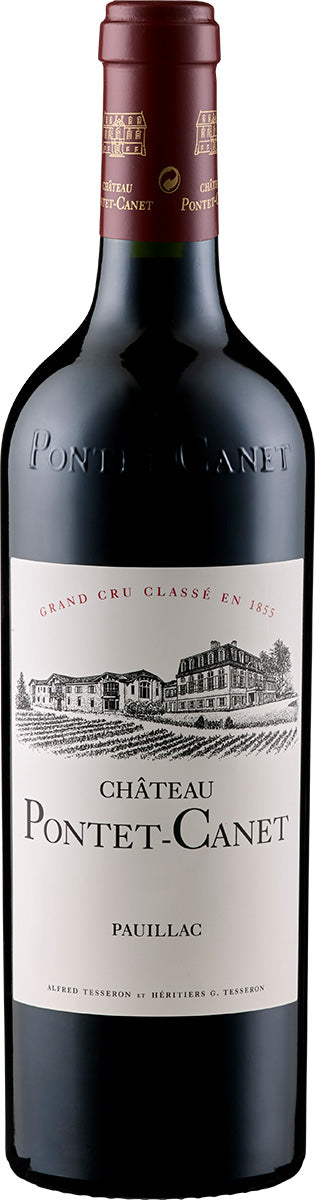
Château Pontet-Canet
Read more Read less
At Pontet Canet, new paths have been taken since the nineties to get as close as possible to nature. Over time, one fact became clear: progress in viticulture can only come from observation and experiment with the vine. The winegrower must simply know how to observe the vine in order to be able to feel its needs. Since 2004, Pontet Canet has been the first of the top Bordeaux estates to switch to biodynamic cultivation and has been internationally certified since 2010, which, however, is not shouted from the rooftops. The wines should simply convince on their own.
Filters
1 product
About Château Pontet-Canet
Pauillac

Château Pontet-Canet —
Pauillac, where observation comes before technique
Château Pontet-Canet is located in the heart of Pauillac, directly next to Mouton Rothschild — and yet the estate has been going its own way since the 1990s. Instead of relying on cellar technology, the Tesseron family began to read the vineyard anew: row by row, season by season, with the growing conviction that the vine itself sets the direction.
As the first of the classified Bordeaux estates, Pontet-Canet switched to biodynamic cultivation from 2004 — internationally certified since 2010, without it being made into a marketing promise. Horses replace tractors in the rows, copper and sulfur replace synthetic agents, and the harvest is based on the lunar calendar. This sounds like a principle, but it is above all practice: years of observation of what really benefits the soil and the vine.
In the glass, the wines appear dense and structured, with the typical cassis fruit and the graphite tone of Pauillac — but with a liveliness that classically aged Médocs rarely achieve. Anyone who understands Bordeaux not as a museum, but as a living wine region, will find one of the most convincing proofs of this here.