From Ferrari sparkling wine to Sagrantino: the Lunellis in Umbria
The Lunelli family has stood for viticulture in Trentino for three generations — known above all for the sparkling wine brand Ferrari Trento DOC, which they have managed for decades. In the 1980s, the family began to expand this foundation to include still wines, first in Trentino, then in Tuscany. 2001 saw the next step: fascinated by the ancient, almost mystical landscape of Umbria and the expressive power of Sagrantino, the family acquired Tenuta Castelbuono — 30 hectares of vineyard area in the municipalities of Bevagna and Montefalco. It was the beginning of a project that was to combine viticulture, art, and architecture in a way previously unknown in this form.
The first Montefalco Sagrantino was launched as early as 2003, and the Montefalco Rosso followed a year later. The winery grew quickly — a second vineyard was planted in 2006 — and made the construction of a new cellar necessary. The commission was taken on by a close friend of the family: the sculptor Arnaldo Pomodoro, one of Italy's most important contemporary artists.
The Carapace — a habitable sculpture as a cellar
What began in 2005 and was inaugurated in 2012 is still without comparison today: the Carapace, a copper-clad dome construction in the shape of a turtle that blends into the Umbrian hilly landscape as if it had grown out of it. Pomodoro was inspired by the shell of the turtle — for him a symbol of stability, longevity, and the union of heaven and earth. According to Tenute Lunelli, the result is the first sculpture in the world in which work and living actually take place: art and function cannot be separated in the Carapace.
In the cellar, Pomodoro's artistic signature continues: the interior of the dome shows the stylized skeleton of the animal, and the vault structure bears the artist's unmistakable relief pattern. Anyone who enters the Carapace enters one of his sculptures — and finds steel tanks and wooden barrels inside, in which the wines mature.
Organic viticulture, clonal selection, and the reach for elegance
From the beginning, Tenuta Castelbuono focused on work in the vineyard. The vineyard areas were converted to organic farming; at the same time, a comprehensive project for clonal selection was underway to understand the existing stocks and develop them in a targeted manner. The declared goal of the Lunellis: not to tame the Sagrantino — by nature a tannin-rich, powerful red wine — but to give it elegance and balance. For this, the ripeness of the grapes is consistently pushed to the limit to soften the tannins, and in the cellar, they rely on maturation in large wooden barrels that shape the wine without overpowering it.
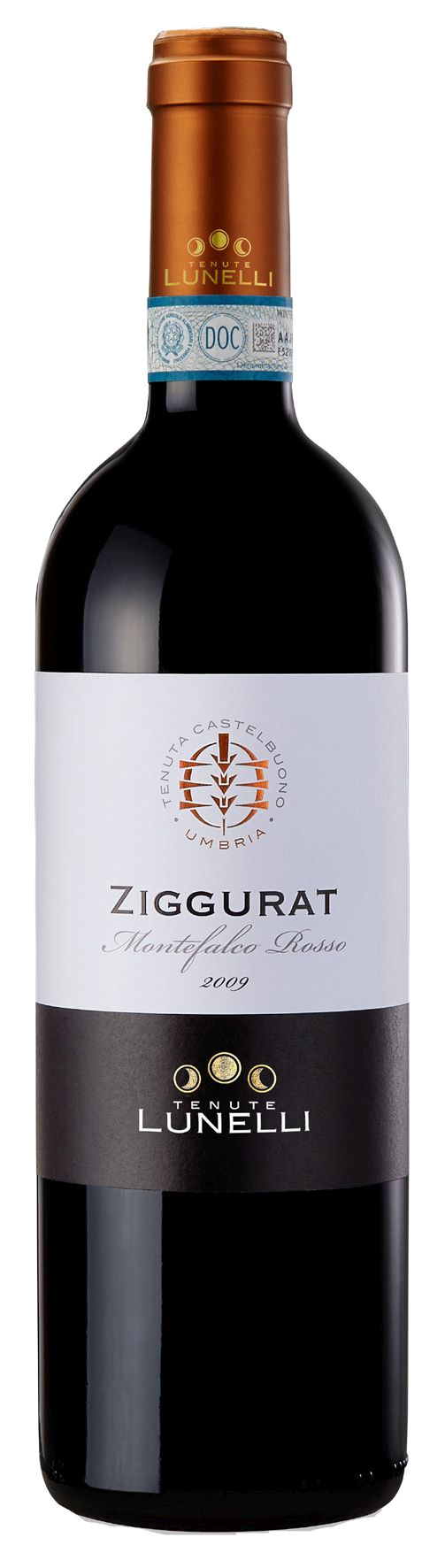
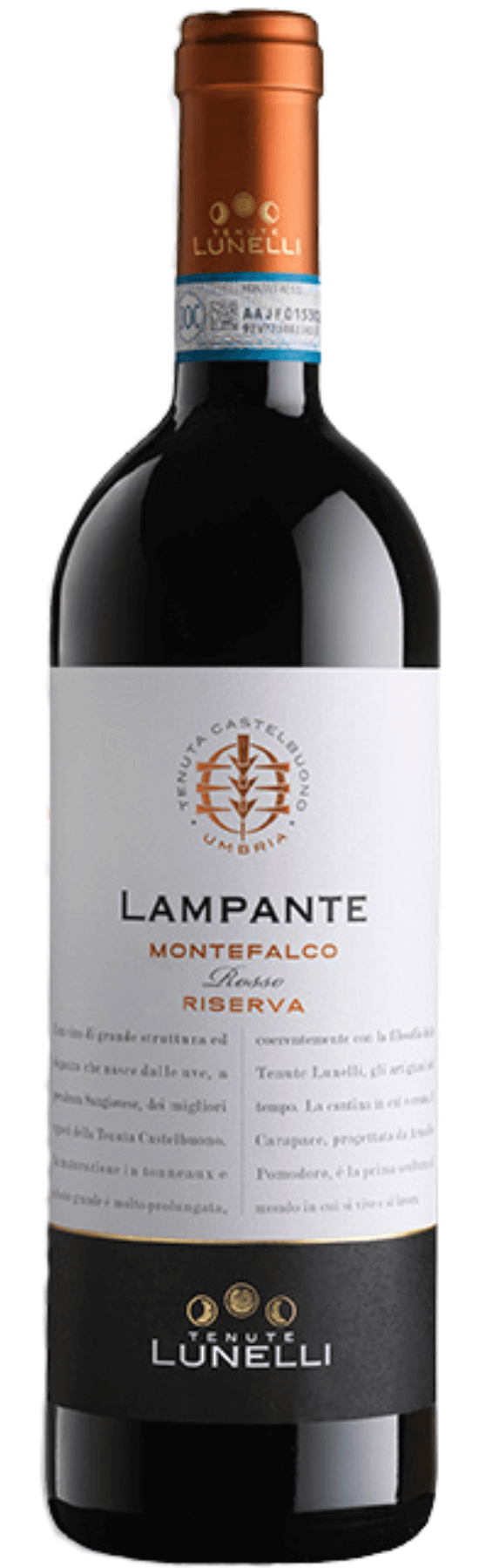
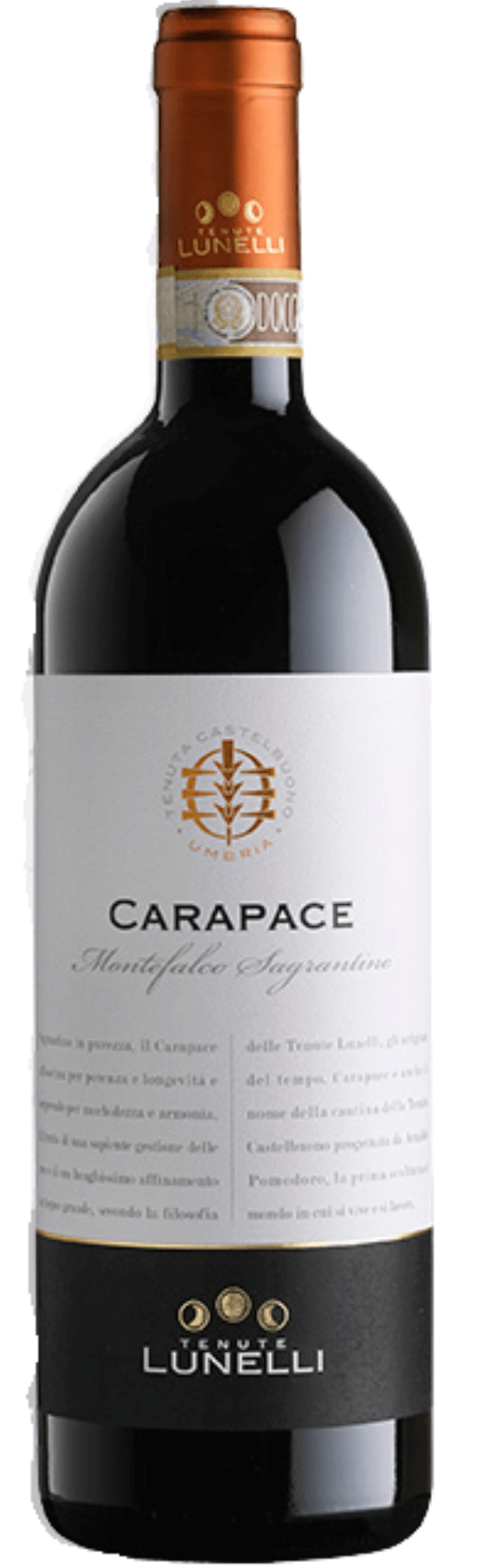
The result is three wines with clearly different characters: the Carapace as Montefalco Sagrantino DOCG, which shows the full depth of this autochthonous grape variety with a long maturation period; the Lampante as Montefalco Rosso DOC Riserva with more accessibility and finesse; and the Ziggurat as Montefalco Rosso DOC, which emphasizes the freshness of the site. All three wines bear the signature of a winery that does not view Umbria from the outside, but works from within it.