From the Royal Prussian Domain to the Nahe flagship
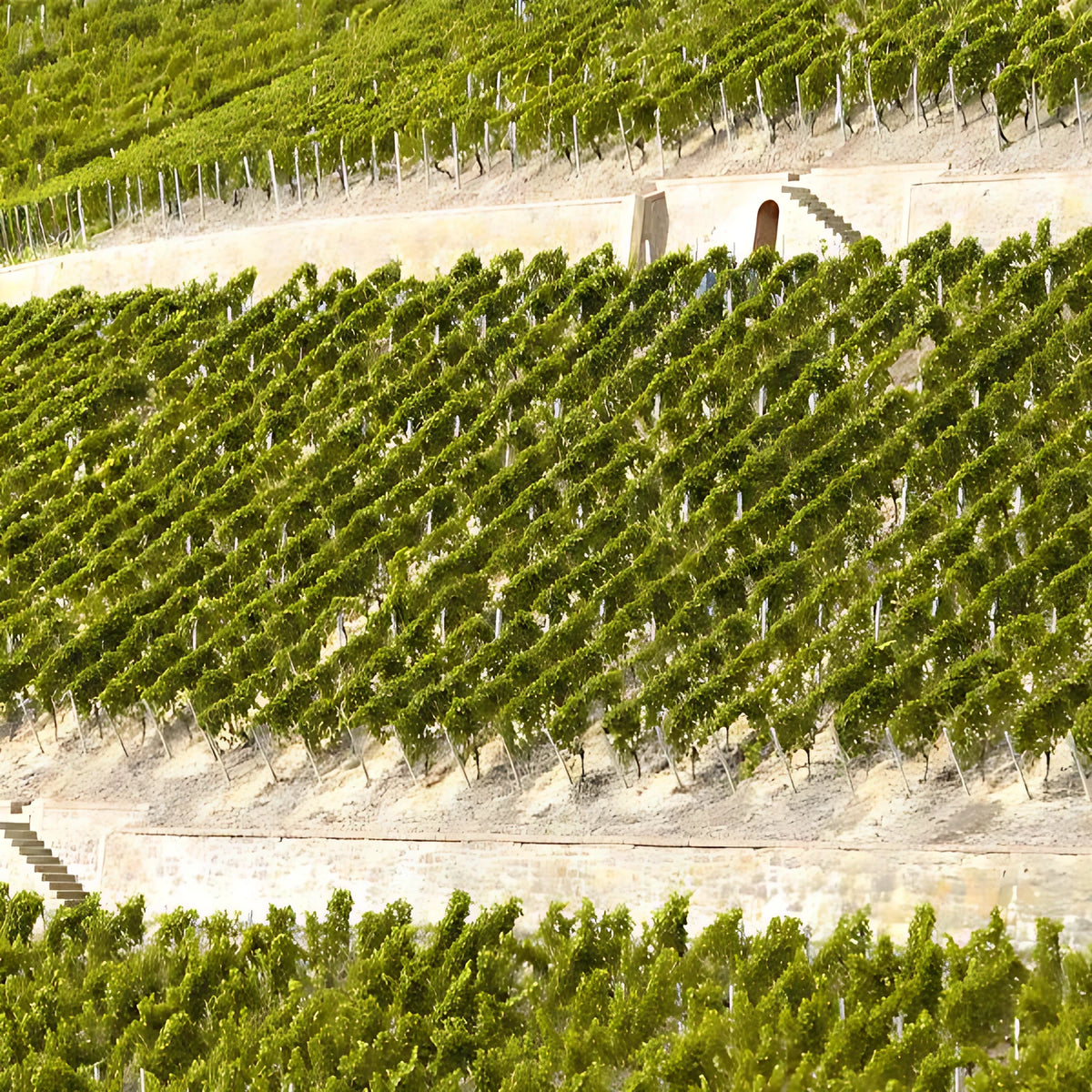
The history of Gut Hermannsberg begins in 1902, when the Prussian state founded a wine-growing domain in Niederhausen and reclaimed steep, rugged rocky terrain for it — including an abandoned copper mine. Rocks had to be blasted and massive amounts of earth moved before the first Riesling vines were planted in 1903. The estate remained in state hands until 1998, before it was privatized. In 2009, Frankfurt entrepreneur Jens Reidel and his wife Dr. Christine Dinse acquired the property; in 2010, it received its current name — derived from the surrounding monopoly site Niederhäuser Hermannsberg. The estate's Art Nouveau buildings, including the curved press house, are now listed monuments and bear the signature of the founding era. The Prussian eagle still adorns the labels as a reference to this origin.
Manual labor in the steep slopes, restraint in the cellar
All 30 hectares of the estate's vineyards — spread over seven terroirs in the municipalities of Niederhausen, Schlossböckelheim, Traisen, and Altenbamberg — are classified by the VDP as Grosse Lage. A monopoly operation of this purity is exceptional in Germany. The soils change from clay slate and Rotliegend to porphyry and volcanic weathered rocks; it is precisely this diversity that gives the wines their independence. Since the sites are mostly located on steep slopes, harvesting is exclusively manual work — mechanical harvesting is out of the question.
In the cellar, cellar master Karsten Peter focuses on maximum site expression rather than stylistic uniformity. The Grosse Gewächse are fermented spontaneously and mature on the lees for a long time, partly in stainless steel, partly in large wooden barrels. Fining is avoided whenever possible. This explains Peter's much-cited credo: