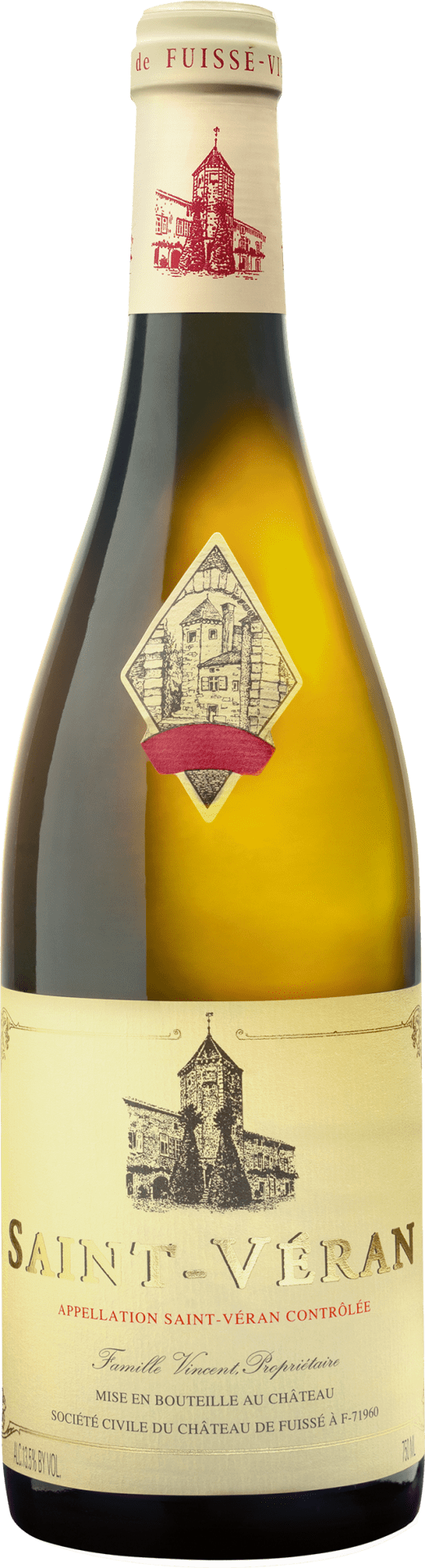
From the Médaille d'Or 1876 to the benchmark of the southern Burgundy
The history of Château Fuissé begins in 1862, when Claude Bulland acquires the estate in the village of the same name in the Mâconnais. As early as 1876, he returns with a medal from the Paris World's Fair — an early signal that this place is capable of more than regional table wine. However, Jacques Vincent-Bulland becomes decisive for its current reputation: he is a co-founder of the Pouilly-Fuissé appellation, which is officially recognized in 1936, and thus lays the institutional framework in which the Domaine still works today. His successor, Marcel Vincent, expands the winery from 1948 onwards and introduces bottling as the standard. Jean-Jacques Vincent, in turn, begins in 1967 to vinify each vineyard individually and systematically build up exports — a practice that was not a matter of course at the time. Today, the fifth generation is at the helm: Antoine Vincent, a trained oenologist, manages the Château together with Philip Tuinder.
One hundred plots, one principle: terroir without compromise
The winery manages around 40 hectares, divided into nearly one hundred plots in five appellations — Pouilly-Fuissé, Saint-Véran, Mâcon-Villages, Mâcon-Fuissé, and Bourgogne Blanc. The heart is the Le Clos Monopole: 2.7 hectares of limestone-clay soils in a southeast-facing location directly around the Château, with vines averaging over fifty years old. The Premiers Crus Le Clos and Les Brûlées — the latter on marl with southern exposure — show how differently the same appellation can taste when one works consistently plot by plot.
The harvest is carried out exclusively by hand, followed by gentle whole-bunch pressing. Aging depends on the origin: steel tanks for the freshness typical of the Mâcon and Saint-Véran appellations, wooden barrels for the more complex Pouilly-Fuissé cuvées. The motto is balance between natural ripeness, minerality, and freshness — no aging that overwrites the terroir. Since 1985, the Famille Vincent line has complemented the range with wines from leased plots that are vinified according to the same standards as the Château's own wines.
Chardonnay as a benchmark — and Gamay as a counterpoint
The white Chardonnay from Pouilly-Fuissé is the house's clear strength: the wines show ripe citrus fruit, white peach, and a salty minerality due to the calcareous soils of the Mâconnais. The Tête de Cuvée, an assemblage from the best Pouilly-Fuissé plots, adds toast and walnut to the aroma profile — the result of barrel aging, without the wood dominating. The Bourgogne Blanc offers the same house style in a more accessible form: fresh, clear, with good acid structure. Since 2010, the granite soils of Beaujolais have also been part of the range: in Juliénas, Gamay shows red fruits and delicate spice, vinified in the tradition of Cru Beaujolais. The Crémant de Bourgogne rounds off the offer both upwards and downwards — as an introduction to the house's signature as well as an aperitif before the big evening.