From Bordeaux refugee to pioneer of Rioja export history
When phylloxera devastated Bordeaux in the 1880s, the French wine consultant Charles Serres looked for a new terroir – and found it in Haro. In 1896, he founded the bodega there, registered as the city's first export house: a category that did not exist in Rioja until then. What drew him to Haro was the combination of calcareous-clay soils, an Atlantic-influenced climate, and the railway connection to Bilbao, which made international markets accessible. Within a few years, his wines were in France, England, Cuba, and the USA – at a time when Rioja was hardly a term outside of Spain.
Serres did not stop at his own business: in 1907, he pushed for the founding of the Rioja Wine Exporters Syndicate, the direct predecessor of today's DOCa Control Board. This structural political initiative made him one of the key figures in regional wine history. Today, the Vivanco family continues to run the house – several generations, over 40 years of presence in Rioja – and maintains the founder's international ambition.
Finca El Estanque: 60 hectares as the backbone of quality
The centerpiece of production is the Finca El Estanque, a contiguous vineyard of 60 hectares southeast of Haro, not 800 meters from the winery. The calcareous clay soils with a high gravel content promote minerality and freshness; the climate is continental with a significant Atlantic influence – cool nights that protect aromas, and sufficient warmth for complete ripening. At the beginning of the 1980s, the Finca was converted to trellis training, which increases leaf area, improves grape ventilation, and reduces the use of pesticides. Parts of the production are also grown and certified according to EU organic standards (CPAER).
In the cellar, cellar master Roberto de Carlos works, who has been responsible for vinification for over 35 vintages. Concrete tanks secure the fruit characteristics of the individual grape varieties through natural micro-oxygenation; aging then takes place in barrels of American and French oak. Both cultivation and aging follow the principle of placing terroir expression before stylization.
Classic Rioja architecture from Blanco to Gran Reserva
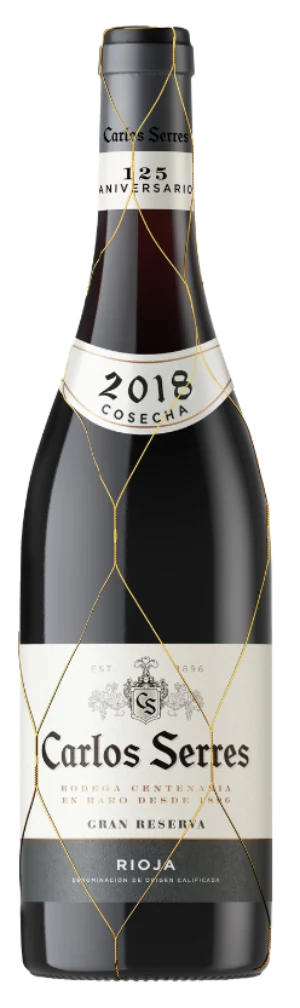
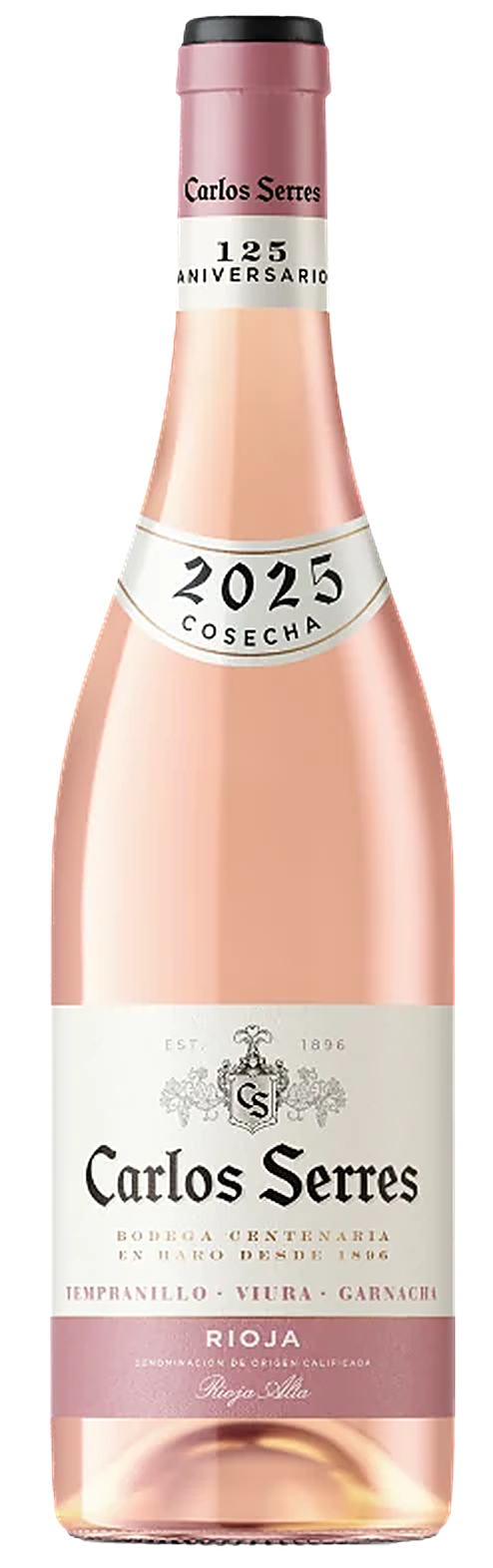
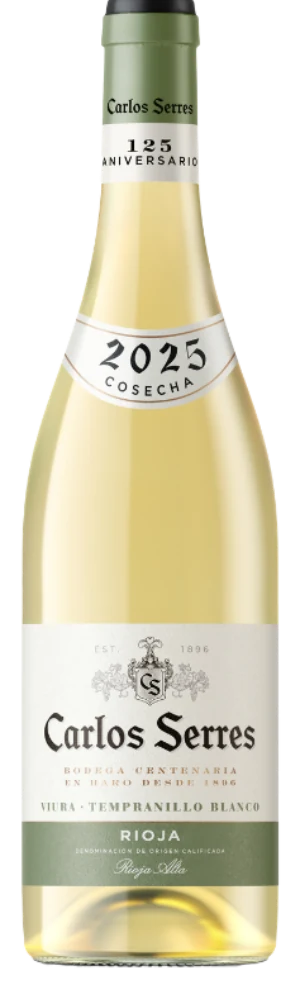
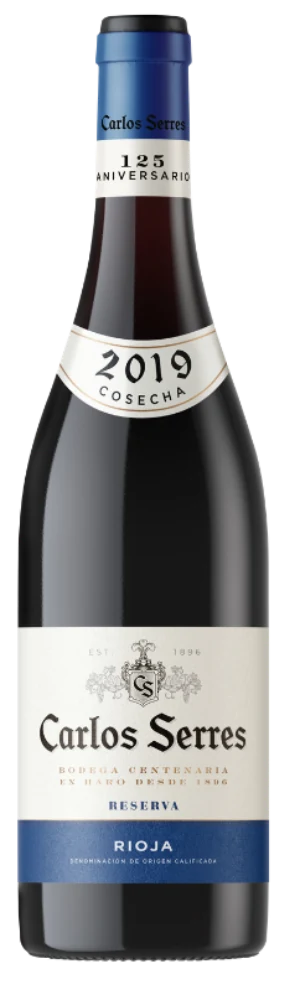
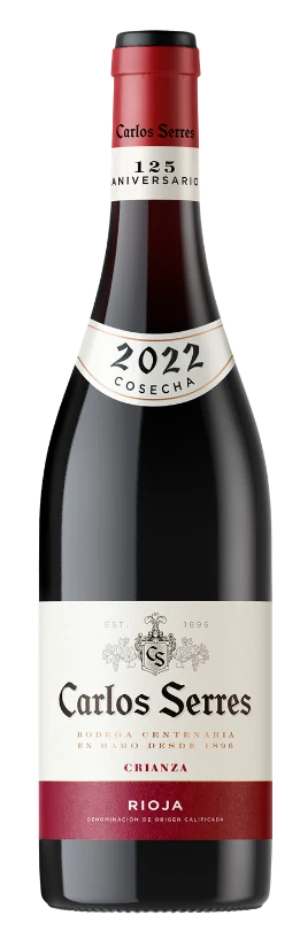
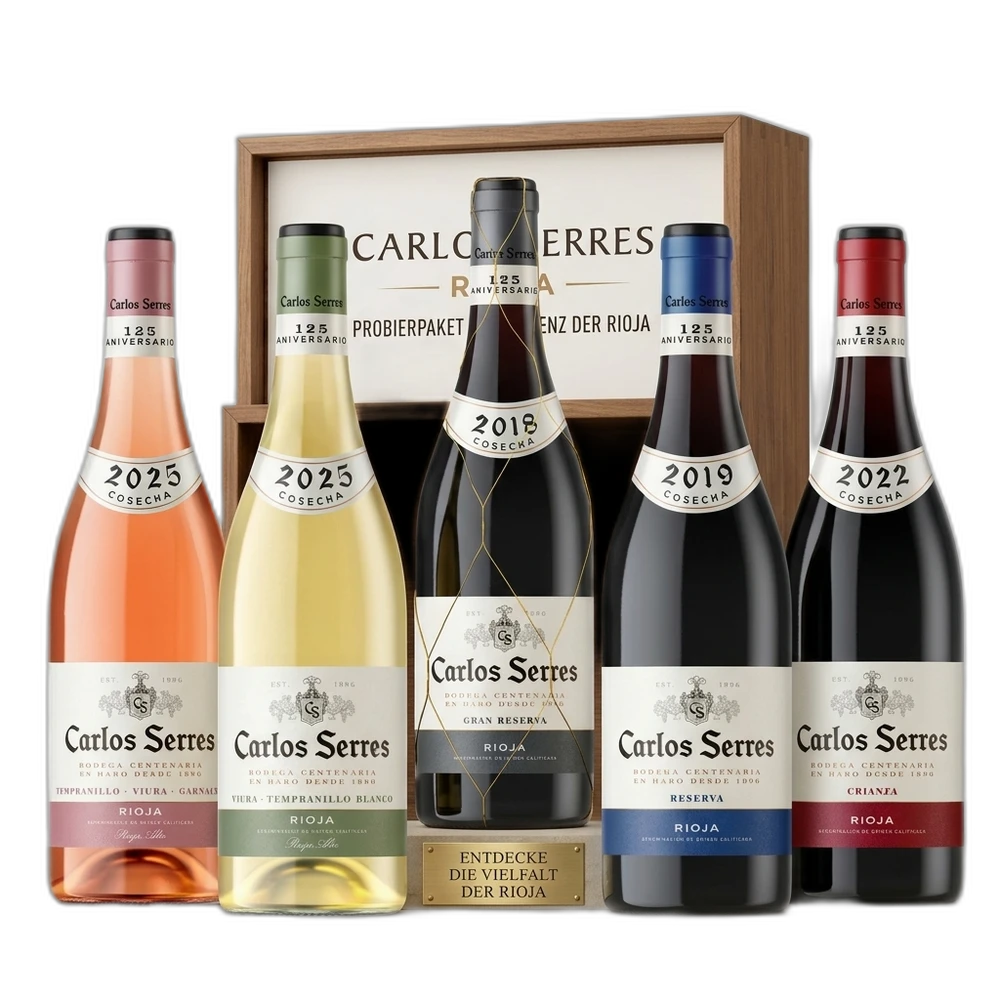
The assortment spans the arc from fresh Blanco and Rosado – both from grapes from contract farmers in the Haro area – to the Crianza, which ages for 14 months in American and French oak, to the Reserva and Gran Reserva, which come from the Finca El Estanque and show the full depth of the house. The latter combine ripe red fruit, tobacco, and leather aromas with a freshness in the finish carried by the Atlantic location. The limited line 1896 Finca El Estanque – formerly known as Onomástica – marks the peak: Tempranillo, Graciano, Mazuelo, and Maturana Tinta from the old parcels of the estate vineyard. Anyone looking for Rioja in its classic, barrel-influenced form of expression will find one of the most reliable reference points in the region at Carlos Serres.