From three hectares to the most important Vernaccia address in Tuscany
In 1974, Enrico Teruzzi and his wife Carmen Puthod left their life in Milan and acquired three hectares of vineyards at the foot of San Gimignano – the medieval tower city that has been a UNESCO World Heritage site since 1997. Enrico was an engineer by profession, a winemaker by conviction; Carmen brought an artistic sensibility that is still reflected in the house's signature today. From the beginning, the founders sought advice from Emile Peynaud, one of the most influential oenologists of his generation, and consciously chose Vernaccia di San Gimignano – the white grape variety that was the first Italian wine ever to receive DOC status in 1966 and was upgraded to DOCG in 1993. Over four decades, the estate grew continuously until it became the largest single producer in the appellation. In 2016, the Moretti family took over the winery through their holding company Terra Moretti – a group that also includes Bellavista and Contadi Castaldi in Franciacorta. The roots and the focus on San Gimignano remained untouched.
Farming on ancient marine soil
The estate now covers 180 hectares, 96 of which are under vine, nestled in olive groves and forests around San Gimignano. 60 of these vineyard hectares are reserved for Vernaccia – the largest contiguous Vernaccia planting in Tuscany. The soils are of marine origin from the Pliocene: yellow sands and clays that vary greatly depending on the plot and give the Vernaccia vine – more sensitive to soil differences than most other varieties – precise terroir signatures. In addition to Vernaccia, Trebbiano, Chardonnay, Sauvignon Blanc, Sangiovese, and Merlot grow on the estate.
Under the Moretti family, the viticulture program was consistently expanded and awarded the Equalitas certificate. Chemical fertilizers and herbicides have been abolished; instead, the team works with green manure and composts pomace and stems from their own harvest. Pesticides have been reduced by around 50 percent, and through special recovery sprayers – so-called atomizzatori da recupero – the winery saves about half of its irrigation water.
Vernaccia as the flagship wine – and Sangiovese as the red counterpart
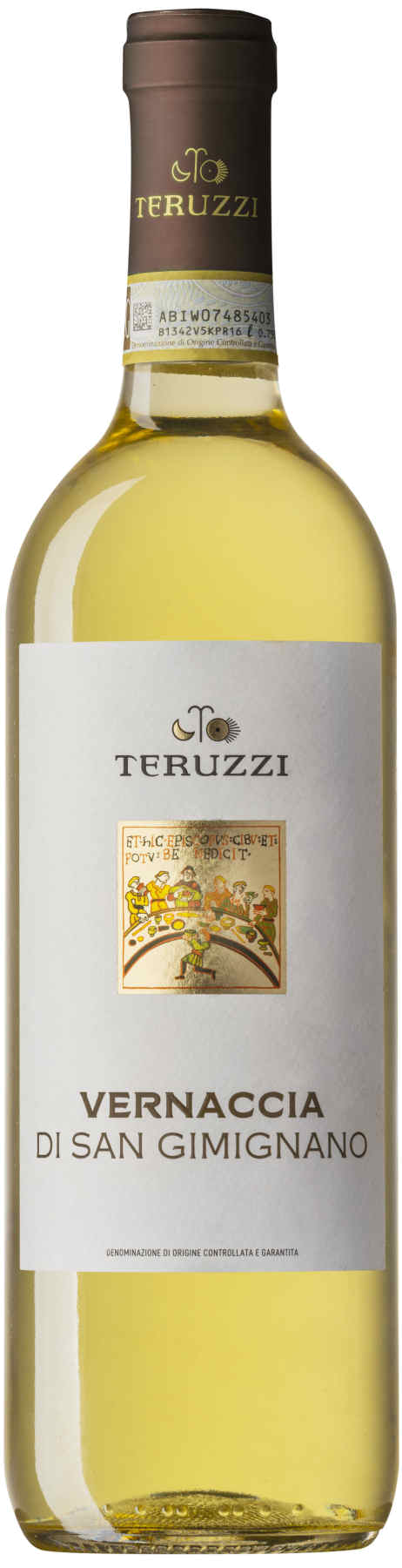
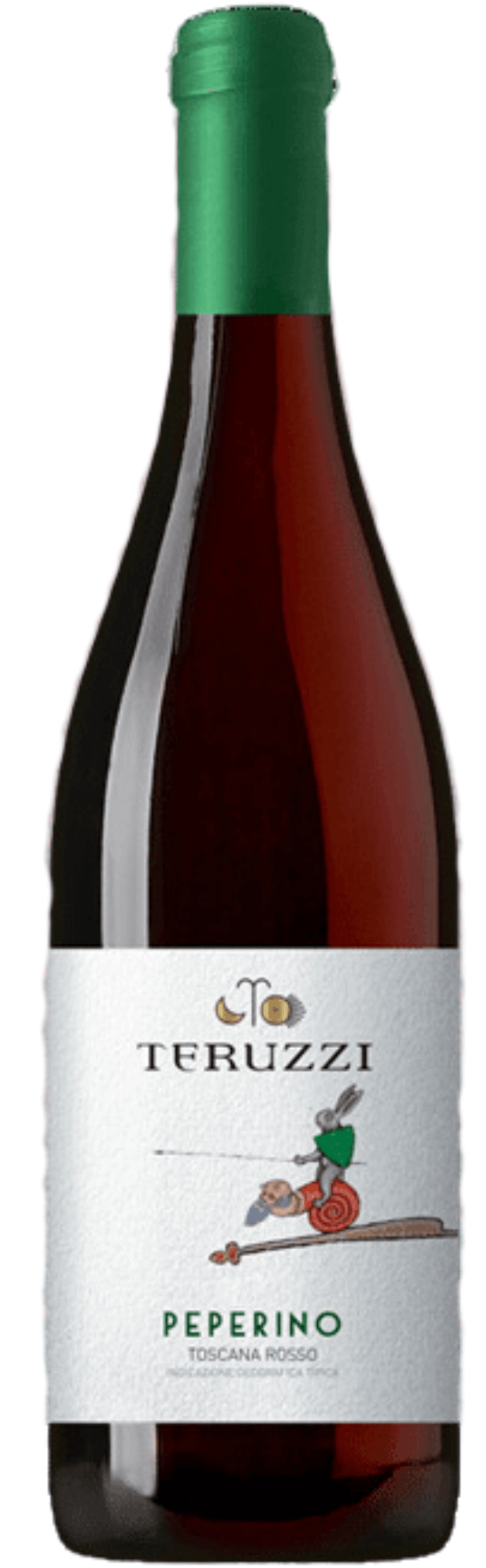
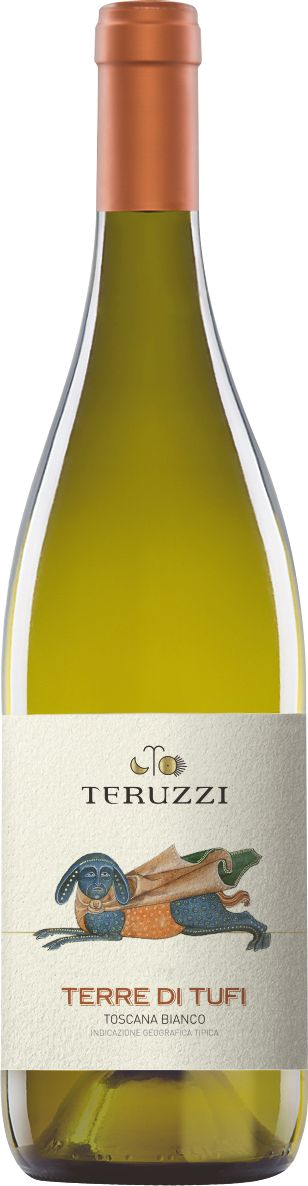
The range revolves around Vernaccia di San Gimignano DOCG: fresh, mineral, with a fine bitter note on the finish – a white wine that holds its own in a Tuscan red wine landscape. With Terre di Tufi, a white blend of Vernaccia, Chardonnay, and Trebbiano, Teruzzi made history early on: the wine is considered the first white "Super Tuscan" ever. On the red side is Peperino, a Tuscany Rosso made from Sangiovese and Merlot, which combines the warmth of the Sienese hills with an accessible structure. The wines are created through the interplay of stainless steel and wood, aimed at clarity and loyalty to their origin rather than extraction. Anyone who wants to get to know Tuscany beyond the big Chianti names will find at Teruzzi a precise, artisanally consistent answer to the question of what this landscape can extract from the Vernaccia grape.