From Renaissance villa to reference address for Vino Nobile
The history of Tenuta Tre Rose does not begin with viticulture, but with a churchman. 1521, Cardinal Silvio Passerini, Bishop of Cortona and patron of the artist Giorgio Vasari, had Villa Romizi built on the hills of Valiano — strategically placed on the border between the Grand Duchy of Tuscany and the Papal States. A secret tunnel once led from the building to Umbria, a silent witness to politically turbulent times. The farm itself goes back even further: remains from Roman times have been preserved in front of the villa. In the late 1980s and early 1990s, the estate was fundamentally modernized under Lionello Marchesi and developed into a serious wine estate. In 1994, the Angelini Group took over the winery. Since 2014, Tenuta Tre Rose has been part of Bertani Domains, the wine division of the Angelini Group, which also includes Val di Suga in Montalcino and San Leonino in Chianti Classico — with each estate retaining its own cellar identity.
103 hectares on five hills — precision as a philosophy
The heart of Tenuta Tre Rose's philosophy is the Prugnolo Gentile, the local biotype of Sangiovese. On 103 hectares of vineyards, spread over five hills around Villa Romizi, almost everything is planted with this variety. The terrain slopes gently from Valiano towards Val di Chiana and Lake Trasimeno; the proximity of the lake creates a unique microclimate that slows down the ripening of the grapes and gives them additional structure. In the vineyard, Tenuta Tre Rose relies on precise site mapping and satellite image monitoring — tools that help to understand and specifically utilize the heterogeneity of the various plots. In the cellar, the range follows the DOCG logic: Vino Nobile di Montepulciano is aged for at least 24 months, the Riserva for at least 36 months, part of which in oak. The proportion of international varieties — Merlot and Cabernet Sauvignon — in the blend remains deliberately small so as not to overpower the Prugnolo Gentile as the lead grape.
Prugnolo Gentile in three faces — from Rosé to Riserva
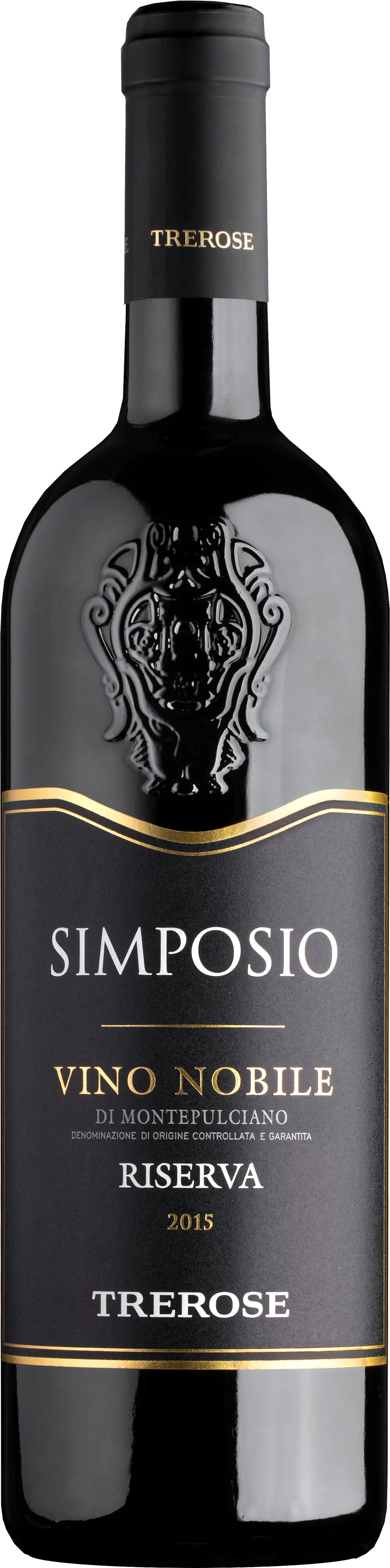
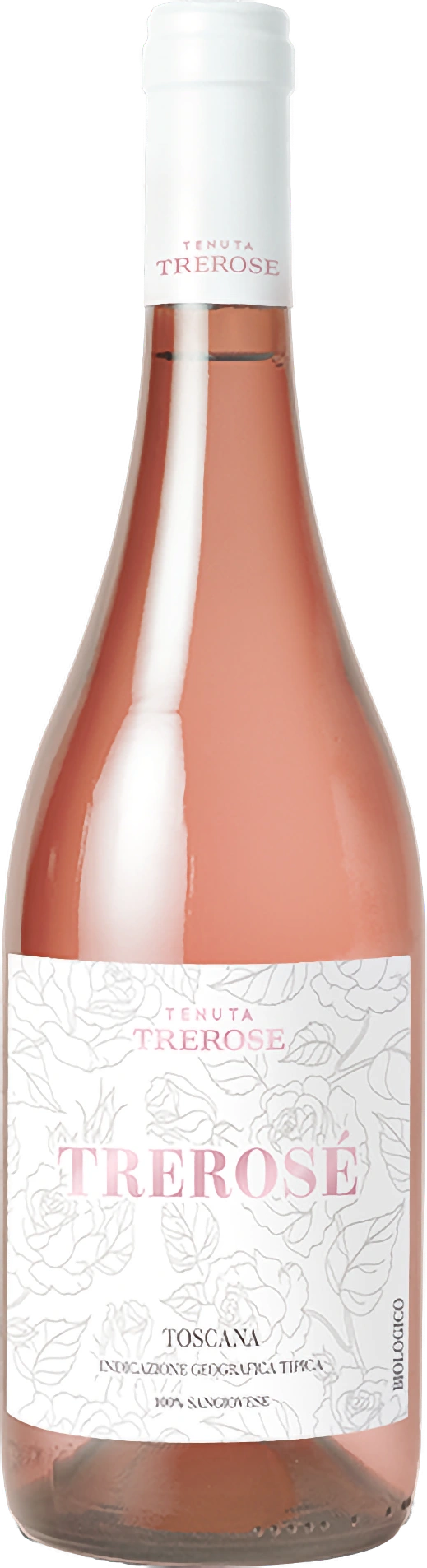
What Tenuta Tre Rose shows in the glass follows a clear internal logic: fruit, acidity and tannin structure that come from the terroir, not forced from the cellar. The Rosé di Tre Rose made from Sangiovese is the most direct entry — light, fruity, made for everyday life. With the Santa Caterina Vino Nobile di Montepulciano, the character of the Prugnolo Gentile becomes clearer: the eponymous plot on the Santa Caterina hill yields grapes on sandy sandstone and saline clay, which is reflected in juiciness and mineral depth. The top designation is the Simposio, a Vino Nobile Riserva DOCG — aged longer, with a more pronounced tannin architecture and the potential for extended bottle development. The Prugnolo Gentile ripens late in this microclimate, which, according to Angelini Wines & Estates, leads to wines with pronounced fruit fullness, salinity and tannic strictness — a style profile that runs through the entire range.