More than two centuries of Riesling on the Middle Mosel
Weingut Josef Rosch is one of the oldest family businesses on the Middle Mosel. Wine has been made in Leiwen for over 200 years — a town located on the great Mosel loop between Klüsserath and Trittenheim, whose vineyards are among the most historic in the region. The current style of the house was shaped by Werner Rosch and his wife Renate: lean, highly mineral Rieslings that practically challenge the flow of drinking with their lively acidity structure. Since 2021, son Nico and his wife Nicola have been running the winery. Nico Rosch brought experience from other Mosel estates, including a biodynamically working winery, and is gradually integrating this knowledge into the business without giving up the established character of the wines.
Steep slopes, slate, and consistent avoidance of interventions
The winery cultivates plots in six top sites: Leiwener Laurentiuslay, Trittenheimer Apotheke, Dhroner Hofberg, Piesporter Goldtröpfchen, Klüsserather Bruderschaft, and Leiwener Klostergarten. Only Riesling is grown. In the Leiwener Laurentiuslay — a southwest-exposed steep slope with dark slate rock — some ungrafted vines grow, whose age can be read in the depth and density of the wines. Dry stone walls, which were laid out generations ago, structure the best plots and hold the weathered slate in the slopes.
In the cellar, the use of cultured yeasts is consistently avoided: all wines ferment spontaneously, i.e., exclusively with the naturally occurring yeasts. Modern cellar technology is left out — the winery describes its approach itself as "like with grandfather 100 years ago". All wines are vegan. The stated goal under Nico Rosch is to further develop the business in the direction of biodynamic cultivation.
Mineral, lively, true to the site — Riesling in its Mosel expression
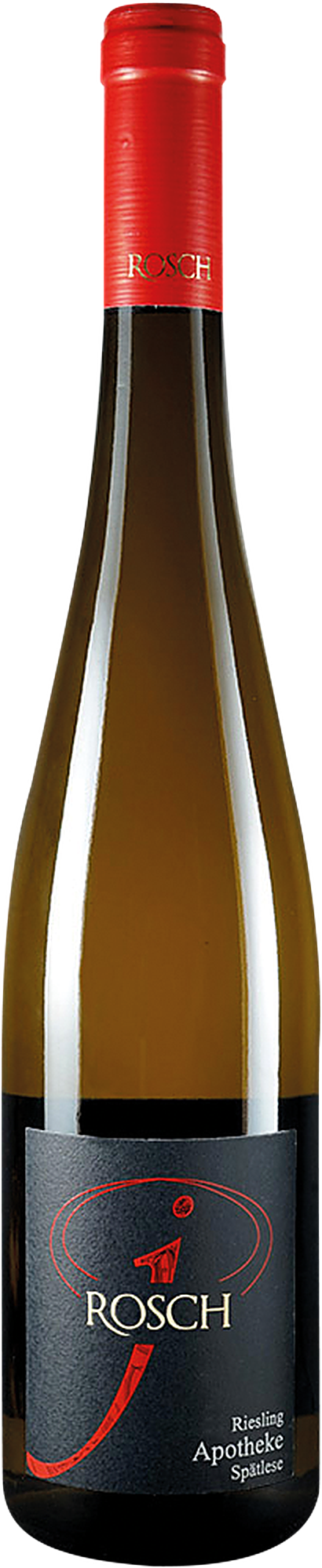
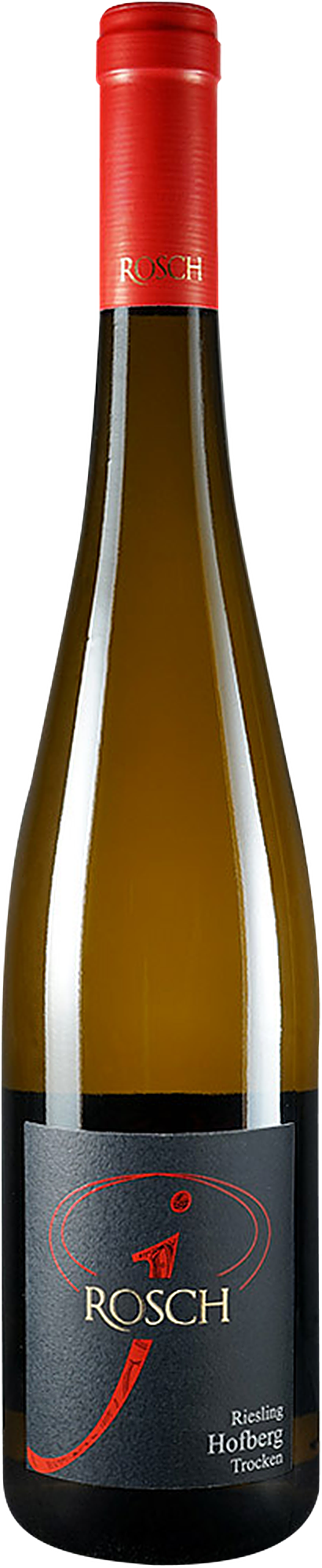
The wines from Josef Rosch do not follow a heavy, opulent style. The Trittenheimer Apotheke, whose vineyard area extends inside and outside the narrow Mosel loop near Trittenheim, delivers highly mineral Rieslings with partly exotic fruit aromas and the heat-storing slate as a backbone. The Dhroner Hofberg stands for spicy-mineral notes, the Leiwener Klostergarten for more accessible, fruit-forward estate wine characters. What all wines have in common: a clear acidity line that creates freshness and tension without stinging, plus a distinct slate tone on the finish. For its quality consistency, the winery has been listed in the most important German wine guides for decades — Eichelmann, Feinschmecker, and Vinum regularly give Josef Rosch high ratings.