From tenant to owner: Lynch-Bages in the hands of the Cazes family
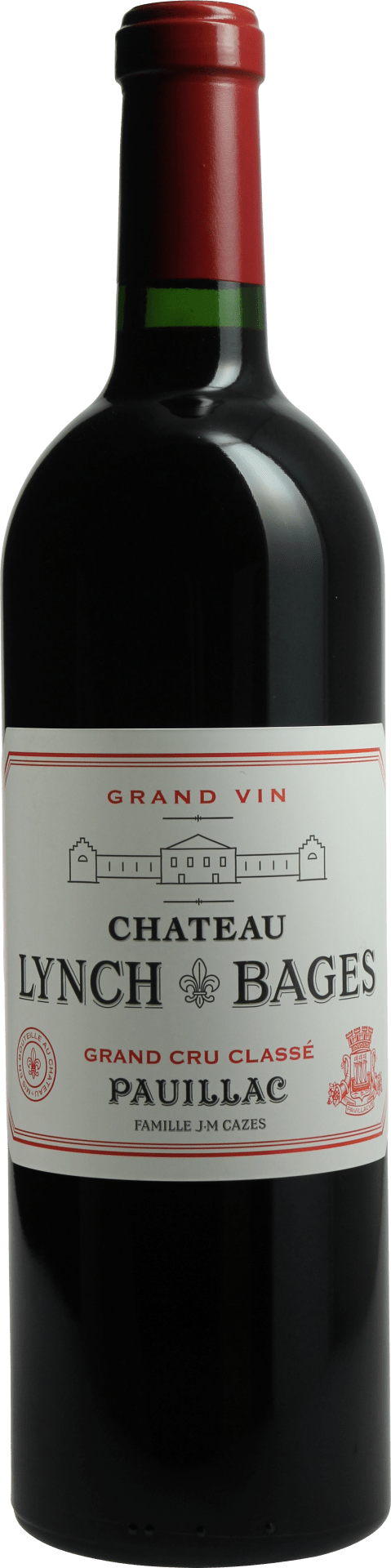
The double name points to Ireland. In the 18th century, the Irishman Thomas Lynch married into the family that owned the estate near Bages. The Lynchs, descendants of John Lynch from Galway, held the property for about 75 years. After that, it changed hands several times. At the time of the 1855 classification, it belonged to the Swiss merchant Jurine, and Lynch-Bages was classified as a Fifth Growth (Cinquième Cru).
The history of today begins in the early 1930s. Jean-Charles Cazes, a trained baker from Pauillac, leased the neglected vineyards and brought them back into shape. In 1939, he bought the estate. His son André continued to run it. In 1973, his grandson Jean-Michel Cazes returned from Paris, a former IBM manager, and modernized the estate. Great-grandson Jean-Charles Cazes has been managing the winery since 2006.
Gravel, mass selection, and a new cellar: how Lynch-Bages works
The vines stand on about 100 hectares in the municipality of Pauillac. A gravel ridge above the Gironde provides well-drained soils: deep layers of gravel over a limestone subsoil. Since 2005, the estate has relied on mass selection for replanting. For this purpose, vines are only propagated from plots that are older than 50 years, and only the best vines provide cuttings. This preserves the genetic diversity of the old stocks. The first Petit Verdot plots from this method were harvested in 2010.
Fertilization is carried out plot-specifically, the vegetation between the rows is controlled, and areas rest under flowering fallow. In the cellar, Jean-Michel Cazes carried out a comprehensive modernization over 15 years, including a new fermentation cellar and more storage capacity. Later, a new winery was added, designed by New York architect Chien Chung Pei. It has twice as many tanks as the old one and a barrel cellar twice as large.
Pauillac with accessibility: wine style and assortment
Cabernet Sauvignon dominates in the vineyard, supplemented by Merlot, Cabernet Franc, and some Petit Verdot. This creates a powerful Pauillac with dark fruit, cedar wood notes, and a long finish. It is significantly more accessible than the reputation of classified growths would suggest. Decanting is worthwhile. It goes well with leg of lamb, grilled entrecôte, or an aged hard cheese.
In addition to the Grand Vin, the estate bottles the second wine Echo de Lynch-Bages, which has been named this since the 2007 vintage. Since 1990, there has also been the white wine Blanc de Lynch-Bages. The family also owns Les Ormes de Pez in Saint-Estèphe, Villa Bel-Air in the Graves, and since 2017, Haut-Batailley in Pauillac.