From the cult of the 16th century to Premier Grand Cru Classé B
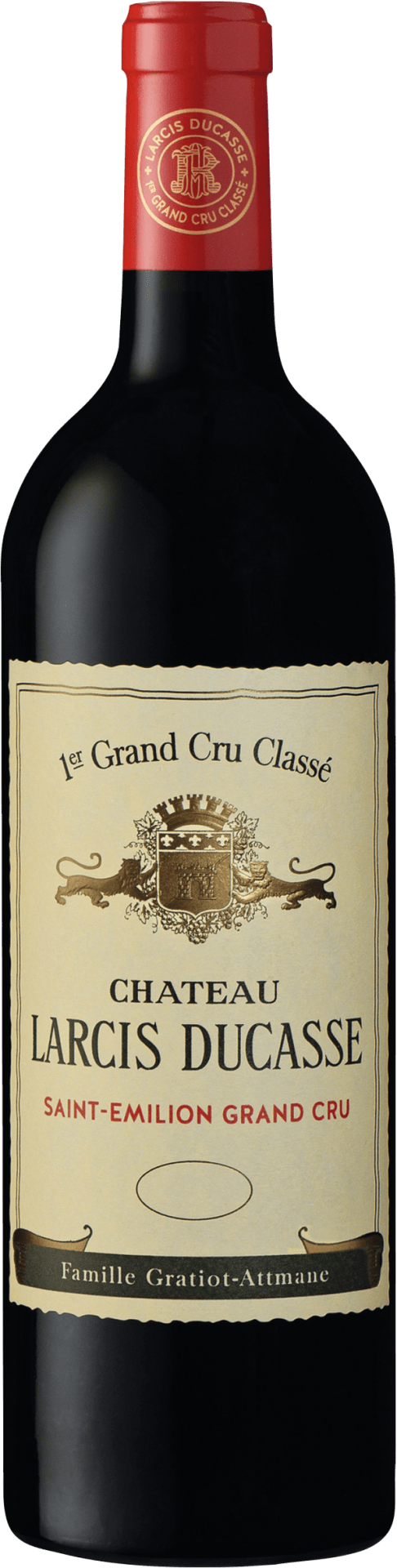
The roots of Château Larcis Ducasse run deep: its wines were already considered highly sought-after in the 16th century, and in 1777, the Libourne merchant Pierre Beylot acquired them at an exceptionally high price. The modern foundation was laid in 1893 by Henri Raba, who bought the estate and thus laid the foundation for over a century of family ownership. After his death in 1925, his widow and his son André Raba continued to run the winery before it passed to Hélène Gratiot Alphandéry in 1941. Her son Jacques-Olivier Gratiot inherited the estate in 1990 — today the family operates as Gratiot-Attmane. For decades, however, the potential of the location remained untapped: the wines lost critic praise and attention. This changed abruptly when the family entrusted Nicolas Thienpont with the management in 2002, together with oenologist David Suire and consultants Stéphane Derenoncourt and Julien Lavenu. Ten years later, in 2012, Larcis Ducasse was upgraded in the Saint-Émilion classification from Grand Cru Classé to Premier Grand Cru Classé B — a recognition that confirmed the measurable leap in quality since 2002.
Terroir loyalty, organic farming, and artisanal precision in the cellar
The winery covers 11.15 hectares on the Côte de Pavie, the south-exposed slope that connects the limestone plateau of Saint-Émilion with the lower terraces — directly next to Château Pavie, with a view of the Dordogne valley. The soils form a mosaic of asteriated limestone, clay-loam, and colluvial clay-limestone soils. The vines are on average 35 years old and are in a location that is protected from both north winds and frost. From the 2005 vintage, the team converted the entire management to 100% organic farming. In the cellar, they rely on gravity flow, whole-bunch fermentation in cement tanks, a maceration period of 25 to 28 days, and aging for 16 to 18 months in French oak barrels (50% new, 50% one-year-old). The new team brought fundamental changes to the harvest: where previously harvesting was done early within two to three days, the selective hand-harvesting now takes two to three weeks — until each parcel reaches its optimal ripening window.
Power and finesse from limestone and clay — what to expect from the wines
The main wine is a cuvée of predominantly Merlot (around 83–86%) and Cabernet Franc (14–17%). The style combines the fleshy depth of the right bank with a minerality and freshness unusual for Saint-Émilion, which comes directly from the limestone subsoil. Typical aromas: red and dark cherries, plum, licorice, a hint of smoke and truffle, plus a distinctive slate and chalk spice in the finish. The tannins are present but silky — not a weightlifter, but a structured, long-lived wine with real aging potential. In cooler vintages, Larcis Ducasse shows more savory, salty traits; in warm years like 2022, the fruit density comes to the fore without losing the line. Anyone who chooses the Premier Grand Cru Classé B should give it time: several years of bottle aging are worth it, and the drinking window typically extends over a decade and more.