From the Marche to Mendoza: the roots of the Catena family
Alamos is the result of a story that begins in 1898 in the Italian region of Marche: Nicola Catena emigrates to Argentina and plants his first Malbec vines in 1902 at the foot of the Andes in Mendoza — at a time when the variety in Europe was little more than a blending grape. From this decision, the Bodega Catena Zapata emerged over generations, today one of the defining addresses of Argentine viticulture. Alamos as an independent brand within the Catena portfolio followed from 1993 — the name is derived from the poplar avenues that protect the vineyards from the sharp Andean wind in Mendoza's high altitudes.
Nicolás Catena Zapata, grandson of the founder, consistently developed the winery from the 1960s onwards and brought European vinification techniques to Argentina. Today, his daughter Laura Catena, a trained biologist and physician, stands by the side of the company — the winery has remained entirely in family hands to this day.
Altitude and snowmelt
Mendoza is located in the Argentine Región del Nuevo Cuyo, nestled between the dry climate of the Andean foothills and the peaks of the Cordillera. The vineyards of Alamos grow at altitudes of 900 to 1,500 meters — conditions that combine intense solar radiation with cool nights. These temperature fluctuations extend the ripening period, preserve the aromatic breadth of the grapes, and promote the development of thicker grape skins, which gives the wine structure and color depth. The vineyards are irrigated exclusively with mineral-rich meltwater from the Andes.
In the cellar, Alamos relies on double manual grape sorting to process only flawless fruit. The wines mature in a controlled manner in oak — used moderately so as not to mask the grape variety characteristics. Cellar master Lucía Vaieretti, who grew up in Mendoza and spent her wine career years in the Uco Valley, has led the vinification since 2016. She learned her craft at the Don Bosco School, one of the most renowned training centers for oenology in South America.
Malbec, Cabernet Sauvignon, and Torrontés: clear grape variety portraits from great heights
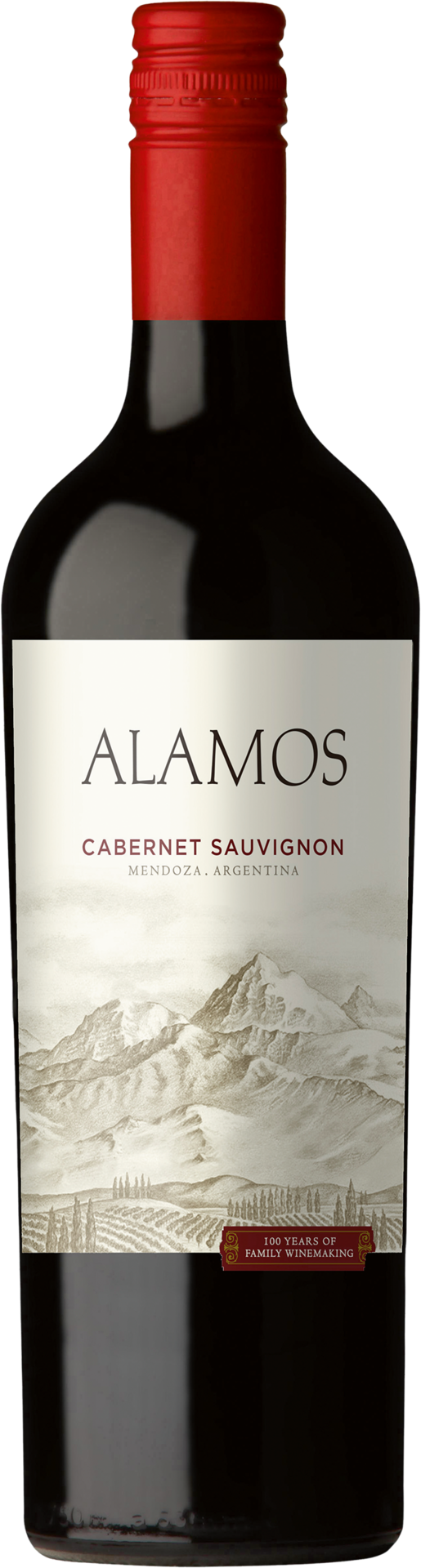
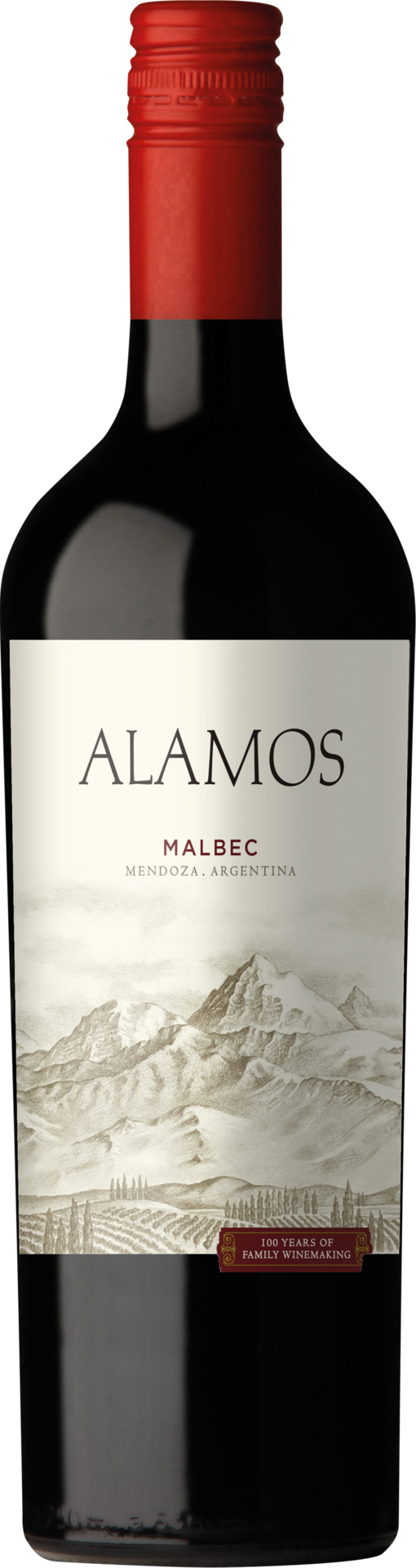
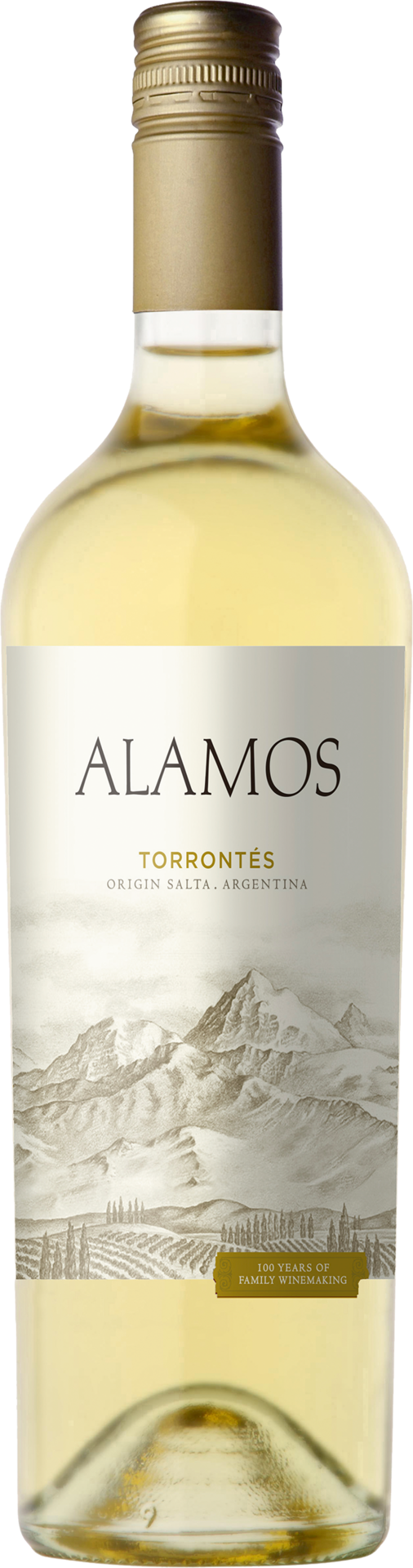
Alamos sees itself as a window into Argentine viticulture — the range focuses on a few, clearly defined grape varieties: Malbec as the main and flagship discipline, plus Cabernet Sauvignon and the white wine variety Torrontés, which is native to Argentina. The style follows a clear line: the fruit should be in the foreground, supported by the natural acid structure of the high altitudes, without being over-molded by excessive use of wood. Malbec from Mendoza typically shows dark berry fruit, velvety tannins, and a spicy finish at Alamos — a profile that directly reflects its origin in the sites of the Andean slopes. Cabernet Sauvignon brings more structure and grip, while Torrontés scores with floral aromas and fresh texture, as is characteristic for the grape variety in Argentine high altitudes.