Three continents, one farm: the story behind the name Stark-Condé
Behind the name Stark-Condé lies a family history that begins on three continents. Hans Schröder, born in Stellenbosch, met his future wife Midori Maruyama during his studies in Japan in the 1960s. Since their marriage would have been illegal under apartheid law in South Africa, the couple lived in Tokyo for the next three decades, where they raised their three daughters. When the end of apartheid was foreseeable, Hans and Midori returned — and in 1989 bought the Oude Nektar farm in the Jonkershoek Valley. Daughter Marie and her husband José Condé, a Cuban-American graphic designer, soon followed them to South Africa.
What began as an experiment in 1998 has written wine history: José Condé, without formal cellar training, produced his first Cabernet Sauvignon from a single vineyard plot — 2,400 bottles, with the simplest equipment. The result received five stars in the Platter's Wine Guide and was chosen by Oz Clarke as one of the top 20 wines of the year. The brand name unites two family lines: “Stark” stands for Franziska Stark, Hans Schröder's mother and the first of the family to settle in Stellenbosch; “Condé” for José's father, a Cuban immigrant to whom José owes his design drive and understanding of craftsmanship.
Organic viticulture on the volcano: philosophy and craft in the Jonkershoek Valley
The Jonkershoek Valley is not an ordinary Stellenbosch location. The vineyards lie on decomposed granite soil over clay, at altitudes between 150 and 600 meters. The annual winter rainfall is historically almost twice as high as in the rest of Stellenbosch, and the southeast wind blowing through the valley in summer keeps disease pressure and yields low. 80 percent of the 240-hectare farm remains untouched natural land with native fynbos vegetation — an adjacent part of the Jonkershoek National Park is part of the UNESCO World Heritage site. The vineyards themselves have been certified organic since 2021, after the estate had already worked according to sustainable IPW standards for more than ten years.
In the cellar, José Condé consistently follows the principle of minimal intervention: spontaneous fermentation with wild yeasts in open vats, manual pigeage around the clock, basket press, and subsequent aging of the red wines for up to 22 months in French oak barrels. Fining and filtration are omitted. José Condé's own words summarize the philosophy concisely: “Keep things as simple as possible.”
Elegant tannins, clear origin: what distinguishes Stark-Condé wines
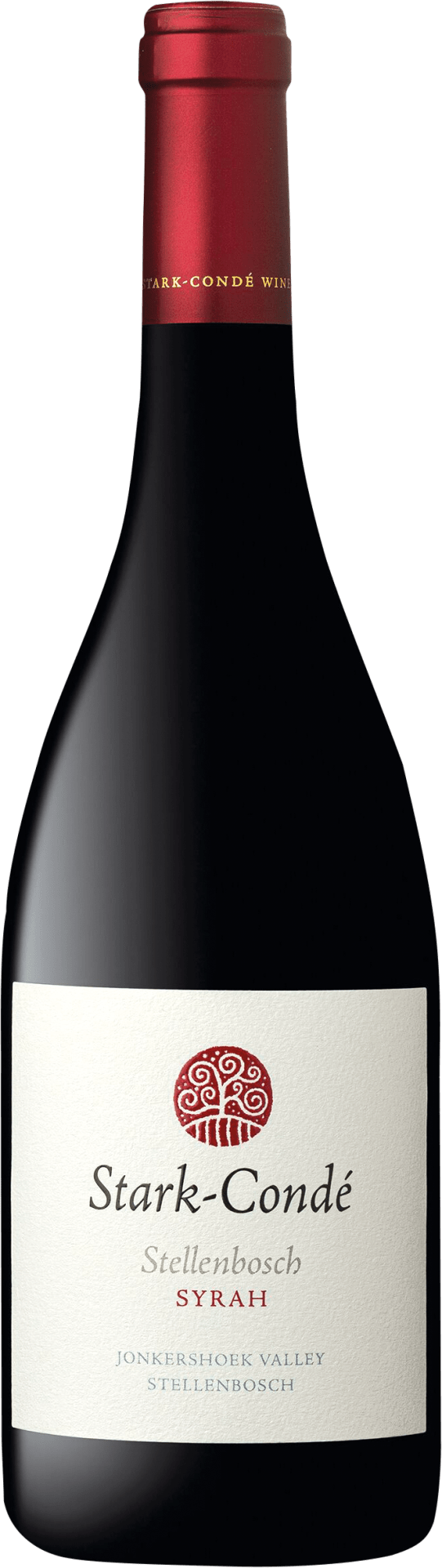
Cabernet Sauvignon remains the common thread in the range — and the wine with which Stark-Condé became internationally known. The Jonkershoek Valley, according to José Condé, develops a characteristically elegant tannin structure because skins, seeds, and tannins ripen more slowly and evenly in the cool mountain climate than elsewhere in Stellenbosch. This peculiarity also characterizes the Syrah, which is considered another focus of the house. The flagship wine, Three Pines Cabernet Sauvignon — named after three pine trees above the cellar — received 95 points from critic Tim Atkin MW and the status of a South African “First Growth.”
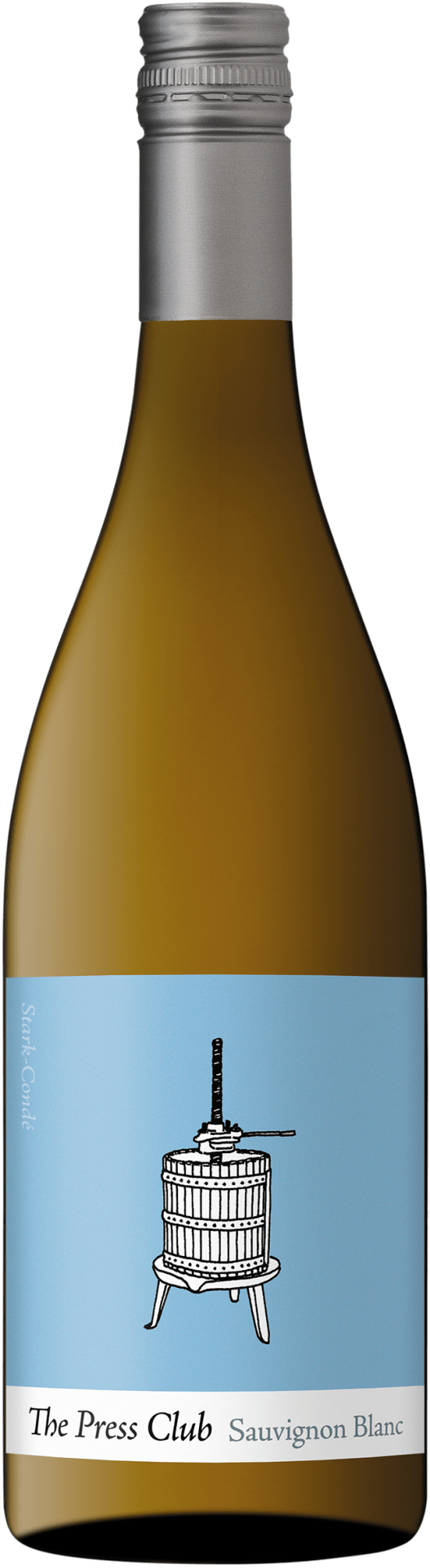
In addition, the range shows how versatile the location is. The Field Blend of Viognier, Roussanne, Chenin Blanc, and Verdelho is vinified as a so-called co-ferment: all grape varieties grow in the same vineyard and are harvested and fermented together, not brought together only after fermentation. Nine months of lees aging, unfined and unfiltered, provide a white wine with body, aromatic density, and a fresh acid structure at the same time. The Sauvignon Blanc under the The Press Club label and the historic estate grounds of Oude Nektar, which gave the winery its origin, round off the picture: a range that reflects origin and craft, not market logic.