From strawberry tree forest to Brunello: the history of Le Macioche
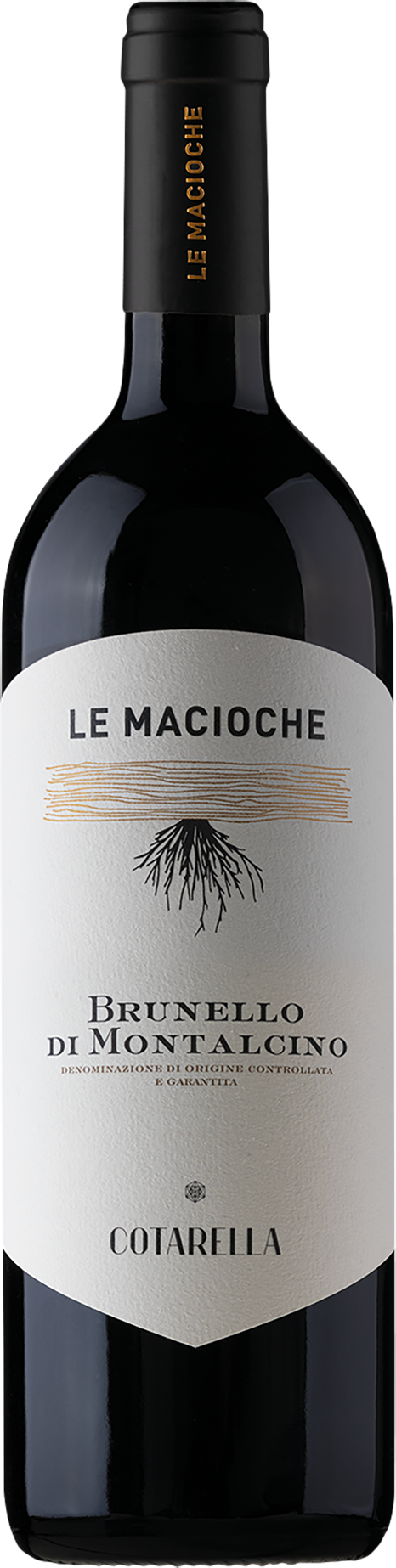
The name Le Macioche goes back to an old piece of forest that borders the property to the west: Macioca is the Sienese term for the strawberry tree (Corbezzolo), whose fruits were once processed into honey there. In 1979, Matilde Zecca and Achille Mazzocchi bought the site, then still known as “Azienda Agricola Palazzina”, and began to reorganize it. In 1988, they planted three hectares of Sangiovese, and in 1995, the first wine under the Le Macioche label was released with the 1991 vintage. The founders' children did not want to continue the estate, which is why it passed into the hands of the Famiglia Cotarella in 2017 — one of Italy's most renowned winemaking families. Brothers Riccardo and Renzo Cotarella had founded the Falesco winery on the border between Umbria and Lazio in 1979; Riccardo is considered one of Italy's most influential oenologists, and Renzo was long-time CEO and head cellar master at Antinori. In 2017, the three daughters of the next generation — Dominga and Marta (Riccardo's daughters) as well as Enrica (Renzo's daughter) — officially took over the management of the family businesses. For them, Le Macioche was the entry into one of Italy's most prestigious wine regions.
Biodynamic care at an altitude of 450 meters
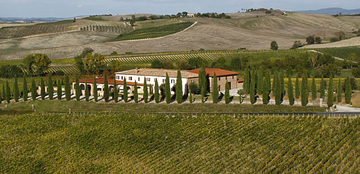
Le Macioche is located just southeast of the small town of Montalcino, at an altitude of around 450 meters, surrounded by well-known neighbors such as San Polo and Fattoria dei Barbi. The estate's four Brunello plots — totaling around 3.5 hectares — are all oriented to the southwest. This exposure, combined with the altitude, ensures even ripening and constant ventilation throughout the entire growing season. The soils are clayey with a high proportion of skeleton due to underlying Galestro rock — a classic substrate of southern Montalcino that gives the vines structure while preserving freshness. Since the 2018 vintage, the estate has been working entirely according to organic principles, certified according to the ICEA protocol. The grapes are harvested exclusively by hand, and the training system in the vineyard is Guyot. Vinification takes place in the cellar, which the engineer Achille Mazzocchi once had built into a natural rock cave under the estate buildings — an unusual but climatically advantageous solution. The Rosso di Montalcino matures in 500-liter tonneaux; for the Brunello line, oak containers are used, the exact composition of which the Cotarellas have fine-tuned since the takeover.
Sangiovese Grosso as the only language — Brunello, Riserva, Rosso
Le Macioche produces exclusively on the basis of Sangiovese Grosso, the clone also known as Brunello in Montalcino. The range includes three wines: the Rosso di Montalcino as a more accessible entry into the estate's terroir, the classic Brunello di Montalcino DOCG and the Riserva as the long-aged peak of the house. On the nose, the wines show ripe red berries, cocoa, balsamic herbs and, with increasing aging, notes of tobacco, leather and dark chocolate. On the palate, the combination of a firm tannin structure, fresh acidity and fruity density is striking — a balance that the predecessors of Le Macioche already established as a stylistic trademark and which the Cotarella family continues with technical precision. The wines go well with wild boar goulash, roasted beef, venison or strong hard cheese from the Apennines. Serving temperature: 17–18 °C.