From the manor of the Counts of Bracci to the Antinori estate
The name La Braccesca is not a marketing construct, but lived history: The estate was once owned by the Counts of Bracci, whose coat of arms — an armored arm holding a sword — still serves as the estate logo today. In 1990, Marchese Piero Antinori acquired the property in the southeast of Tuscany, a few kilometers from Montepulciano, on the border with Umbria. At this time, the Vino Nobile di Montepulciano was experiencing its second boom, and the Antinoris recognized the potential of this region early on. The family itself has been producing wine in Tuscany for over 600 years — La Braccesca has been one of their most important estates outside the main house in Florence since 1990.
As early as the beginning of the 1990s, the new owners began to plant new vineyards and systematically develop existing ones. Today, La Braccesca covers a total area of around 508 hectares, of which about 334 hectares are planted with vines — divided into two clearly separated zones: the hills between Montepulciano and Cortona as well as the three historic subzones Cervognano, Santa Pia, and Gracciano in the immediate vicinity of Montepulciano.
Two soils, two climate zones, one standard
La Braccesca works in two very different terroirs simultaneously. In Montepulciano, the sites from which the Vino Nobile comes dominate: Prugnolo Gentile, a local clone of Sangiovese, grows here on soils characterized by rolling hills and a moderate Tuscan climate. Yields are deliberately kept below the permitted maximums to ensure concentration and origin character. In Cortona — a separate DOC since 1999 — clay-rich, well-drained soils determine the picture; the dry, hot climate of the hillside below the city walls favors Syrah in an extraordinary way.
Cellar management follows the ambition to combine tradition and technical precision. The completely underground aging rooms house barriques, tonneaux, and larger barrels made of French, American, and Hungarian oak — selected according to the wine and the desired style. Stainless steel tanks for fermentation and temperature-controlled maceration at 27–30 °C complement the infrastructure. The philosophy is clearly formulated: respect for local tradition, combined with consistent quality development.
Prugnolo Gentile meets Syrah — two characters, one estate
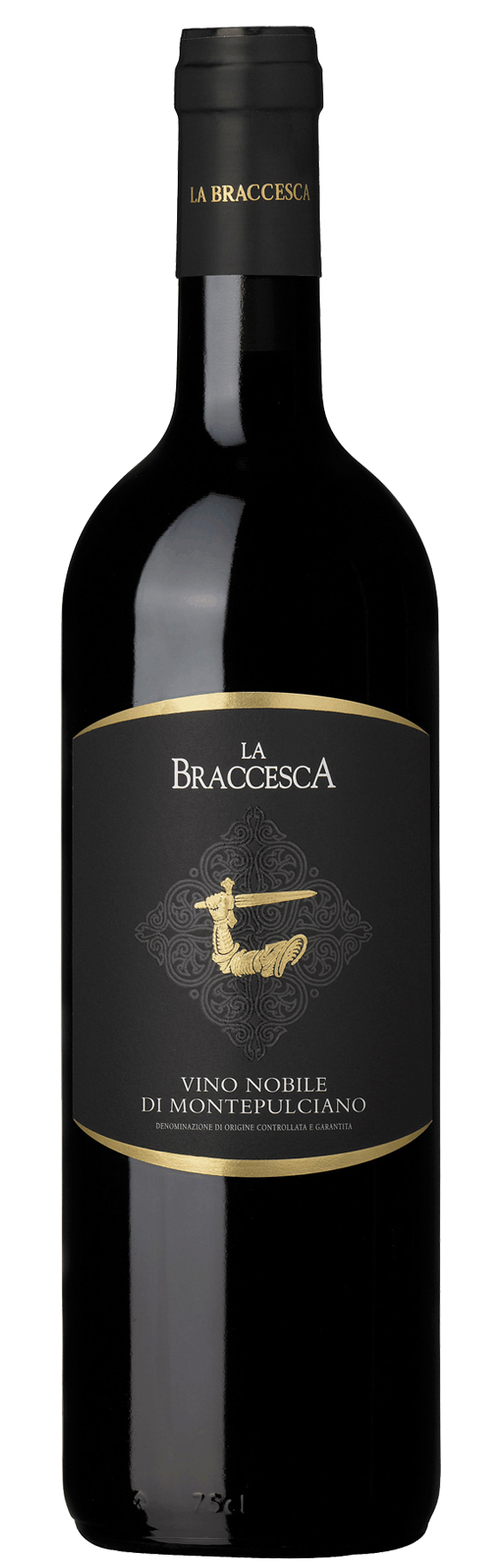
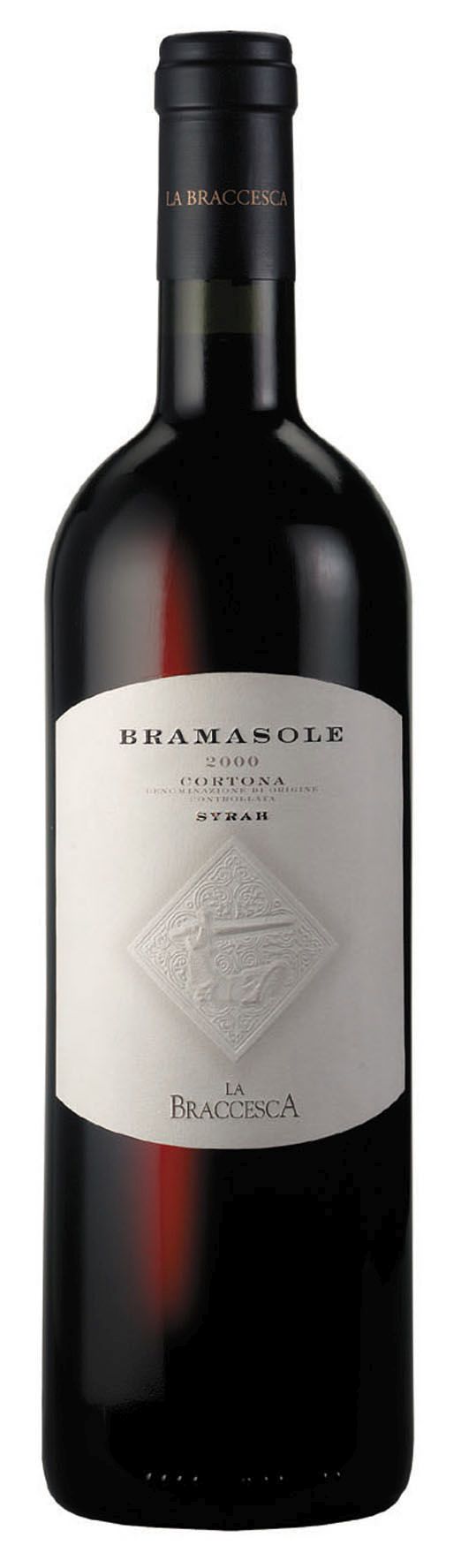
The assortment of La Braccesca directly reflects this geographical balancing act. The Vino Nobile di Montepulciano DOCG line — including the simple Annata and the Riserva Santa Pia — stands for the classic Tuscan red wine: blackberry, cherry, and spices, fine-meshed tannins, tobacco and violet notes from barrique contact, long finish. The Prugnolo Gentile accounts for at least 80 percent of the assemblage. On the other side is the Syrah from Cortona: The Bramasole, a single-varietal Syrah from the hillsides below Cortona, and the Achelo show what clay-rich soils and intense sunlight get out of this grape variety — dark fruit, spice, a structuring density that differs significantly from the classic Rhône Syrah. Anyone who wants to get to know both poles of the estate has an instructive contrast program ahead of them with these two wine lines — and a direct insight into the breadth of southern Tuscany.