From Carthusian monastery to Ruwer Valley winery with a history of almost 700 years
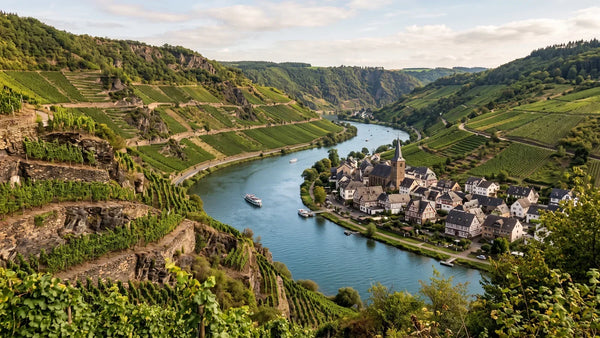
The history of the Karthäuserhof begins in the year 1335, when Elector Balduin of Luxembourg gifted the country estate to the Carthusian monks. They cultivated the steep slopes of today's Karthäuserhofberg for centuries until the Napoleonic secularizations dissolved the monastery. In 1811, Valentin Leonardy acquired the estate, which passed into the possession of the Rautenstrauch family through his daughter. Over three generations, the Rautenstrauchs led the winery to international fame — Karl Wilhelm Rautenstrauch, for example, managed it for over 30 years and obtained the classification of the Karthäuserhofberg into the highest vineyard category from the Royal Prussian government. His son Hans Wilhelm later oversaw legendary vintages, including 1903, 1921, and 1949. Through marriage, the business passed to the Tyrell family; Christoph Tyrell took over in 1986 and was voted Winemaker of the Year by both Feinschmecker (1997) and Gault Millau (2005). Since 2012, responsibility has rested with Albert Behler, who leads the estate in the seventh generation. The Karthäuserhof is considered one of the oldest wineries in the world today — located in Trier-Eitelsbach, in the Ruwer Valley, a tributary of the Mosel.
Biodynamic vineyard, manual labor, and the primacy of terroir
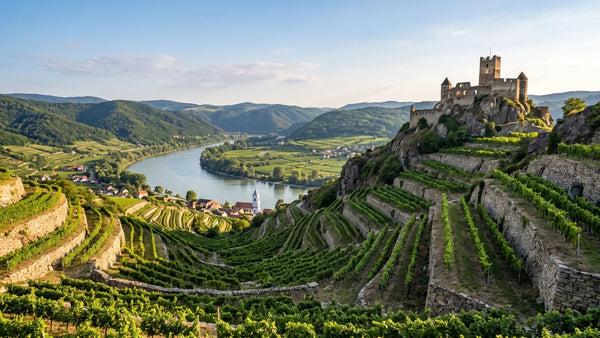
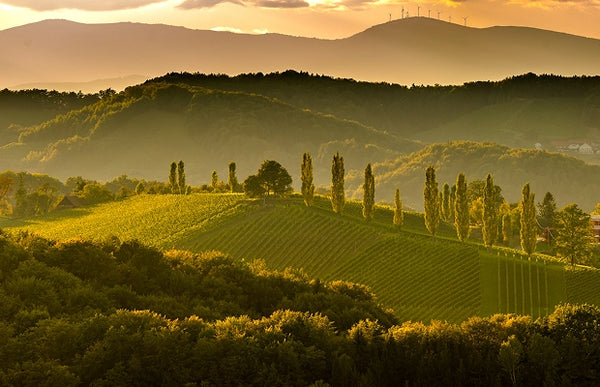
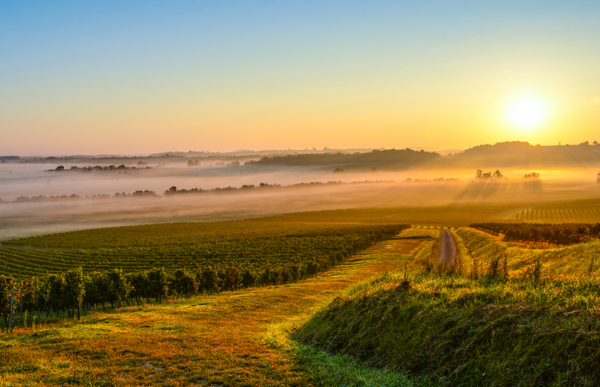
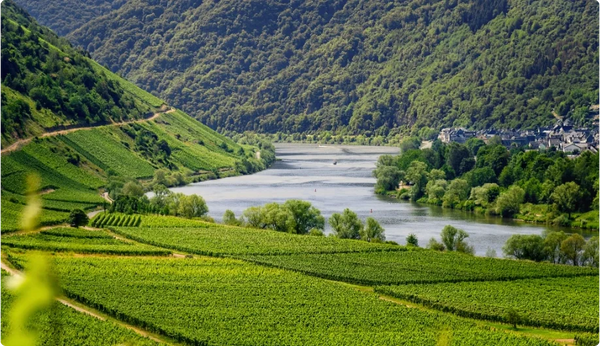
The Karthäuserhofberg is a monopoly site: the entire vineyard area, covering almost 20 hectares, is solely owned by the estate and classified as VDP.Große Lage. The slopes drop with an inclination of up to 55% and are southwest-facing — maximum sunlight meets the cool nights of the narrow Ruwer Valley. The subsoil consists of Devonian slate, iron-rich and heat-retaining, giving the wines their crystalline minerality. The vineyard is managed according to biodynamic principles: preparations according to the biodynamic method are used in the vineyard, the harvest is carried out exclusively by hand, and yields are consistently minimized. Since 2018, the estate has purchased additional sites in the Ruwer Valley and filled gaps in the vines with new plantings. In the cellar, the maxim is to stay out of the way of the terroir as much as possible: the wines mature without excessive intervention so that clarity, freshness, and the character of the site are preserved.
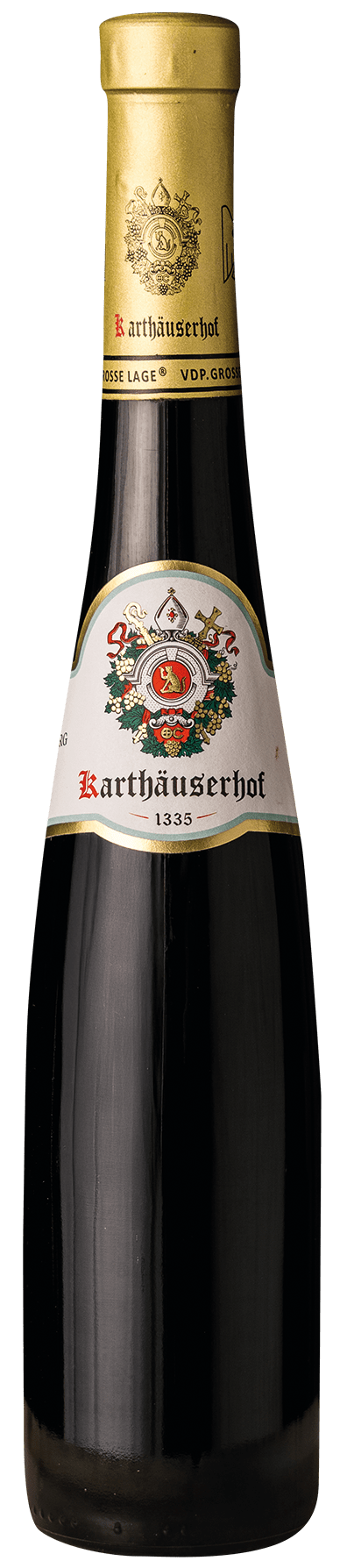
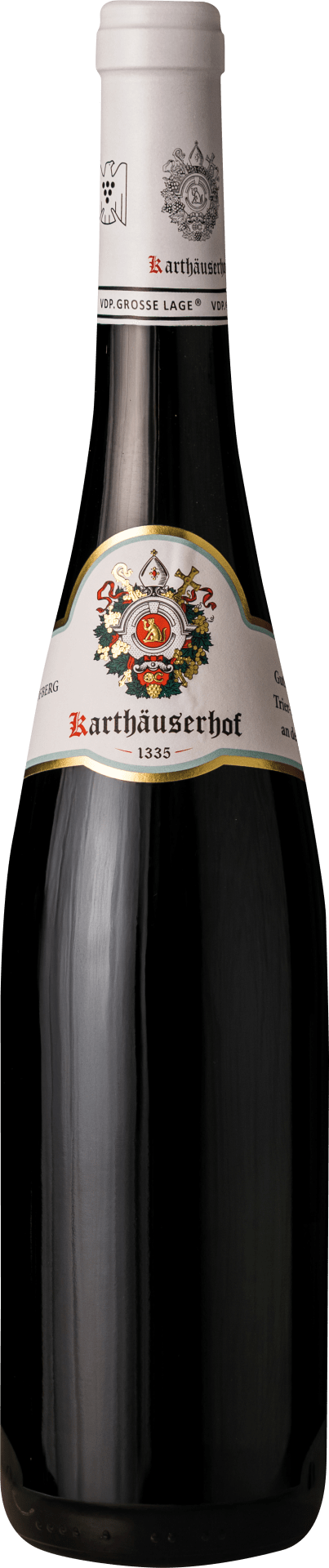
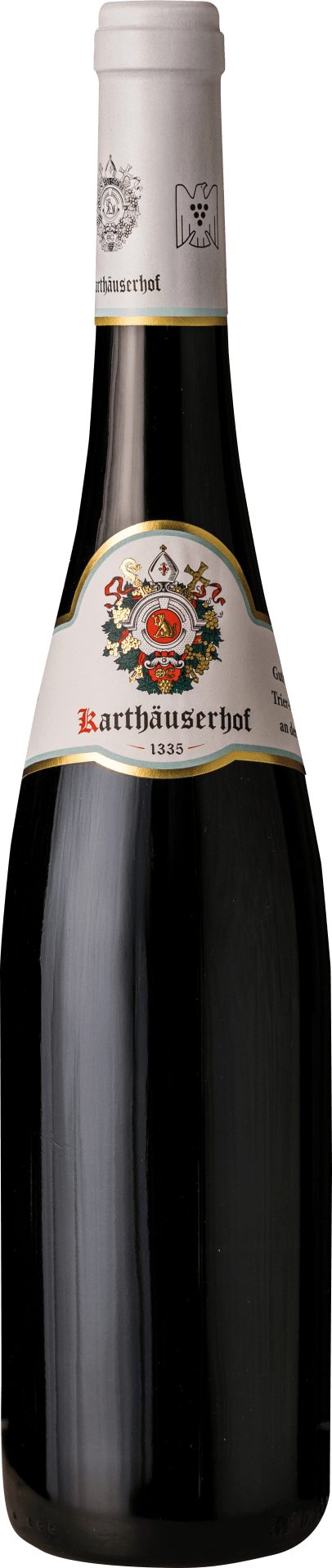
The external trademark is the neck label — as the only winery in Germany, the Karthäuserhof attaches its labels to the neck of the bottle, a tradition from the late 19th century. The coat of arms shows the monkey, the animal of the Carthusian order.
Ruwer Riesling in two faces: classic site wines and the BRUNO line
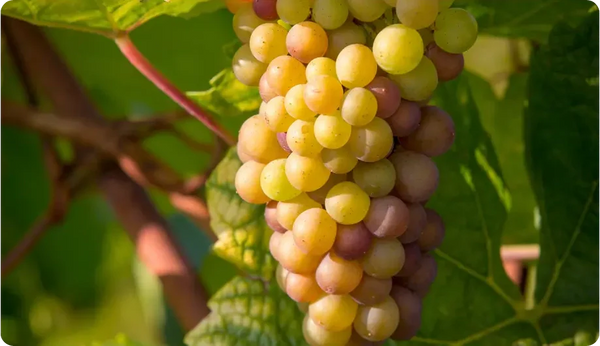
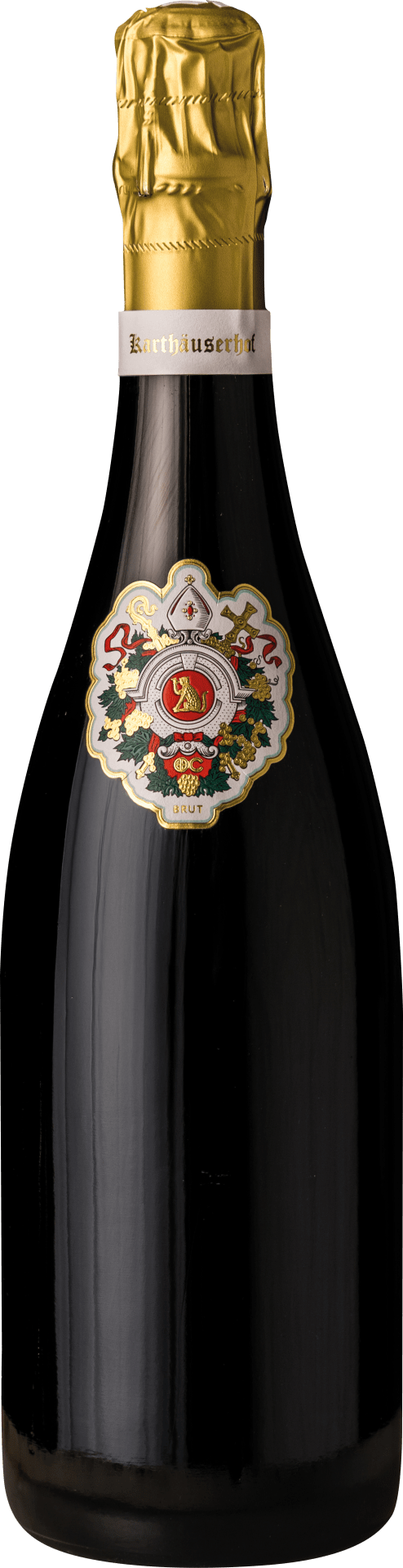
The Karthäuserhof's range is divided into two clearly distinct lines. The classic site wines — from the Schieferkristall to the Eitelsbacher Alte Reben to the Karthäuserhofberg Große Gewächs and the Kabinett predicates — come exclusively from the Karthäuserhofberg or from at least 50-year-old vines in the Ruwer Valley. Their style is characterized by lively acidity, salty slate minerality, aromas of white peach, citrus zest, and a cool, spicy finish — typical of the filigree Ruwer Rieslings, which appear lighter and cooler than many Mosel counterparts. With increasing maturity, these wines develop deeper complexity and structure. The program is complemented by the Karthäuserhof BRUT, a sparkling wine made from Riesling and Pinot Blanc with a mineral character.
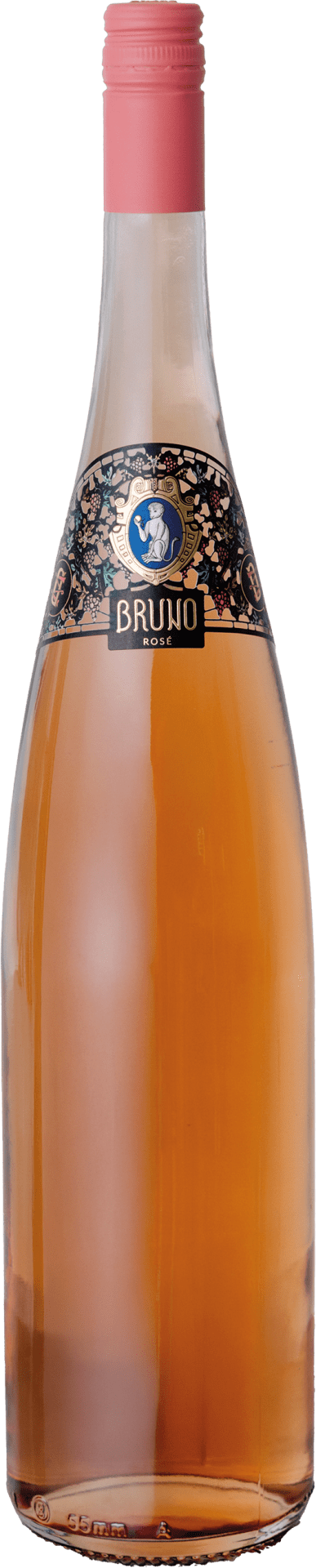
The BRUNO line — named after Bruno of Cologne, the founder of the Carthusian order, whose name is emblazoned in large metal letters on the old monastery facade — is the more accessible brother: fruity-fresh, uncomplicated in its claim, but still shaped by the terroir of the Ruwer Valley. BRUNO Riesling, BRUNO Riesling Kabinett, and BRUNO Pinot Blanc are each also offered in magnum bottles — a format that suits the aging potential of these wines and is recommended for the table with guests.