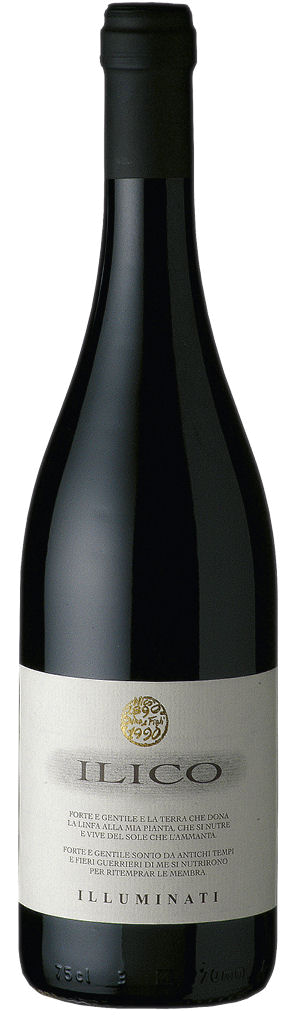
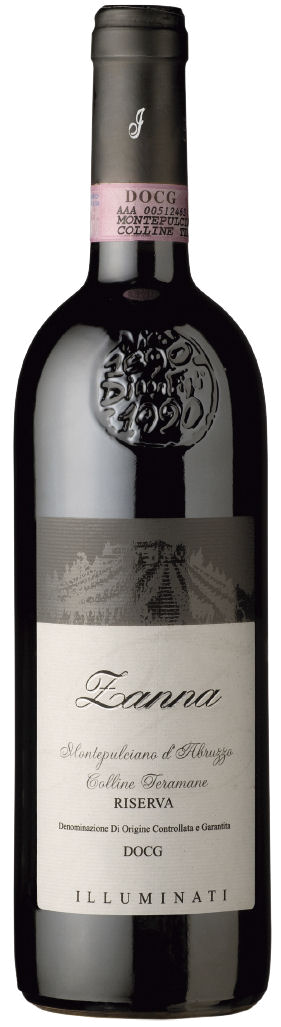
From Fattoria Nicò to a reference address for the Colline Teramane
In 1890, Nicola Illuminati founded the Fattoria Nicò on the hills on the border between Abruzzo and the Marche — without technological ambitions, but with the clear artisanal claim to produce honest wine. What began as a small-scale family farm developed over the following generations into one of the defining wineries of central Italy. Dino Illuminati took the decisive step: from the 1950s onwards, he knew how to bring the viticulturally almost forgotten zone of Controguerra and the Colline Teramane back into the public consciousness — as a winemaker, lobbyist, and visionary all in one. He pushed for the founding of the consortium, fought for the DOC recognition for Controguerra (1996), and ensured that the Colline Teramane today holds the only DOCG in all of Abruzzo.
Today, the responsibility lies with Stefano Illuminati, Dino's son, who runs the winery together with his brother Lorenzo and the next generation of the family — Stefano's son bears the name Nicola again, as if the circle had been deliberately closed. In around 130 years, the vineyard area has grown from 15 to 130 hectares, all family-owned, all self-managed, and all within the Controguerra DOC and Colline Teramane Montepulciano d'Abruzzo DOCG denominations.
Clay from the soil: Vineyard and cellar in Controguerra
From the winery on the heights of Controguerra, you can see the Adriatic coast and the snow-capped peaks of the Gran Sasso at the same time on clear days — and it is precisely this interplay that shapes the wines. 320 meters above sea level, loamy soils, the massif in the north as a windbreak against cold air masses, the sea breeze as a natural temperature regulator: a combination that allows for ripe fruit and fresh structure in one glass. The clay-rich soil stores moisture during dry phases and releases it in a controlled manner to the roots — it is the main source of the density and depth that Illuminati wines show on the finish.
In the vineyard, the team works with pergola training and green harvesting for yield control; the use of pesticides is reduced to a minimum, and organic fertilizers and cover crops between the rows promote soil life. In the cellar, careful maceration is followed by maturation in large Slavonian oak containers — for top wines like the Zanna, with 16 days of skin contact and subsequent extended barrel aging. After the initial fermentation, the Riparosso undergoes a Ripasso on Amarone pomace, which gives it additional color, structure, and complexity.
Montepulciano at the center, Pecorino and Passerina as characters
The heart of the range is the Montepulciano d'Abruzzo in various versions: from the accessible Riparosso, which is regularly listed in international wine guides as a price-performance reference, to the Zanna — a single-vineyard Reserva from old pergola vines in the historical core of the estate, which shows the full expressive power of the terroir on the palate with dark berry fruit, tobacco, and licorice. On the white side, there are Pecorino and Passerina: the autochthonous Pecorino grape provides mineral-fresh wines with a citrus line and a structure typical of the variety; the Passerina brings floral lightness and a salty finish — both varieties characteristic of the Colline Teramane and clearly shaped by their origin at Illuminati. Around 60 percent of production goes to export, to five continents — the winery from Controguerra has long since ceased to be a regional affair.