A Valencian dream in the province of Cádiz
Vicente Taberner Carsi comes from Valencia — but his heart beat early for the deep south of Spain. Around the year 2000, he found what he was looking for in the area of Arcos de la Frontera: a 91-hectare estate at an altitude of 150 meters, framed by rolling hills, with a view of the Sierra de Grazalema and the Bornos reservoir basin. On this land, which was already used for viticulture in Roman times, he founded Huerta de Albalá — with the goal of showing Rioja and Ribera del Duero that Andalusia can do more than sherry. The first wines came onto the market with the 2005 vintage and quickly garnered international attention. Today, 25 years after its founding, the family runs the winery as a closed project: vineyard, cellar and marketing in one hand, with around 50 percent of the annual production going to export.
Terroir before technology — how Huerta de Albalá thinks about its wines
The microclimate between the Grazalema mountains and the Bornos reservoir is the decisive location advantage: hot days, cool nights, Atlantic influence — this slows down ripening and preserves the acidity structure of the grapes. The 75 hectares of vineyards comprise 225,000 vines, divided into individual plots with sometimes very different soils. Each plot is managed separately, vinified separately and aged separately before a decision is made on the final blend. The artisanal core of the cellar: manual pumping-over processes during fermentation, controlled temperature management in the tanks and aging in over 450 barrels of French and American oak — including barrels from selected cooperages such as Sylvain, Mercier and François Frères. New barrels are first used for the top wines and then passed on to the simpler lines. Oenologist Santiago is now responsible for the cellar; his approach combines agronomic expertise with respect for the grown structures of the terroir.
Tintilla de Rota, Syrah and the range between everyday life and prestige
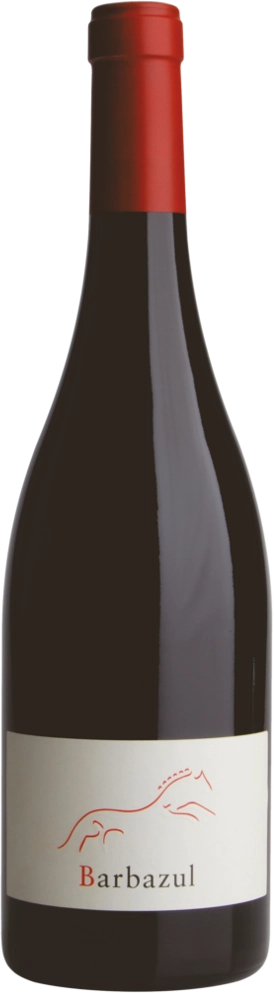
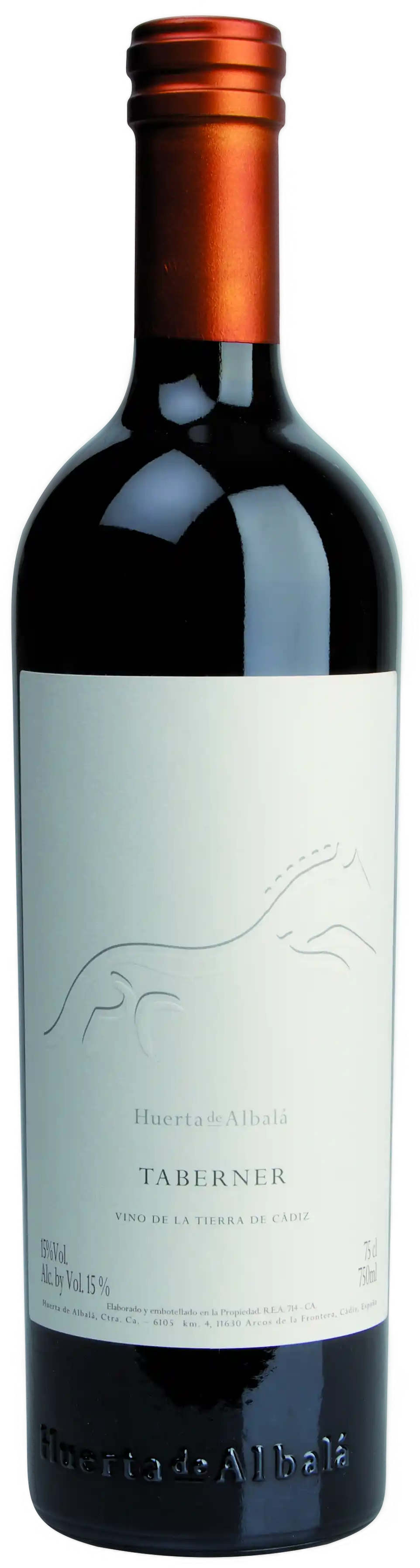
The grape variety profile reflects both the conviction and the challenge of the location: 60 percent Syrah, 20 percent Merlot, 10 percent Cabernet Sauvignon — and 10 percent Tintilla de Rota, an almost extinct variety from the province of Cádiz, which Huerta de Albalá actively preserves and integrates into its cuvées. In addition, there are 160 hectares of Chardonnay vineyards in the Balbaina zone near Jerez, from which the white wine line is fed. The range is clearly structured: The Barbazul — as Tinto, Rosado and Blanco — stands for an accessible, fruit-driven character from the entire grape variety spectrum of the estate. The Taberner is a 100 percent Syrah, aged for 18 months in French oak barrels, powerful and structured. Finally, Taberner No. 1 marks the pinnacle: limited to around 10,000 bottles annually, it is only created in vintages in which the harvested grapes meet the requirements. All three lines stand for the same approach — wines that show where they come from: from the Atlantic-influenced hinterland of Cádiz, far outside the sherry zone, and that is exactly their trump card.