From family castle to global brand: eight generations of olive oil in Jaén
The history of Castillo de Canena begins in 1780, when the Vañó family's property — fields and olive groves around the village of Canena — was first officially recorded in the cadastre of Úbeda. Jaén, the province in the northeast of Andalusia, now supplies around one-fifth of the olive oil produced worldwide; nowhere else do so many olive trees grow in such a small area. The brand is named after the family castle on the hill above the groves: built on Roman foundations, converted into a palace in 1538 by the Renaissance architect Andrés de Vandelvira on behalf of Francisco de los Cobos — Secretary of State to Emperor Charles V — and declared a national monument in 1931. Its silhouette still adorns every label to this day.
2003 marked the turning point that made the company what it is today: Rosa and Francisco Vañó gave up their executive positions at Coca-Cola and Banco Santander to fundamentally realign the family business. Instead of selling oil anonymously as bulk goods, they focused on single-varietal premium oils under their own name. Today, the three siblings Francisco, Rosa, and Cristina manage the house together — the almazara (mill) is located in Puente del Obispo, and the headquarters in Baeza.
Regenerative agriculture, solar energy, and complete control from tree to bottle
Castillo de Canena controls every step of production itself: cultivation, harvesting, pressing, and bottling. The olive groves are located between the mountain ranges of Cazorla, Segura, and Mágina in the Alto Guadalquivir valley, and only olives from their own cultivation are processed in their own mill. The trees are certified according to the Integrated Production (A.P.I.) standard; pesticides and herbicides are completely excluded; ground cover and regenerative cultivation methods are intended to ensure soil health in the long term. Drip irrigation with integrated fertilization reduces water consumption; drought stress checkpoints monitor the water supply in the grove. The entire electricity demand of the operation is covered by a photovoltaic system on the premises. Olive pomace is either processed into biomass compost or passed on — no production residue is lost. The carbon footprint has been certified and audited since 2011, and the water footprint since 2013; Castillo de Canena works with universities, NGOs, and agricultural institutes for this purpose.
Single-varietal oils with character: Picual, Arbequina, and Royal from early harvest
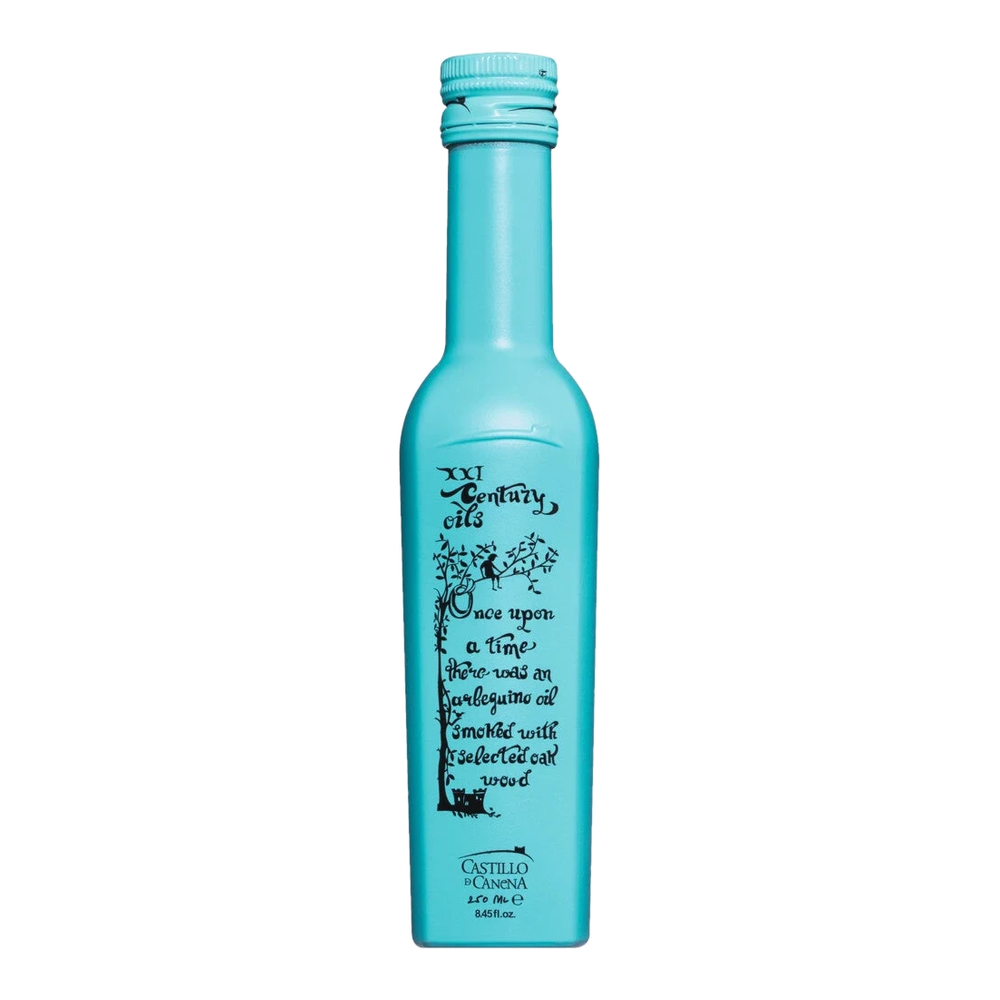
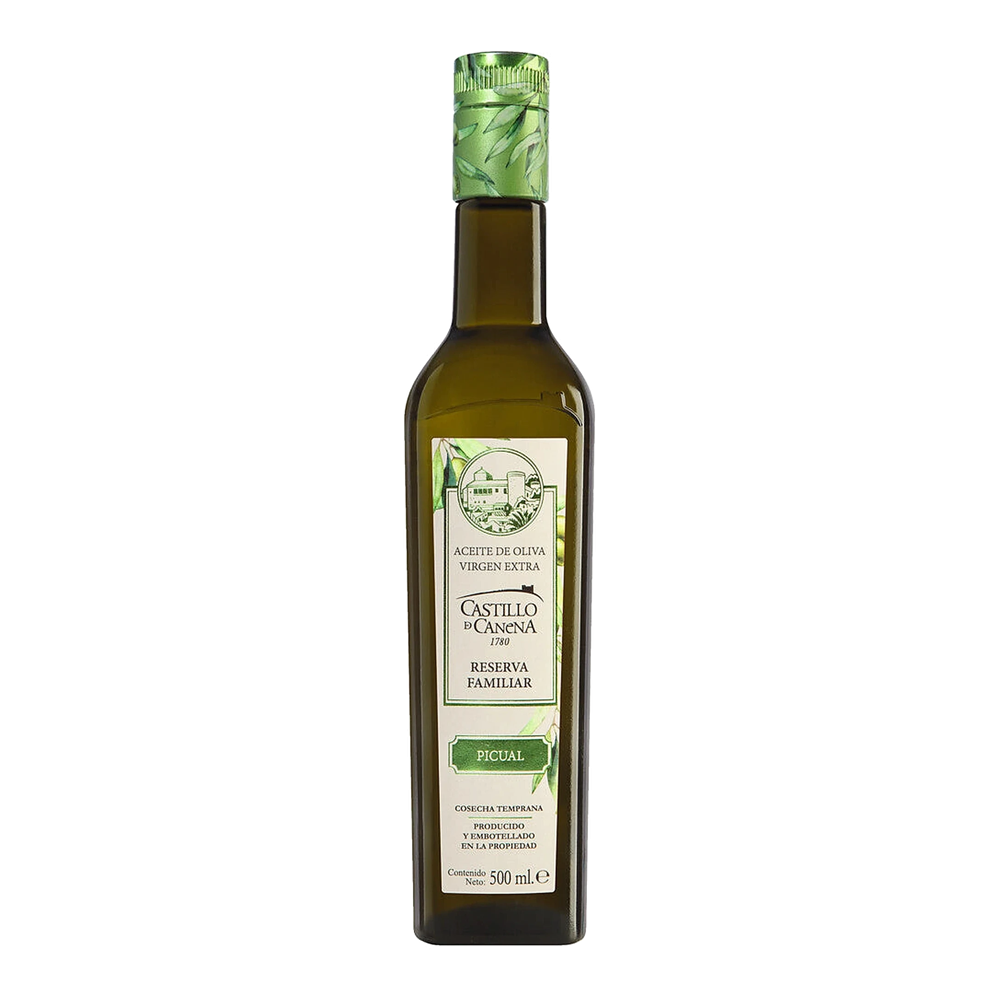
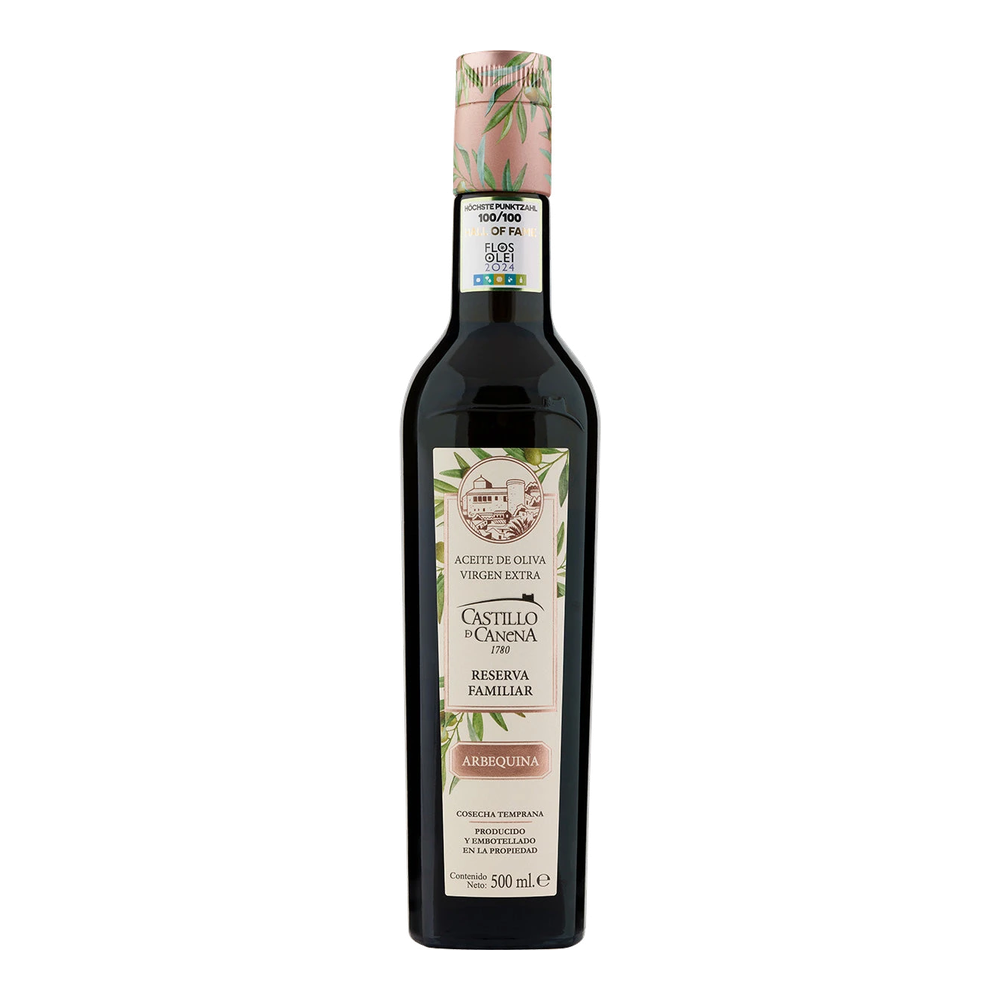
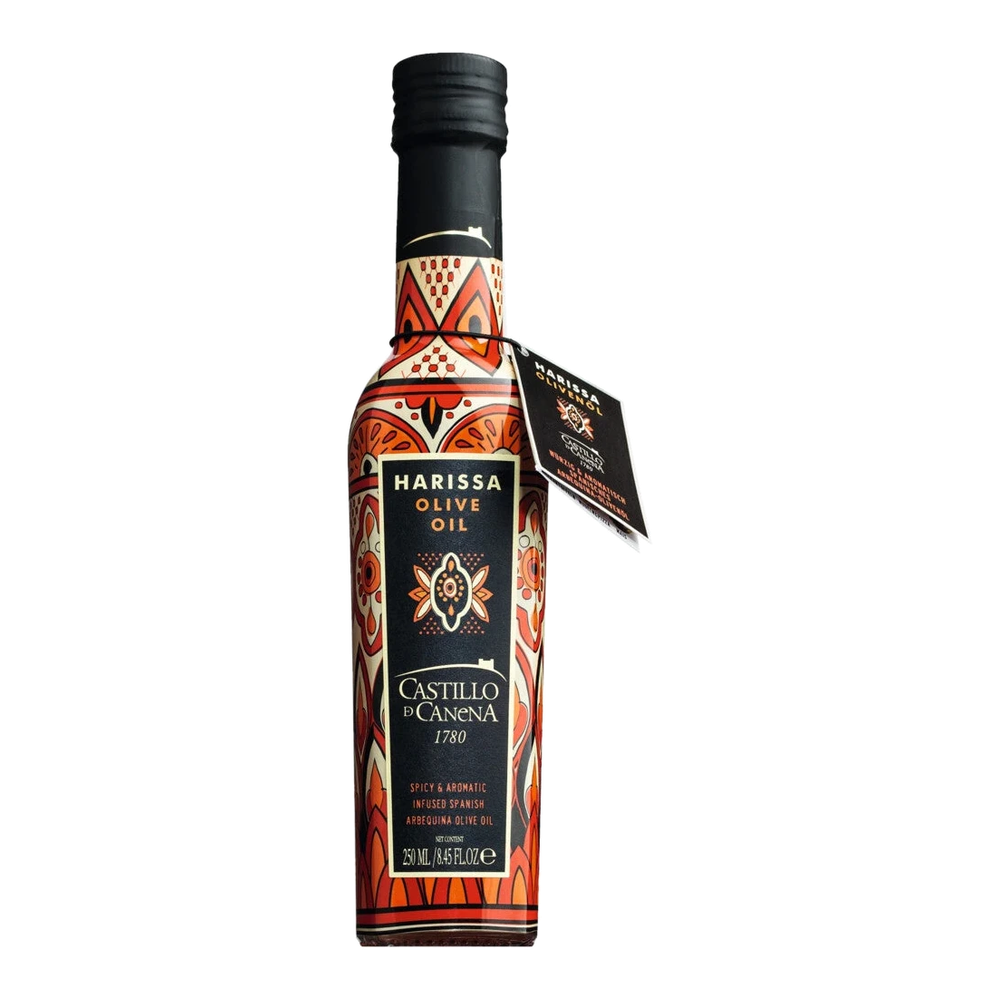
The range revolves around three Andalusian varieties, each cold-pressed and bottled as a monovarietal. Picual is the backbone: intense, green, with notes of tomato, fresh artichoke, and almond, a striking structure, and a peppery, long finish — an oil for those who understand olive oil as an ingredient, not just as a fat. Arbequina appears finer and more accessible: green apple, ripe banana, soft texture, balanced bitterness. The rare Royal variety rounds off the classic trio. Alongside this is a line of flavored oils: the Aceite Arbequino al Humo de Roble, an Arbequina oil refined with oak smoke, or the Harissa oil — kitchen tools for chefs who use oil as a spice. All oils are harvested early at the optimal point of ripeness and pressed as quickly as possible to ensure the polyphenol content. Serving temperature: 16–18 °C, warm slightly before serving.