From political chaos to a pioneering role: The Roquettes and Herdade do Esporão
The history of Herdade do Esporão begins long before the first wine vintage. The geographical boundaries of the estate were established in 1267 — and have hardly changed since. Originally known as Defesa do Esporão, the property near Reguengos de Monsaraz in the heart of the Alentejo has for centuries carried vineyards, olive groves, and three historical monuments: the Esporão Tower, the Esporão Arch, and the Nossa Senhora dos Remédios Chapel.
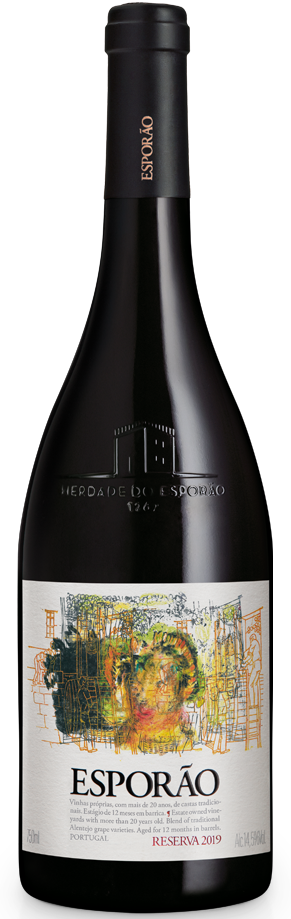
The more recent history begins in 1973, when José Roquette and Joaquim Bandeira acquired the estate — in the middle of a turbulent political era. A military coup in 1974 and the subsequent nationalization of the property forced the Roquette family to temporarily emigrate to Brazil. After their return, José Roquette produced the first commercial wine of the estate in 1985: the Esporão Reserva. Since 1989, the family has been the sole owner. Today, João Roquette, the second generation, leads the company as Chairman of the Esporão Group SA — one of the most significant family-run wineries in Portugal.
Biodynamic, down-to-earth, consistent: Esporão's path to organic farming
When João Roquette joined the company management in 2006, Esporão began a long, difficult transformation process: the complete conversion to organic farming. It was no small step — the estate comprises a total of around 1,840 hectares with seven different soil types, from granite and slate to clay and loam. In 2019, all 441 hectares of vineyards were certified as organic by Kiwa-Sativa. Synthetic pesticides and fertilizers have since been completely banned; instead, Esporão relies on compost, beneficial insects, sheep grazing between the vine rows, and targeted biodiversity management.
In the cellar, the team works consistently towards minimal intervention: gravity-fed, underground cellars reduce energy consumption, fermentations increasingly take place in concrete tanks and amphorae, and oak wood is specifically reduced. An ampelographic open-air laboratory of around ten hectares — planted in 2010, today with 189 grape varieties — serves the preservation of national vine stock and climate adaptation research.
Alentejo in the bottle: grape varieties, style, and what to expect
Around 40 of the over 189 planted grape varieties are in full production — including Alentejo stalwarts like Aragonês, Trincadeira, Touriga Nacional, and Antão Vaz, supplemented by Syrah and Arinto. The stylistic course of recent years is clear: away from the international uniform profile, towards wines that honestly reflect the terroir of Reguengos de Monsaraz. Less new oak, more fruit, more minerality — and a growing curiosity about old Alentejo vinification traditions, including fermentation in clay vessels (talha). The vineyards lie at an altitude of 200 to 400 meters, the climate is Mediterranean-continental with over 3,000 hours of sunshine a year and extreme summer heat periods — this shapes full-bodied, aromatically dense wines with a clear structure and length. Olive oil from 93 hectares of organically certified groves rounds off the range.