From textile factory to the largest Grand Cru owner in Alsace
When Nicolas Schlumberger (1782–1867) moved to Guebwiller in 1810 to open a textile machinery factory there, he incidentally acquired around 20 hectares of vineyards on the slopes above the town. What began as a side business became the family's true life's work. After his death, Jean Schlumberger inherited the vineyards and thus laid the foundation for systematic wine production. The decisive step in growth was taken by Ernest Schlumberger (1885–1954): During the phylloxera epidemic at the beginning of the 20th century, he bought up fallow, devastated vineyards, replanted them, and expanded the estate from those original 20 to eventually 140 hectares. Today, the seventh generation leads the house: Séverine and Thomas Schlumberger, together with their uncle Alain, manage the largest contiguous AOC winery in Alsace.
Steep slopes, stone walls, 50 kilometers of manual labor
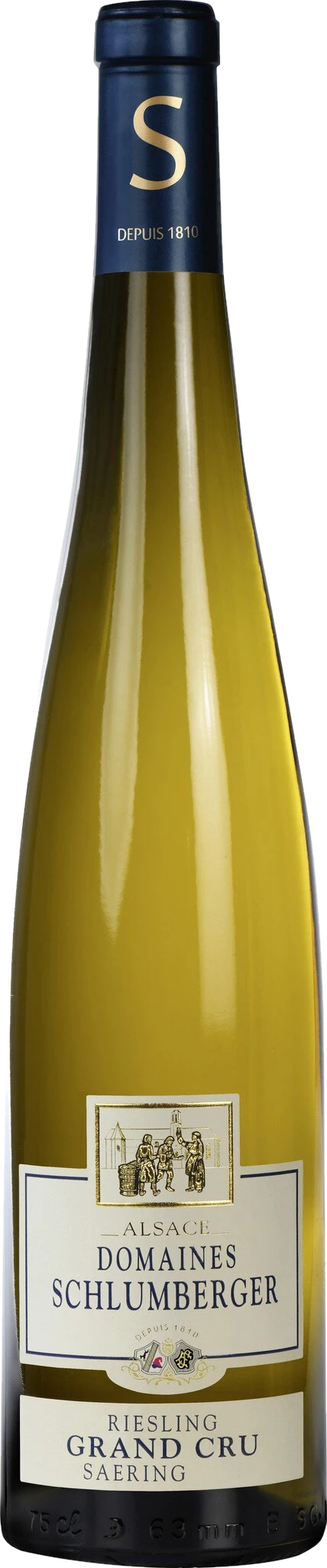
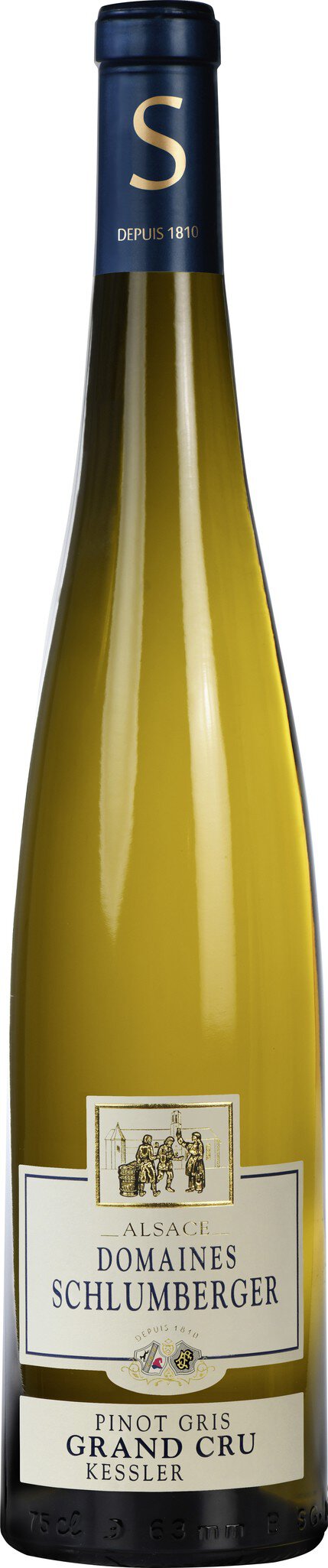
The heart of the estate consists of four Grand Cru sites — Kitterlé, Kessler, Saering, and Spiegel — whose classification was officially recognized in 1983. Of the 140 hectares of total area, 70 are accounted for by these four terroirs, a ratio that is unique in Alsace: Schlumberger thus holds more Grand Cru area than any other winery in the region. The slopes reach inclinations of up to 50 degrees; they are maintained by over 50 kilometers of dry stone walls, some of which are maintained with draft horses because tractors cannot work on such terrain. In addition, there is a consistent commitment to origin: Schlumberger does not buy in grapes, must, or finished wines. Everything that comes into the cellar grows on their own land. For aging, there are 120 large wooden barrels — some over 100 years old, deliberately kept neutral so that they do not impart a woody note to the wine — as well as 80 stainless steel tanks that allow for parcel-by-parcel vinification. On the Grand Cru areas, a portion of the vineyard is also managed biodynamically, and the total yield remains at around 25 hectoliters per hectare, far below what is legally permitted.
Seven grape varieties, four terroirs, one style: mineral and age-worthy
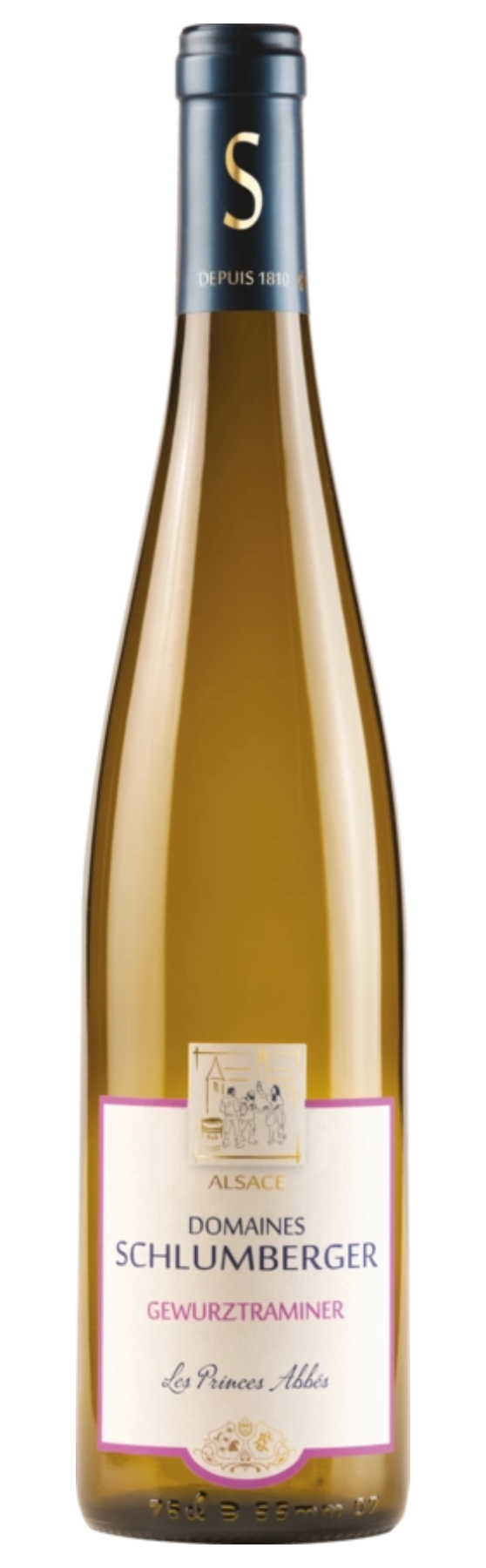
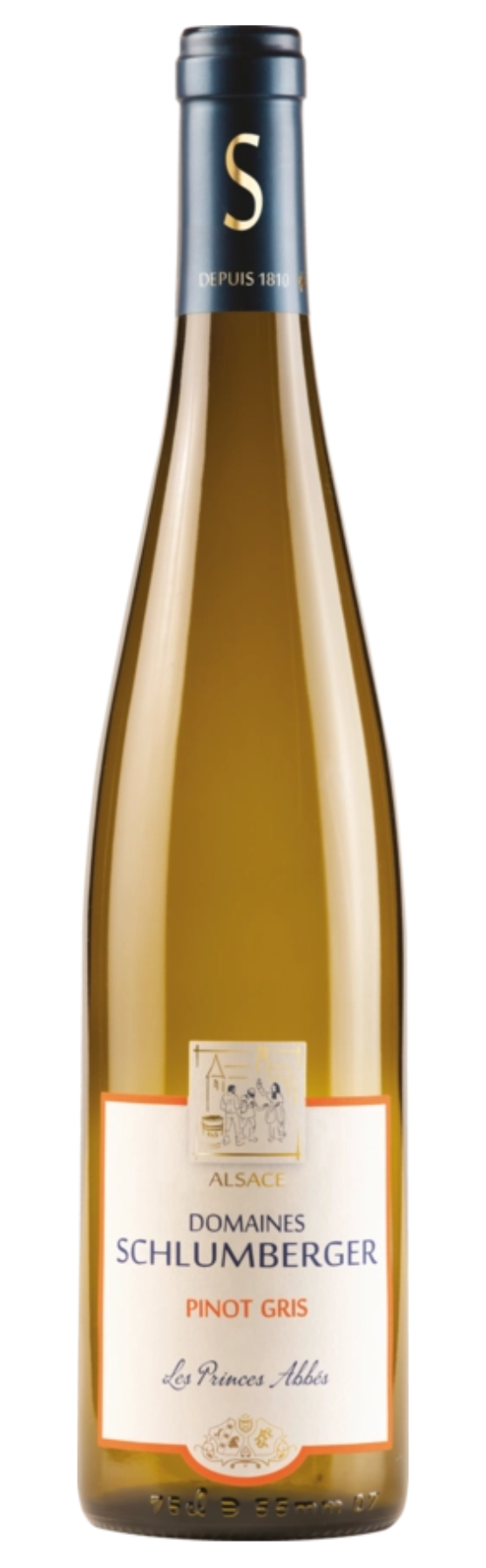
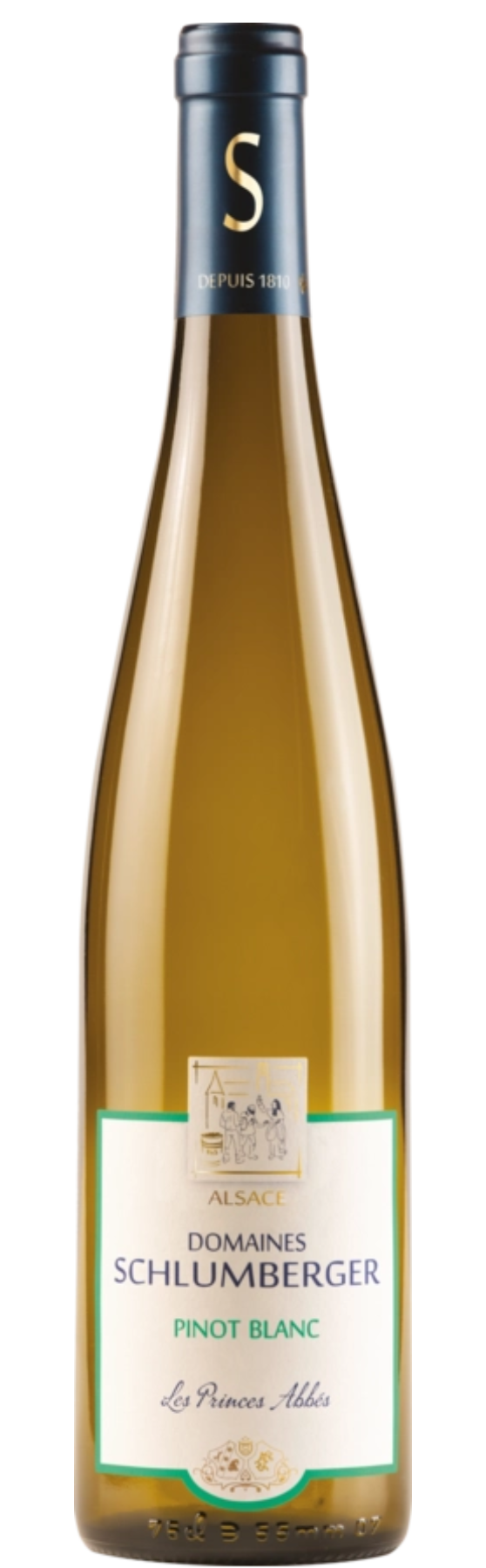
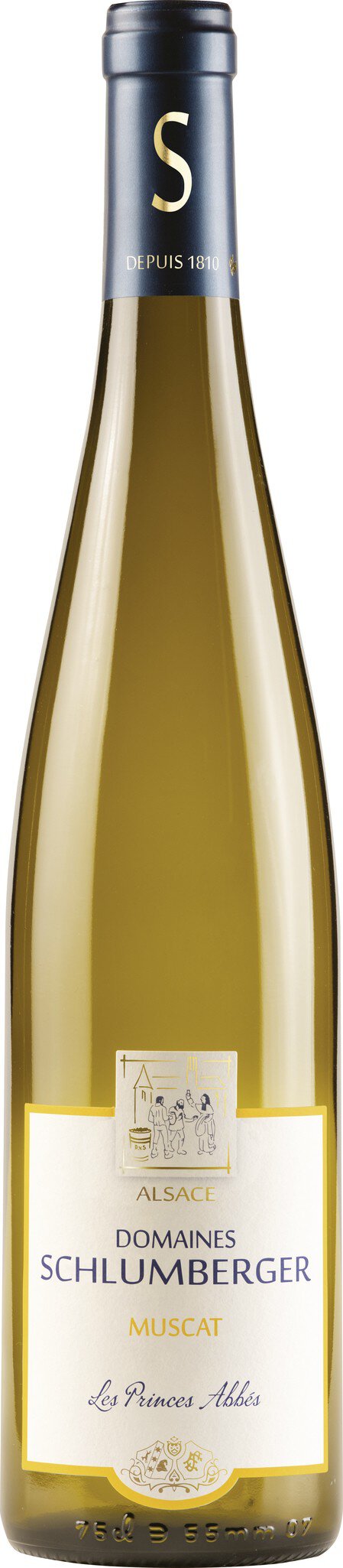
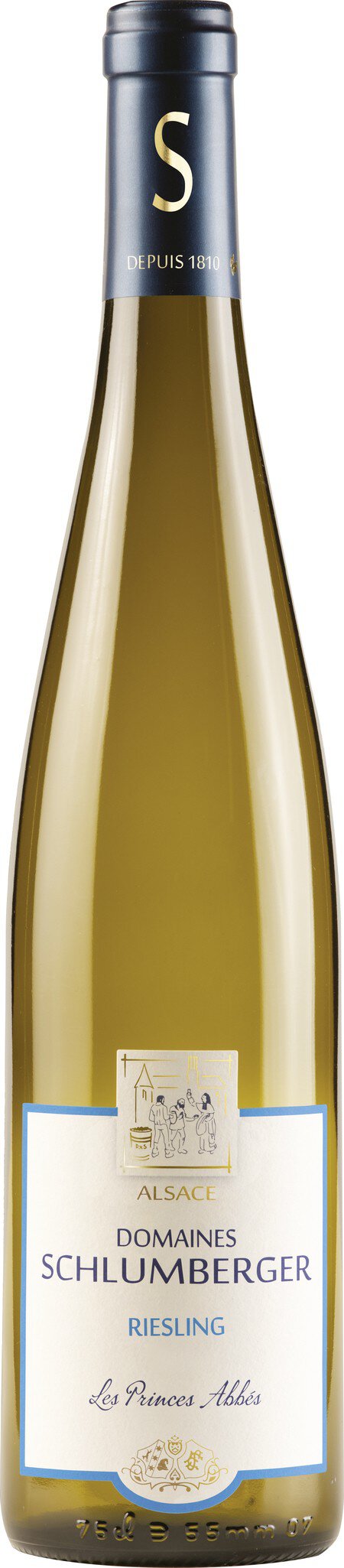
Schlumberger grows all seven classic Alsatian grape varieties — Riesling, Gewürztraminer, Pinot Gris, Muscat, Pinot Blanc, Pinot Noir, and Sylvaner. The range is divided into the more accessible Les Princes Abbés line, named after the prince-abbots of the Murbach Abbey who once controlled these sites, as well as the Grand Cru cuvées, in which the grape variety and terroir are clearly addressed in each case. On the Kitterlé, the steepest and most famous of the four Grands Crus with volcanic rock and sandstone soils, the most powerful and structured bottlings are created. Kessler and Spiegel provide somewhat heavier, profound wines with a distinct texture, while the Saering, on limestone-marl-sandstone, is known for more elegant, citrusy-mineral expressions. In exceptional vintages, Schlumberger also produces Vendanges Tardives and Sélections de Grains Nobles — exclusively from Grand Cru grapes. Those who lay the wines of this domaine in the cellar benefit from it: the acid structure and extract from the steep slopes create the foundation for long development in the glass.