Rooted since 1675: a wine-growing dynasty from Ammerschwihr
Ammerschwihr, nine kilometers west of Colmar, is one of the most renowned wine-growing communities in Alsace – and Maison Kuehn has been part of its history since 1675. The property dates back to an old Alsatian winemaking family; towards the end of the 18th century, Baron Jean-Jacques de Schiele had the deepest cellars in the entire region carved into the rock in order to vinify and age the noblest Ammerschwihr wines in large oak vats. These vaulted cellars – the so-called Caves de l'Enfer, the hell cellars – were hewn seven meters deep into the ground and remain the structural heart of the operation to this day. In the winter of 1944, their walls protected the village population and the art treasures of the village church from the bombings of the Second World War. René Kuehn (1910–1995), member of parliament, mayor of Ammerschwihr, and lawyer, decisively shaped the Maison in the second half of the 20th century: He was actively involved in the creation of the Alsatian designation of origin in 1962 and campaigned emphatically for the international recognition of the Kaefferkopf as a Grand Cru.
Hell vaults and century-old barrels
The winery manages 16 hectares on the slopes of Ammerschwihr – sun-exposed sites that owe their distinct mineral profile to the Haut-Rhin-typical alternation of granite, limestone, and sandstone. Two eras coexist in the cellar: 45 century-old oak vats, the oldest of which was made by master cooper Martin Sattler in 1850, as well as more modern stainless steel tanks between 21 and 150 hectoliters. 35 barrique barrels are also available for the maturation of the Pinot Noirs. Vinification is in the hands of oenologist Francis Klee: All Grand Cru grapes are harvested exclusively by hand, gently pressed after the harvest, and the must is naturally clarified at low temperatures. Fermentation is slow; the wines mature on the fine lees for at least nine months before they are bottled.
Five Grands Crus, one guiding principle: the expression of the terroir of Ammerschwihr
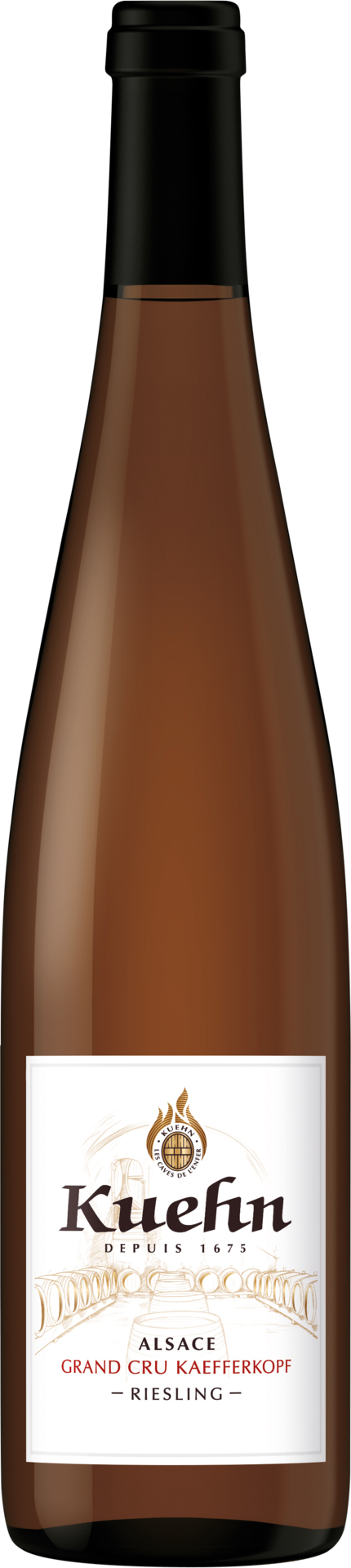
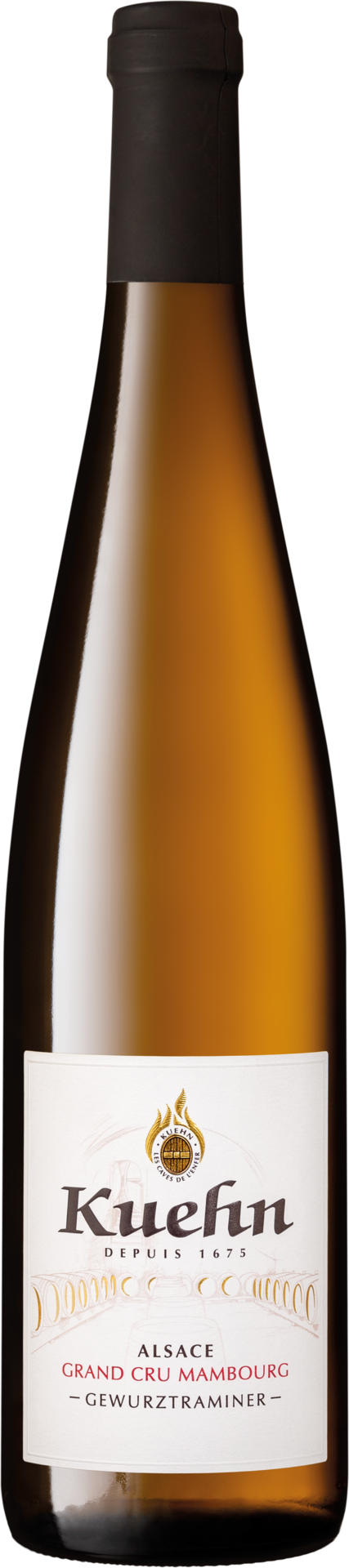
The range includes five Grands Crus and reflects the entire grape variety diversity of Alsace: Gewurztraminer, Riesling, Pinot Gris, Pinot Noir, and Crémant d'Alsace. The pivot and hinge is the Grand Cru Kaefferkopf – oriented to the south and west, underlain with granite, limestone, and sandstone, planted exclusively with Gewurztraminer, Riesling, and Pinot Gris. Already officially demarcated as the first terroir in Alsace in 1932, the Kaefferkopf received Grand Cru status in 2007. The Gewurztraminer from this site shows intense floral and spice aromas with notes of candied fruits and violets; the Riesling comes mineral-dense, with a ripe acid structure. Alongside this are the cuvées of the Baron de Schiele line – Riesling, Pinot Gris, and Gewurztraminer from selected hillside sites – as well as the Grand Cru Mambourg at the center of the offer. Drinking temperature for the white wines: 8–10 °C.