From blooming heather to Second Growth: 200 years of Saint-Estèphe
The name Montrose goes back to a simple observation: when the heather bloomed, the hills above the Gironde turned pink. Sailors on the river called the estate Mont Rose — and the owner family, Dumoulin, adopted the name. Viticulture only began here in 1815, which makes Montrose the youngest Château of the great Bordeaux classification of 1855 — and yet, or perhaps precisely because of this, one of its most compelling Second Growths. After the founder's death, the estate was sold in 1861 to Mathieu Dollfus, who extensively expanded the Château. In 1896, the Charmolüe family took over the estate and managed it for three generations and more than a century, marked by legendary vintages and the stability of a true family dynasty. In 2006, brothers Martin and Olivier Bouygues acquired the Domaine and invested specifically in new cellar technology — while simultaneously preserving the classic Médoc character.
95 hectares on the estuary: terroir, cellar work and viticulture
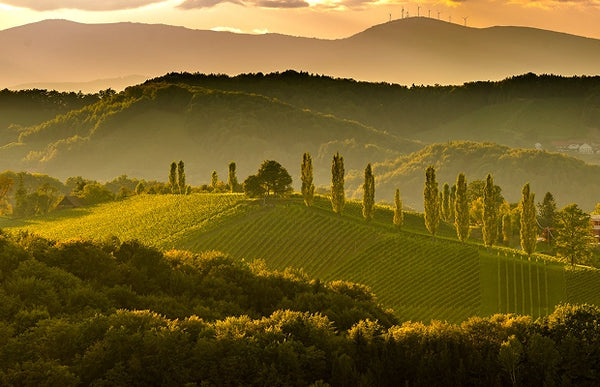
The heart of Montrose is its vineyard: 95 hectares in a single contiguous block, which is an exception in the Médoc. The location directly on the Gironde estuary is no coincidence — the large water reservoir mitigates summer heat and late frosts, creating a microclimate that favors even ripening. The soil consists of gravel of Pyrenean and Central Massif origin over a clay-rich sublayer: the gravel stores heat during the day and releases it at night, while the clay layer retains water for dry periods. The vineyard is planted with around 65% Cabernet Sauvignon, 25% Merlot, and 10% Cabernet Franc; the oldest Cabernet Sauvignon vines date back to 1932. The harvest takes place parcel by parcel, guided by daily berry samples. In the cellar, grapes are strictly sorted manually and optically before the must is fermented parcel by parcel in tanks of varying sizes. The Grand Vin matures for 18 months in 60% new French oak barriques.
Dark fruit, graphite, tannin: the unmistakable Montrose style
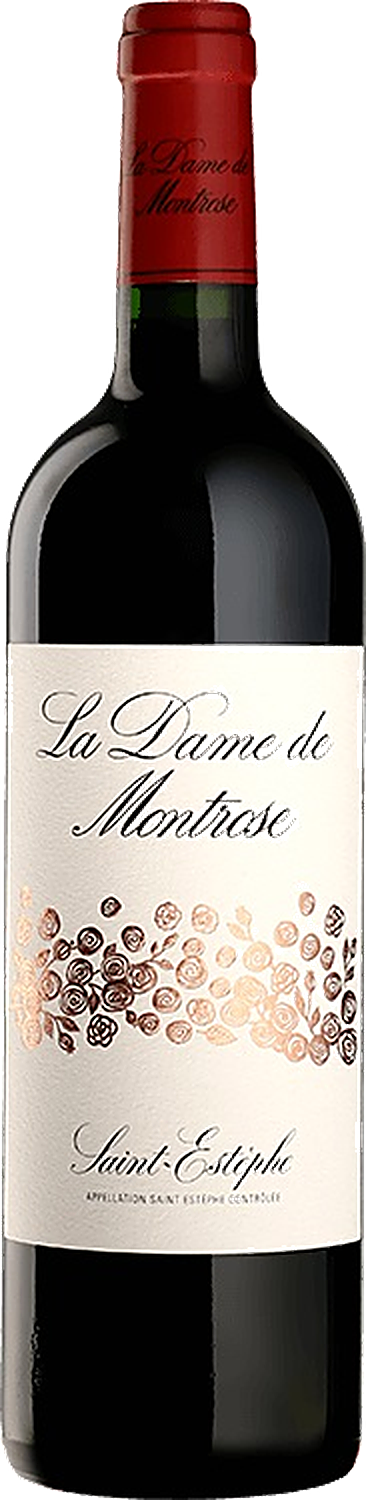
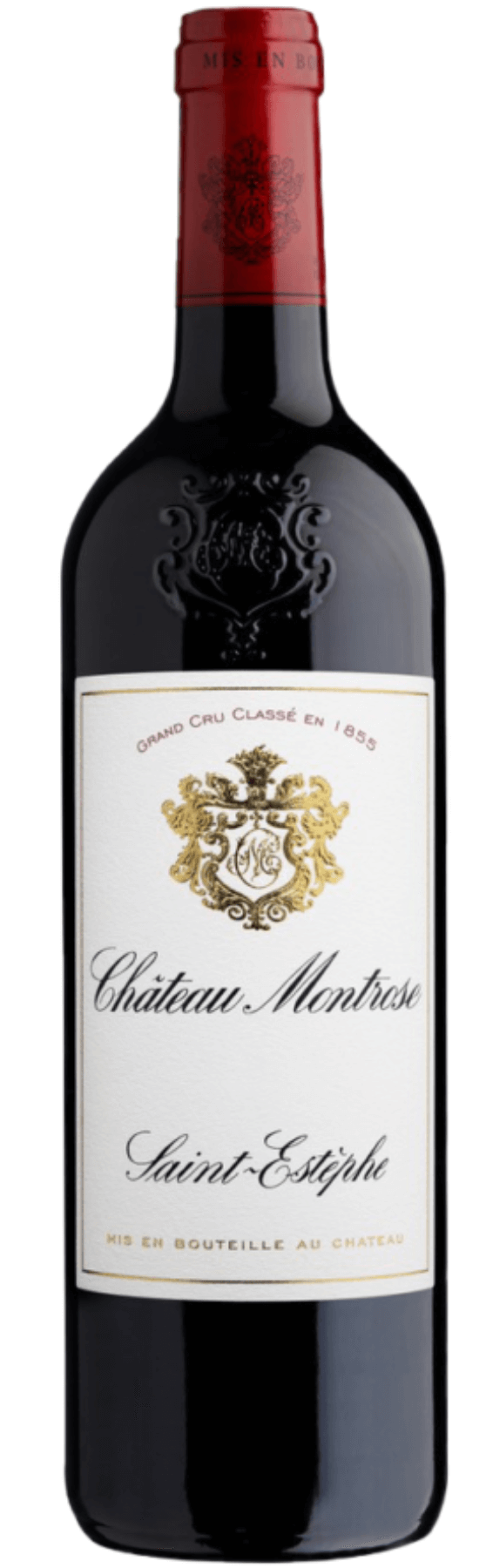
The wines of Montrose stand for what distinguishes Saint-Estèphe from its Médoc neighbors: more structure, more density, a tannin that is demanding in its youth and becomes silk over the years. In the glass, they show black fruit, cedar, graphite, and spices — a profile that layers and deepens over decades. La Dame de Montrose is the house's second wine: more accessible in its approach, with the same varietal character, but ready to drink sooner. The Grand Vin range accounts for 35 to 40% of total production — a sign of how rigorous the selection process is. Those who drink Montrose get Bordeaux in its most structured, mineral form: not a wine for quick enjoyment, but one that grows with the guest. Serving temperature: 17–18 °C; pairs with braised lamb rack, aged Comté, or game poultry with dark jus.