From Maison Noble to Troisième Grand Cru: four centuries of Saint-Julien
The history of Château Lagrange does not begin with a classification, but in the Middle Ages. Even then, vines grew on the grounds of the later Maison Noble de Lagrange Monteil, and documentary mentions of the vineyard date back to 1631. In the 18th century, the estate belonged to the Baron de Brane — the man whose other properties would later become famous as Mouton Rothschild and Brane-Cantenac. In 1790, Jean Valère Cabarrus, Napoleon I's Minister of Finance in Spain, acquired the property and had the striking tower built by the Parisian architect Louis Visconti — the same man who designed Napoleon's tomb in the Invalides. Under Count Charles-Marie Tanneguy Duchâtel, Lagrange reached its historical peak: in 1855, it was classified as a Troisième Grand Cru Classé. As early as 1787, Thomas Jefferson had classified the estate as a Third Growth in his personal assessment — almost 70 years before the official classification.
After Duchâtel's death, a long phase of decline began. The phylloxera crisis, two world wars, and economically weak decades wore the winery down. When the Cendoya family, the last private owners since 1925, sold the estate to the Japanese beverage group Suntory in 1983, just around 56 hectares were under vines — many of them diseased or incorrectly planted.
Suntory's long-term bet: replanting and terroir mapping
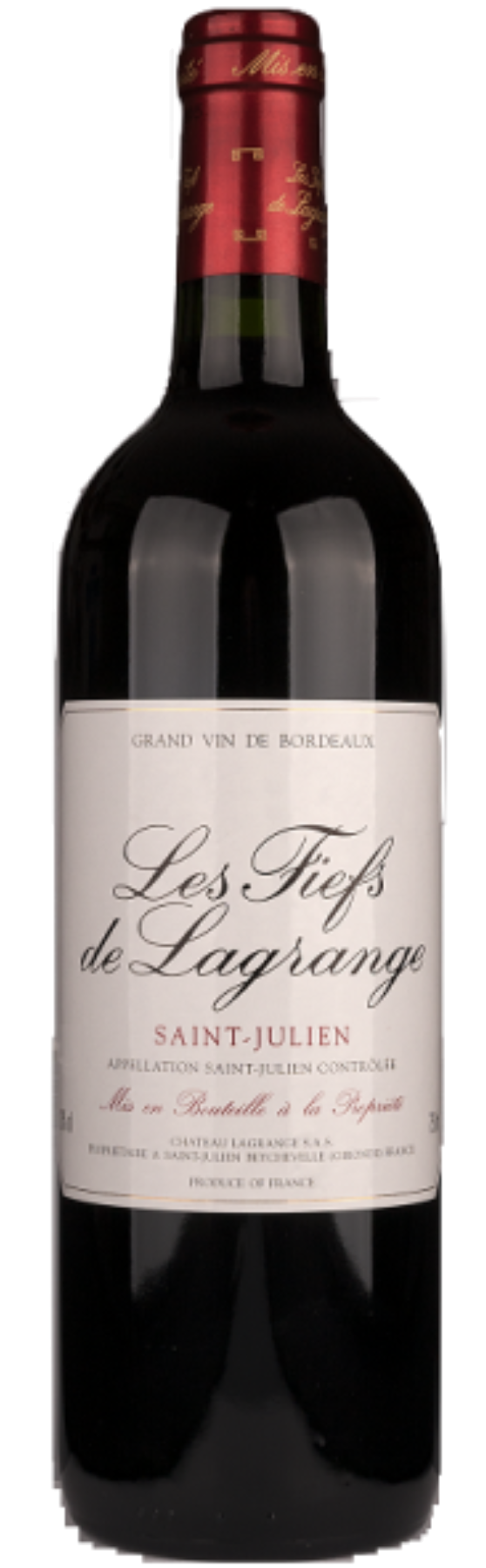
The purchase by Suntory President Keizo Saji in 1983 was initially controversial in Bordeaux. What followed was one of the most consistent rehabilitations of a classified estate ever: Suntory invested many times the purchase price, had 60 hectares of vines replanted, renovated the cellar from the ground up, and bought back adjacent plots to restore the historic vineyard to its original extent. Marcel Ducasse took over management — and in the same year created Les Fiefs de Lagrange, the estate's second wine, to sharpen the selection for the Grand Vin.
Today, 118 hectares of vines stretch as a contiguous block in the southwest of the appellation — a rarity in the fragmented Médoc. Meticulous soil mapping with over 200 test drillings revealed 17 different soil types, from Gunzian gravel with up to 80 percent stone content to loamy sandy soils. The result: 103 clearly defined plots that are managed individually and vinified separately. Four oenologists work year-round together with the vineyard team, and a fifth joins during the blending process. Suntory's philosophy — "Living in harmony with nature" — translates into concrete measures: Terra Vitis certification since 2005, ISO 14001 and HVE certification (Haute Valeur Environnementale) since 2017, traditional soil cultivation by plowing, trials with organic and biodynamic viticulture, and sheep grazing in winter between the vine rows.
Cabernet Sauvignon as a guideline: the style of the Lagrange wines
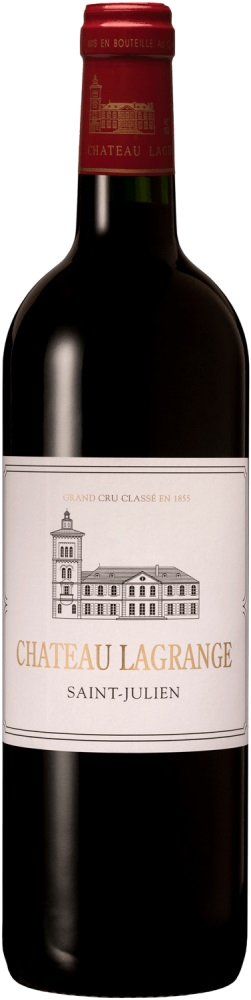
The Grand Vin of Château Lagrange follows the classic Saint-Julien logic: around 65 percent Cabernet Sauvignon, supplemented by Merlot and Petit Verdot, grown on gravel soils that store heat and demand natural concentration from the vines. On the nose, the wines show blackcurrant, cedar wood, and a graphitic mineral that comes directly from the gravel subsoil. On the palate, fine, densely woven tannins and a freshness typical of Saint-Julien characterize the picture — even in hot vintages, the estate keeps the pH value consistently low, which ensures precision and tension in the wine. With Les Fiefs de Lagrange, the estate offers a more accessible entry into the same terroir expression: fruit-forward, drinkable earlier, but with the same structural backbone. In addition, since 1996, Lagrange has produced Les Arums de Lagrange, a dry white wine made from Sauvignon Blanc, Sauvignon Gris, and Sémillon — still an exceptional phenomenon in the Médoc.