From wheat farm to estate: the birth of Capaia
What is now one of the most remarkable wineries in the South African Cape region began as a fallow wheat farm. Alexander Baron von Essen and his wife Ingrid recognized the viticultural potential of the land in Philadelphia in 1997 — a small community about 30 kilometers north of Cape Town and only 10 kilometers from the Atlantic. Previously, New Zealand soil scientists had dug in about 300 places on the site and proven shale soils with excellent water storage properties and a rich mineral content. This finding was the basis for the decision to start anew here. From 1997 to 2002, the vines were planted, the winery was built, and the characteristic wooden fermenters were installed.
From the beginning, Capaia was internationally connected: Tibor Gál, one of the most influential Hungarian winemakers and then cellar master at Ornellaia in Tuscany, became a partner in this founding phase. His influence shaped the Bordeaux-Mediterranean signature of the house. In 2003, Capaia celebrated its first vintage — which was immediately awarded five stars by the South African Wine Magazine and was sold out internationally. In 2005, the estate was officially classified according to the Château principle. From 2015, Count Stephan von Neipperg, owner of the Saint-Émilion Premier Grand Cru Classé estates Château Canon La Gaffelière and La Mondotte, joined as a partner, giving the project an even stronger European foundation.
Gravity, shale, and a commitment to nature
Capaia is located on three shale hills on the northern slopes of the Olifantskop, at an altitude of about 200 meters. The vineyards cover 60 of the total 140 hectares and are oriented in all directions, which gives the individual plots different ripening and aroma conditions. The Atlantic sea breeze ensures constant ventilation and limited temperature fluctuations; the annual rainfall is around 400 mm. The soils of Triassic shale with clay content store water and pass the stored minerality directly to the fruit.
In the cellar, Capaia works consistently with 56 French oak fermentation tanks — manufactured by the Cognac cooperage Tonnellerie Taransaud — with volumes of 5,200 and 8,400 liters. The facility is considered the largest wood-based fermentation plant in private cellars worldwide. The grapes are harvested by hand and guided from the highest point of the facility purely by gravity into the tanks, without mechanical pumps. For the red wine, this means: gentle extraction, fine tannins, structured elegance. In 2017, Capaia also concluded a ten-year biodiversity contract with CapeNature and placed 34.5 hectares of the area under nature conservation as a protected area for the critically endangered Swartland Shale Renosterveld.
Bordeaux on the Atlantic: what makes the wines of Capaia special
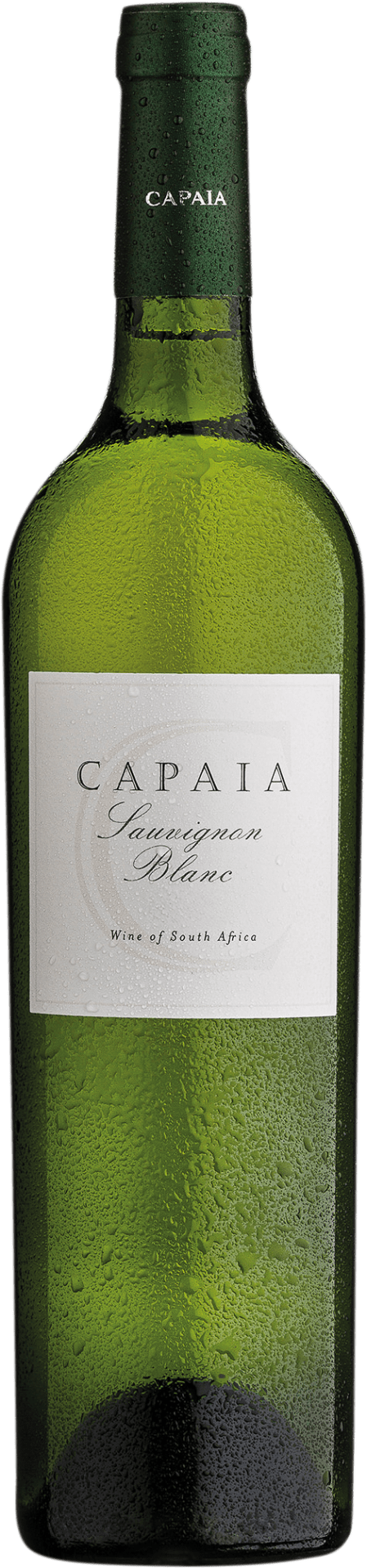
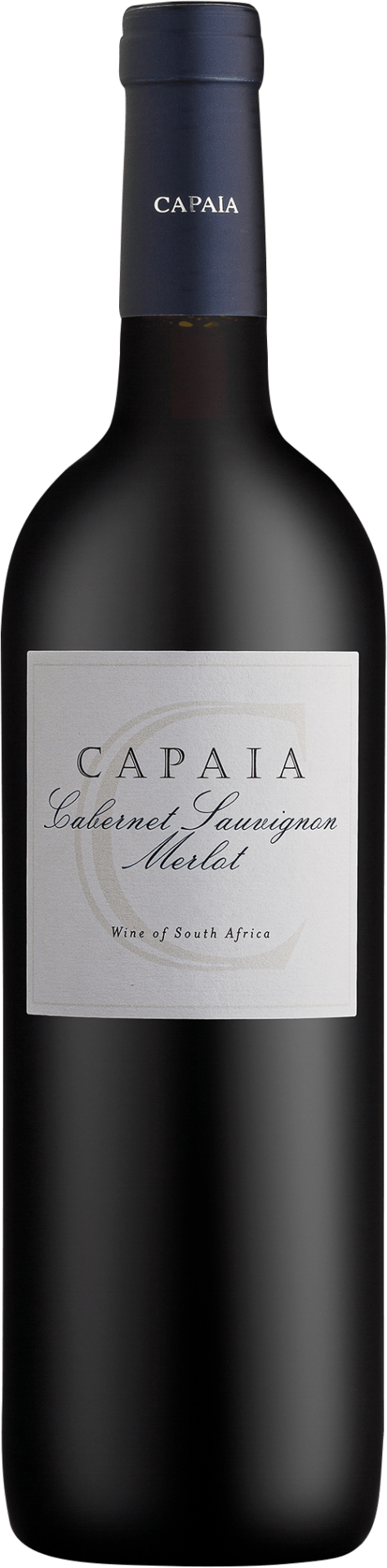
The range follows a clear Bordeaux line. On the red wine side, Cabernet Sauvignon, Merlot, Cabernet Franc, and Petit Verdot are the focus; the spectrum is complemented by Shiraz. White wine comes exclusively as Sauvignon Blanc — varietal, mineral, shaped by the Atlantic climate. The rosé rounds off the offer. All wines come exclusively from the estate's own grapes — no purchasing, no compromises on the Château principle. The wooden fermenters give the red wines a velvety texture and complexity that could not be achieved with pure stainless steel technology. The name Capaia itself is the program: it stands for the spirit of the Cape, with a view of Table Mountain from the vineyard.