From German roots to the oldest winery in Napa Valley
Jacob Beringer came to New York from Germany in the 1860s. After an initial stint as cellar master for Charles Krug in St. Helena, he recognized the potential of the Napa soils — warm, well-drained, not unlike the Franconian sites of his homeland. In 1875, Jacob and his brother Frederick bought 215 acres of land in St. Helena; the first harvest followed in 1876. This makes Beringer Vineyards the oldest continuously operating winery in California, listed in the National Register of Historic Places and designated as a California Historical Landmark. The most striking building on the estate is the Rhine House, begun in 1883 — a 17-room Victorian-style mansion with Belgian Art Nouveau stained glass windows, which Frederick Beringer had built based on the model of his parents' house on the Rhine. Even Prohibition could not harm the business: Beringer produced sacramental wine and dried parts of the harvest without missing a single vintage. In 1934, immediately after the end of Prohibition, the winery was the first in California to open its doors for public tours and wine tastings — a step that helped establish wine tourism in the Napa Valley.
Sustainable vineyards, historic cellars, modern cellar technology
Beringer manages sites in nine sub-appellations from Napa to Knights Valley in Sonoma. The Steinhauer Ranch vineyard on Howell Mountain in particular — at 550 meters altitude, 36 acres in size — is considered one of the best Cabernet Sauvignon sites in the area: cooler climate, high solar radiation, mineral-rich soil. Beringer has been rooted in Knights Valley, whose volcanic, well-drained soil benefits the cultivation of Cabernet Sauvignon and Sauvignon Blanc, since the 1960s. All vineyards are certified sustainable by third parties. Concrete measures: minimal soil cultivation to protect against erosion, composting of organic waste, interplanting with cover crops, and drip irrigation with moisture sensors for water reduction. In the cellar, 150 years of craftsmanship combine with modern oenology: the wine cellars dug by hand in 1877 under the estate — around 1,200 linear meters of tunnels — are still used for wine aging today. They maintain a constant temperature of around 14 °C without technical cooling. The historic cellar building is supplemented by a separate, non-public production facility as well as its own research and sensory laboratory for the further development of the premium lines.
Cabernet, Chardonnay, Zinfandel — a range with a clear style
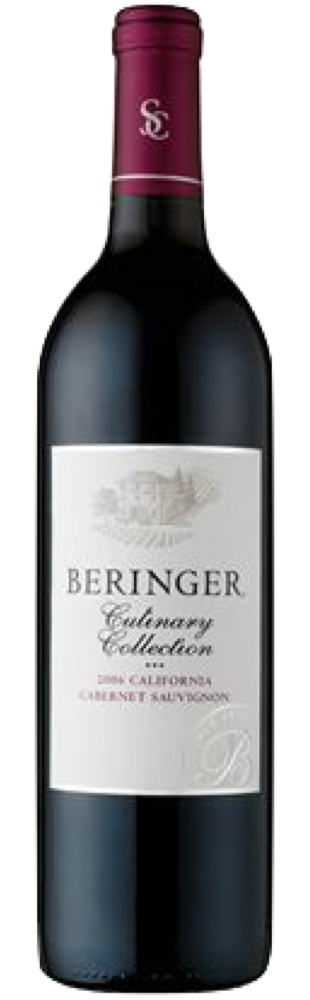
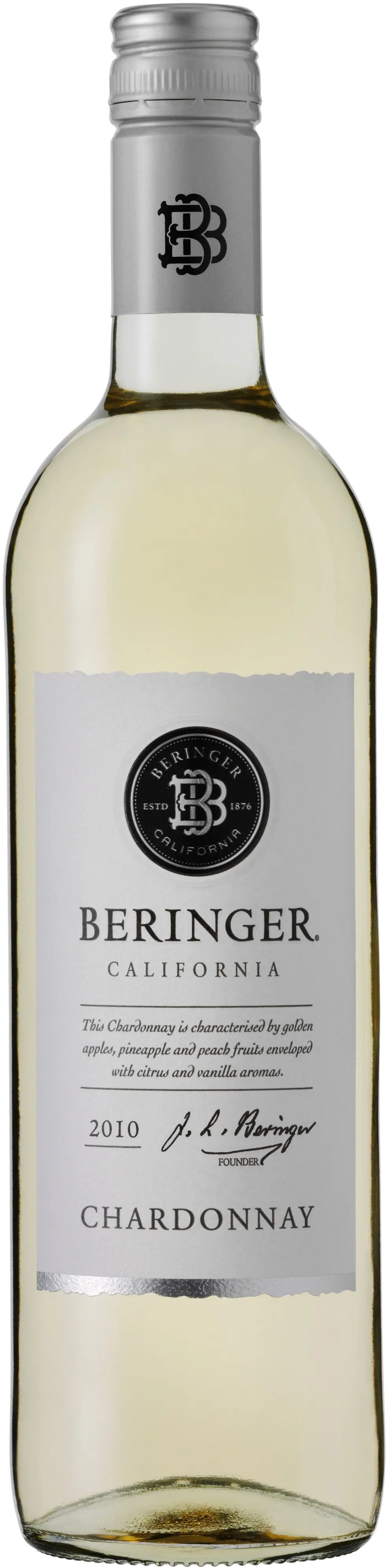
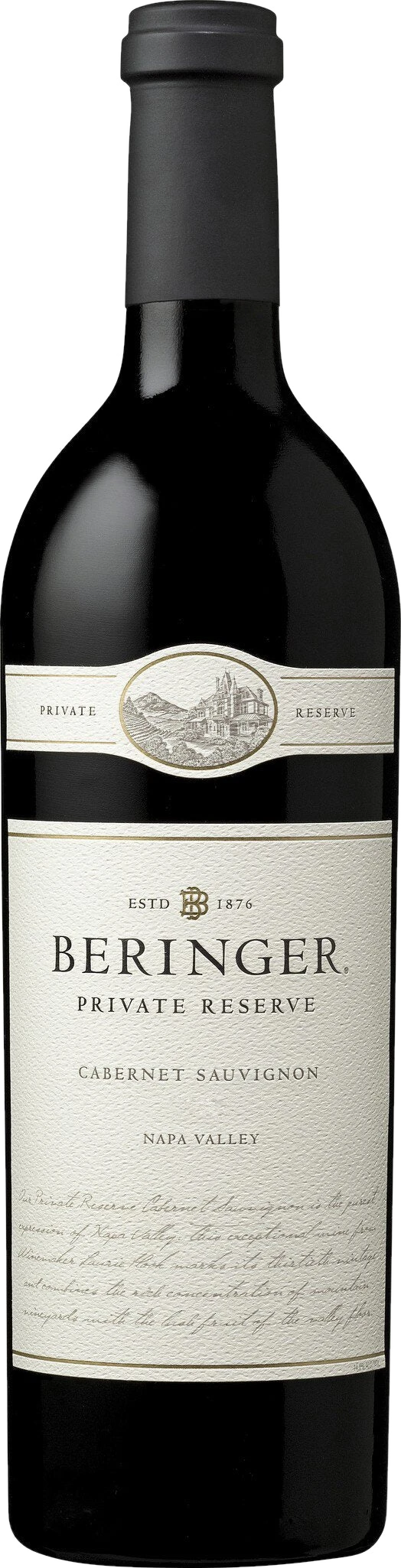
The range extends from accessible everyday wines of the Classic and Founders' Estate lines to the site-focused Private Reserve cuvées from Napa Valley. The Private Reserve Cabernet Sauvignon is the flagship cuvée: it was named Wine of the Year by Wine Spectator in 1990, and the 1994 Private Reserve Chardonnay received the same award in 1996 — the first white wine ever in the history of this selection. This makes Beringer the only winery to have won the title with both a red and a white wine. The style of the wines reflects their origin: the Cabernet Sauvignons from Napa show dark fruit, structured tannins, and depth, shaped by barrel aging and mineral-rich soils. The Chardonnays from Napa Valley are creamy and powerful, with yellow fruit and spicy wood notes. The Founders' Estate line, sourced more broadly from the California growing region, offers fruitier, more uncomplicated drinking experiences — including a rosé Zinfandel with distinct residual sweetness, which is particularly popular in the warmer months. Common to all lines is the ambition to let the respective grape varieties speak clearly — without over-processing, without false theatricality.