Five generations between Barsac and Fargues
In 1851, the du Hayot family took over Château Romer in Fargues from the Comte de la Myre-Mory. Four years later, the 1855 classification included the estate as Château Romer du Hayot among the Deuxièmes Crus Classés. It has remained in the family ever since. The winery speaks of five generations. Today, Catherine and Fabienne du Hayot, as heiresses, continue the tradition.
The construction of the Autoroute des Deux Mers brought a deep cut. It destroyed the original château and cellar buildings, but the vineyards remained intact. The headquarters of the Société des Vignobles du Hayot is therefore now located at Château Andoyse in Barsac.
Mist, noble rot and a cellar in Barsac
The family's viticulture revolves around noble rot, Botrytis cinerea. It is never guaranteed in Sauternes. There are years when it does not appear, and years when the dreaded grey mold comes instead. Barsac is located near the confluence of the Garonne and Ciron rivers. The autumn mist that arises there due to temperature differences favors noble rot.
The estate's top wine, Château Romer du Hayot, grows on clay-limestone soils with gravel in Fargues and Preignac. The grape varieties are Sémillon (around 70%), Sauvignon Blanc (around 25%) and Muscadelle (around 5%). It matures for twelve months in barriques. The family's wines are vinified together at Château Andoyse in Barsac.
From Cru Classé to Barsac cuvée: the range
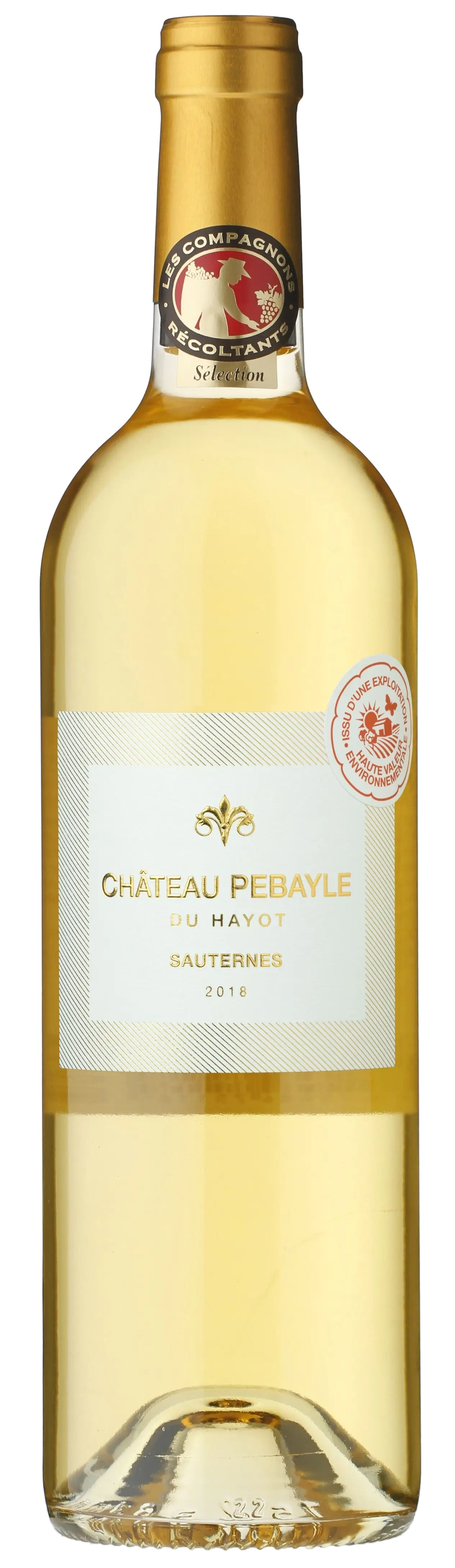
Several Sauternes are produced under the umbrella of Vignobles du Hayot. These include Château Romer du Hayot, Château Andoyse du Hayot, Château Guiteronde du Hayot, Château Camperose du Hayot, Château Pebayle du Hayot, Château Mathalin du Hayot and the second wine Le 2 de Romer du Hayot. The range extends from the classified growth to more accessible cuvées from Barsac.
The Château Pebayle du Hayot is made from Sémillon and Sauvignon Blanc. In the glass, it shows citrus fruits, fine saffron spice and honey. On the palate, there is fresh acidity and a clear sweetness, with candied fruits in the finish. It goes well with blue cheese, foie gras and fruit desserts. Serve it well chilled, at about 8 to 9 °C.