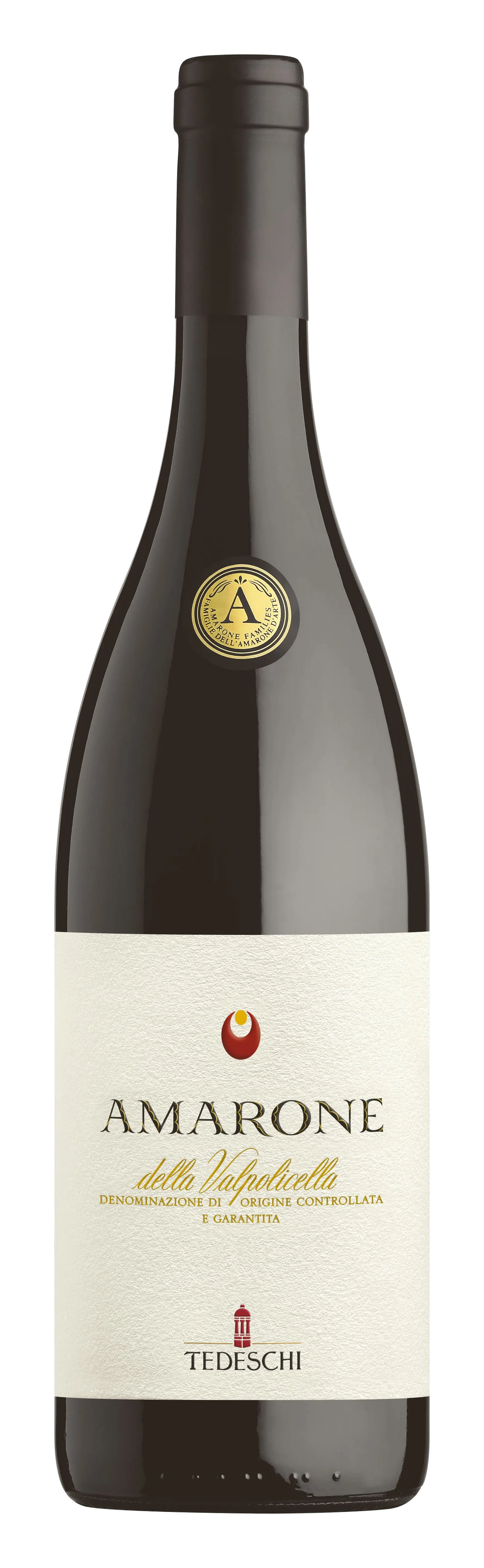
In Pedemonte since 1630: How the Tedeschi family helped shape Valpolicella
The history of Tedeschi Wines can be traced back to 1630, when the family first appeared in the local land registers of Pedemonte di Valpolicella. The winery was formally founded in 1824 by Nicolò Tedeschi — and the business has remained in family hands ever since. Today, the three siblings Antonietta, Sabrina, and Riccardo Tedeschi run the winery in the fifth generation: Antonietta is responsible for the domestic market, Sabrina for international markets, and Riccardo for cellar management. Their father, Lorenzo Tedeschi, laid the foundation for the modern era of the winery when he made a radical decision at the time in the early 1960s: he vinified the grapes from the Monte Olmi vineyard separately, thus creating one of the very first single-vineyard cru wines of Valpolicella. In 1964, the vineyard name appeared on the label for the first time — a novelty in a region where the cuvée tradition had previously been considered untouchable. In 2009, Tedeschi was one of the founding members of the Famiglie Storiche, an association of historic Valpolicella producers who are working together to advance the tradition and innovation of the denomination.
Terroir research, steep slopes, and Slavonian oak
Today, the winery manages four independent vineyard sites around Pedemonte. The heart of the estate is Monte Olmi: 2.5 hectares on terraced southwest slopes with red clay and calcareous moraine soil — the plot that has shaped the family legacy since Lorenzo's time. La Fabriseria is located at an altitude of about 450 meters between Sant'Ambrogio di Valpolicella and Fumane, with pink limestone and slate as the subsoil. The most recent acquisition, Tenuta Maternigo, was added in 2006: 31 planted hectares out of a total of 84 in the Valpolicella DOC zone, on southeast and southwest slopes between 200 and 450 meters. The family relies on scientific precision — including an ongoing research partnership with the University of Verona for soil mapping and the characterization of native grape varieties. In the cellar, the wines mature in Slavonian oak barrels between 500 and 1,000 liters, which specifically controls oxidation and aroma development without masking the terroir. The family's principle is clear: understand the land, respect the soil, and let the grape speak for itself.
Power and finesse: Corvina, Corvinone, and the great crus
The range covers the entire spectrum of the denomination — from the fresh Valpolicella DOC Classico to Ripasso Superiore and Valpolicella Superiore, all the way to Amarone and Recioto della Valpolicella. The indigenous grape varieties Corvina, Corvinone, and Rondinella form the backbone; they are supplemented by rarer varieties such as Oseleta, Dindarella, and Forselina, which give the wines additional depth and typicity. The Marne 180 Amarone della Valpolicella, also in the Vinoscout range, stands for the house's artisanal approach: appassimento-dried grapes, structured body, while at the same time maintaining the line characteristic of Tedeschi — power without heaviness. In general, it is this balance that Riccardo Tedeschi describes as the guiding idea: finesse and freshness in a region that is internationally known primarily for its extract strength. Those who engage with Tedeschi receive wines that never deny their origin in the limestone and red clay of Pedemonte.