From a Decanter advertisement to its own appellation
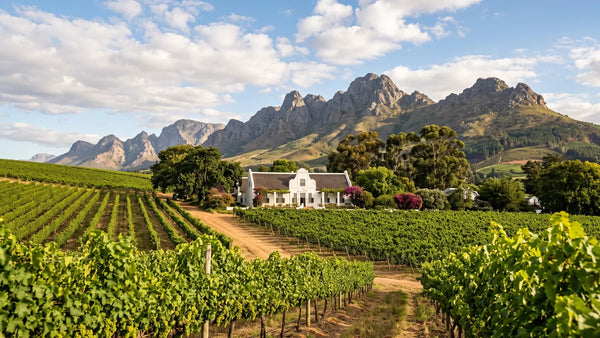
In December 1995, Dr. Johst Weber, an engineer and economist specializing in natural resource management, is waiting for his connecting flight at London Heathrow Airport. In a copy of Decanter magazine, he discovers a brief advertisement: "potential high-quality vineyards" and "limestone soils". Weber has been looking for years for a place where he can plant vines and create a meeting point for family and like-minded people. His first visit to South Africa — in March 1996 — ends on the second day with a handshake: The Springfontein farm near Stanford in Walker Bay is purchased. At this time, the land is largely wilderness, the few buildings are dilapidated, not a single vine is standing. What convinces Weber: a natural spring, which gives the farm its name — fontein is Afrikaans for spring — and a limestone ridge that runs through the entire property.
From 1996, clearing, soil analysis and the development of infrastructure begin. Decades after this new start, Weber has developed the winery together with his partner and vigneronne Jeanne Vito into one of the most unusual businesses in South Africa. Vito, who grew up in Chablis and was trained in Burgundy, joined the team in 2018 and took over responsibility for the vineyard and cellar in 2022. Since 2026, Christo Versfeld has complemented the four-person vignerons team, which also includes Emil Weber.
Limestone, certified organic farming and minimal intervention
What distinguishes Springfontein from its neighbors in Walker Bay is the subsoil: While Bokkeveld shale dominates in the rest of the district, the vines here grow on marine limestone — a soil constellation rare in South African viticulture. The maritime microclimate is shaped by the proximity to Walker Bay and the cold Benguela Current; the steep, sea-facing slopes ensure cool air and slow ripening. This peculiarity has been officially recognized since 2018: With the ward "Springfontein Rim", Springfontein holds one of the few monopoly appellations in South Africa — an origin designation that exclusively encompasses the estate's vineyards.
The work in the vineyard follows the principles of certified organic farming. In the cellar, the team relies on wild yeasts, spontaneous fermentation, minimal sulfur use and complete avoidance of fining — all wines carry the Certified Organic seal. Weber understands wine as a "combination of nature and human craft": The cellar should express what the soil and climate dictate, not correct it. All grapes come exclusively from the estate's own vineyards; no purchasing takes place.
Pinotage, Chenin Blanc and a South African rarity
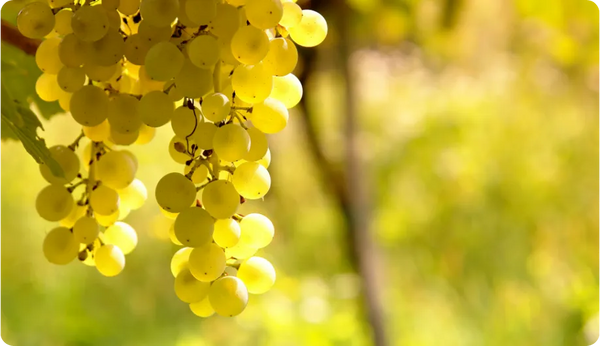
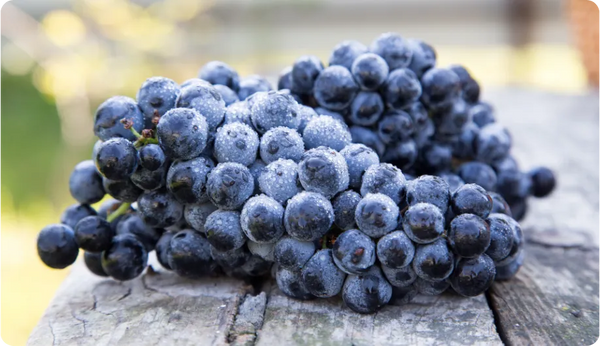
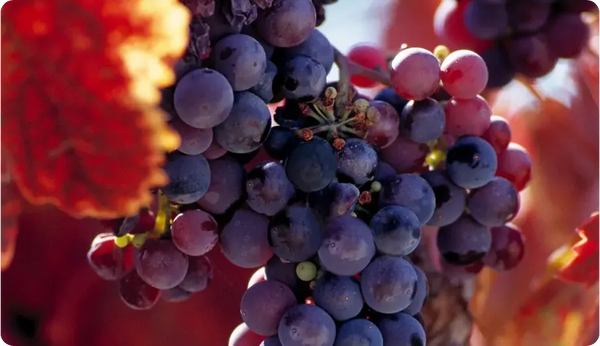
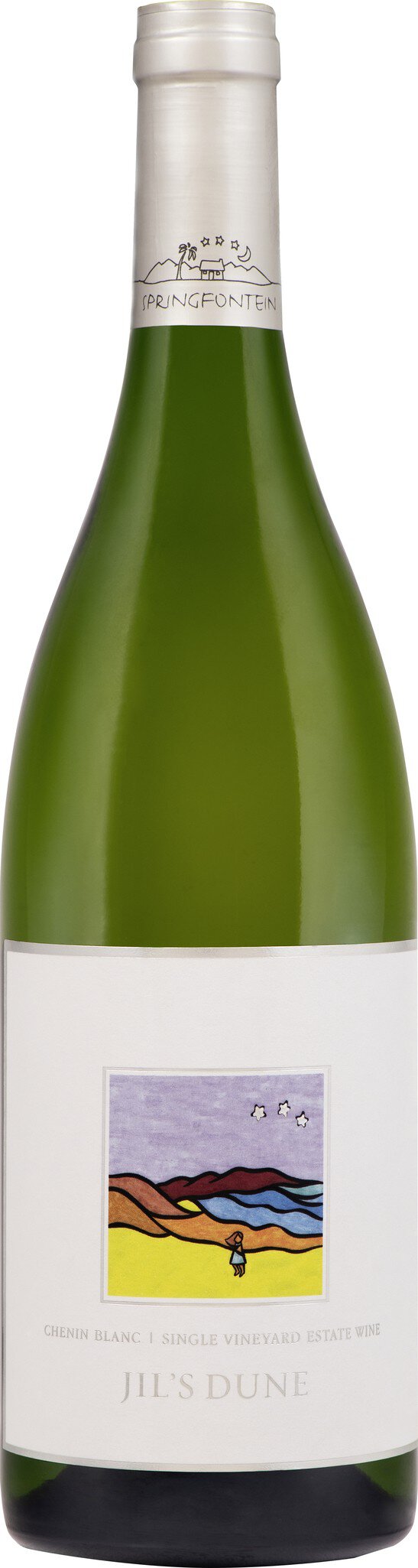
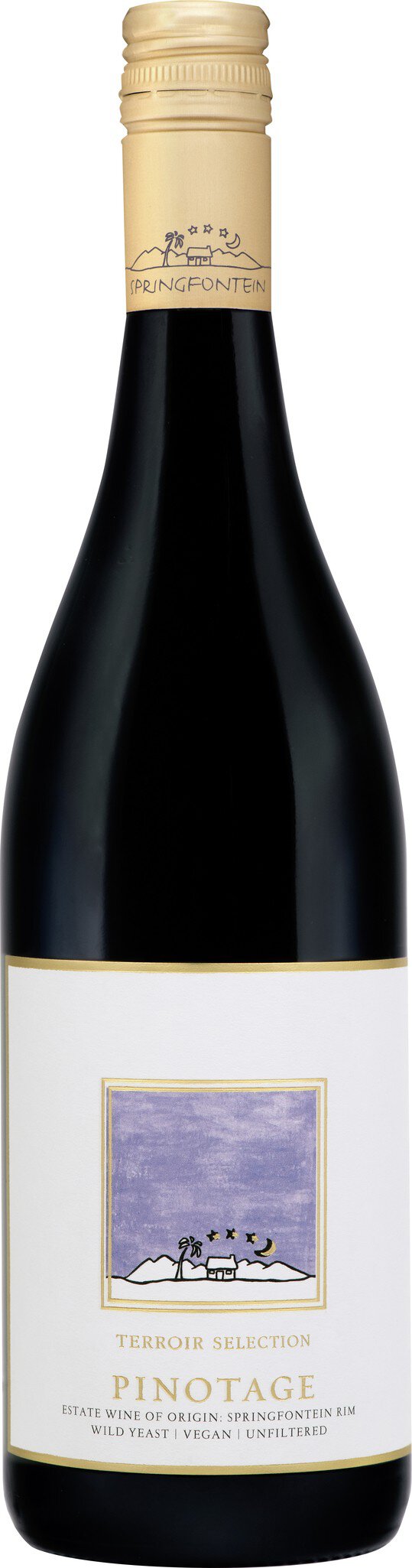
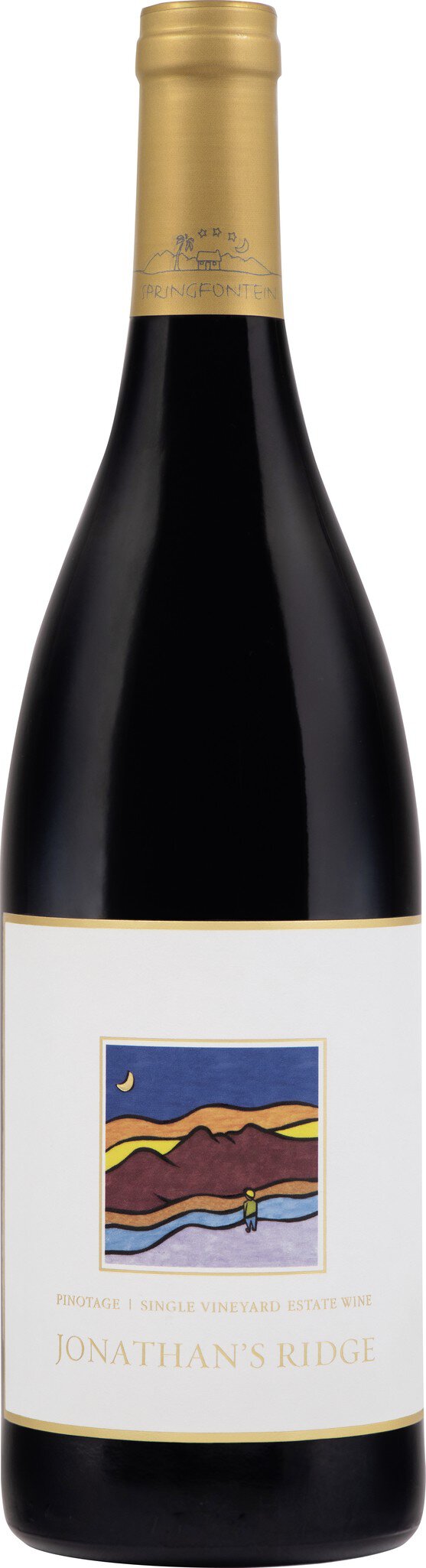
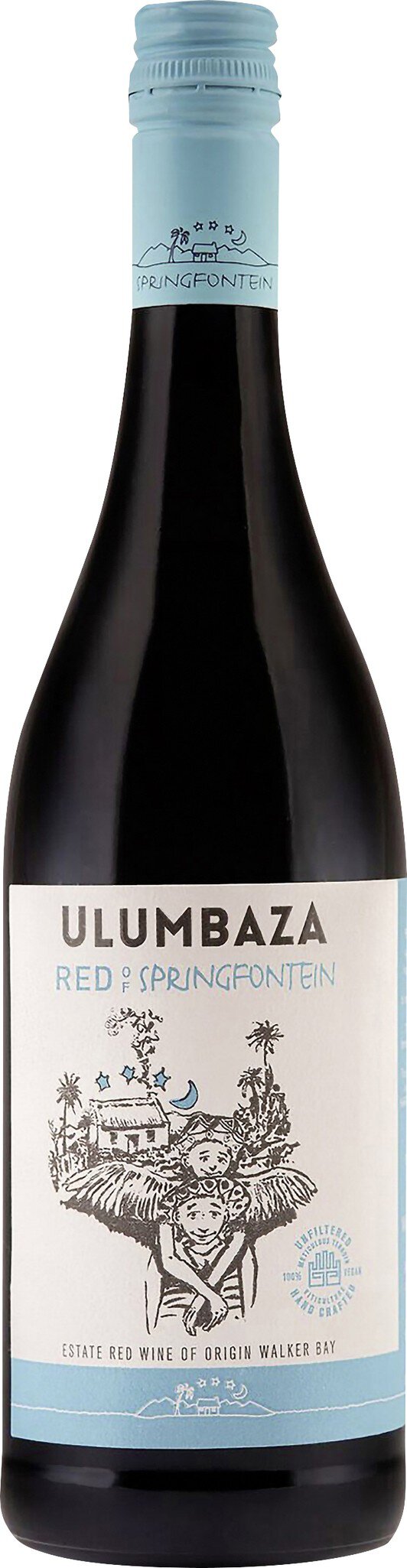
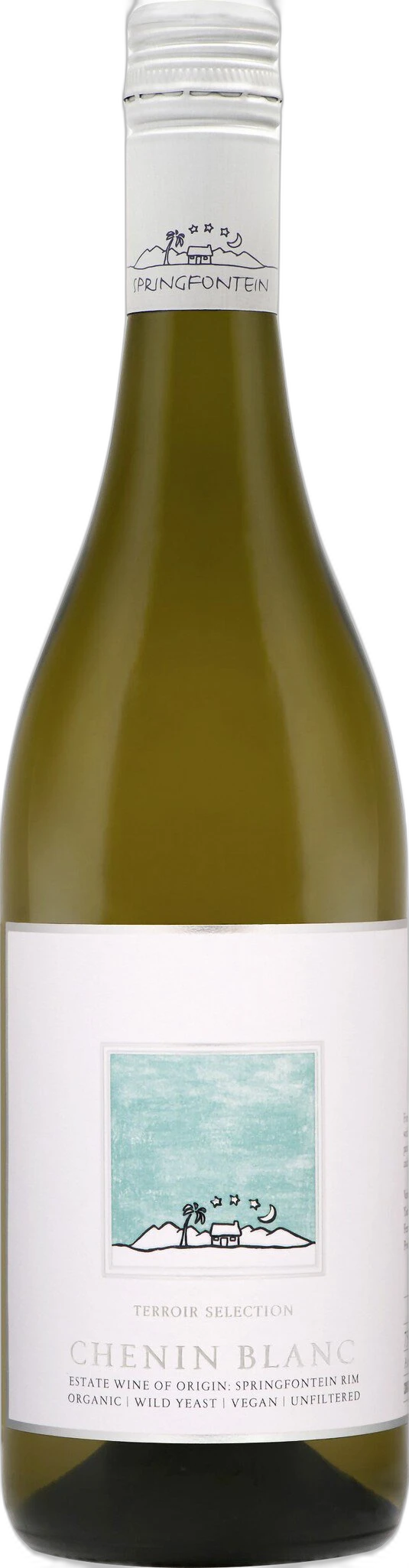
Springfontein focuses on grape varieties that suit the limestone-based coastal climate: Pinotage and Chenin Blanc form the backbone of the range. Added to this is Chénel — a cross between Chenin Blanc and Ugni Blanc (Trebbiano) bred in South Africa in 1974. According to its own statement, Springfontein is the only producer that markets Chénel as a varietal bottling. The wines appear in different quality levels: The Terroir Selection shows the most concentrated engagement with the limestone terroir; the Ulumbaza line — "House of Joy" in Nguni — stands for more accessible, everyday bottlings. The vineyard origin varies: In addition to the estate wines from the Springfontein Rim, individual cuvées are created from the wider Walker Bay district. All wines are distributed both in South Africa and internationally, with a special presence in Germany, Switzerland and the Netherlands.